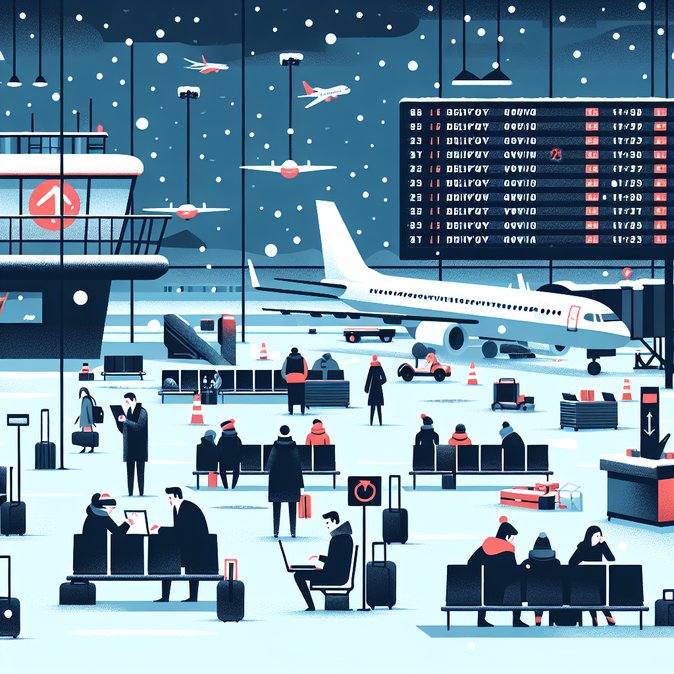
A pan-European operational snapshot published late on 24 December shows 1 918 delays and 43 cancellations across ten countries, with Paris-Charles de Gaulle the second-worst-hit airport after London Heathrow. Six flights were cancelled and 249 delayed at CDG, while Swiss, Lufthansa and easyJet reported knock-on effects that spilled into 25 December schedules.
Ground-handling shortages, winter weather and residual air-traffic-control constraints combined to stretch turnaround times. French business travellers connecting via CDG faced missed onward flights, raising the spectre of EU261 compensation claims—although airlines may invoke ‘extraordinary circumstances’ to limit payouts.
Travel managers scrambled to rebook staff onto TGV and Thalys trains or, where feasible, organise overnight stays near Paris. Insurance advisers reminded companies that unexpected diversions can create transit-visa requirements if reroutes touch non-Schengen states.
![Paris-CDG logs 249 flight delays as post-holiday disruption ripples across Europe]()
Should a reroute or missed connection suddenly require a transit or short-stay visa, platforms such as VisaHQ can expedite the paperwork. The company’s France portal (https://www.visahq.com/france/) lets employers or individual travellers verify entry rules in real time, upload documents and arrange courier collection—streamlining the process when minutes matter.
The data add to concerns that Europe’s aviation ecosystem still lacks resilience at peak demand; French airports have already warned that the 2026 hike in aviation taxes could erode network redundancy further. Mobility teams are urged to maintain updated traveller-tracking dashboards and negotiate flexible fares that allow rerouting without hefty penalties.
With New Year peak traffic looming, airlines operating from France say they are reviewing crew rosters and de-icing capacity to avoid a repeat of the Christmas disruption.
Ground-handling shortages, winter weather and residual air-traffic-control constraints combined to stretch turnaround times. French business travellers connecting via CDG faced missed onward flights, raising the spectre of EU261 compensation claims—although airlines may invoke ‘extraordinary circumstances’ to limit payouts.
Travel managers scrambled to rebook staff onto TGV and Thalys trains or, where feasible, organise overnight stays near Paris. Insurance advisers reminded companies that unexpected diversions can create transit-visa requirements if reroutes touch non-Schengen states.
Should a reroute or missed connection suddenly require a transit or short-stay visa, platforms such as VisaHQ can expedite the paperwork. The company’s France portal (https://www.visahq.com/france/) lets employers or individual travellers verify entry rules in real time, upload documents and arrange courier collection—streamlining the process when minutes matter.
The data add to concerns that Europe’s aviation ecosystem still lacks resilience at peak demand; French airports have already warned that the 2026 hike in aviation taxes could erode network redundancy further. Mobility teams are urged to maintain updated traveller-tracking dashboards and negotiate flexible fares that allow rerouting without hefty penalties.
With New Year peak traffic looming, airlines operating from France say they are reviewing crew rosters and de-icing capacity to avoid a repeat of the Christmas disruption.