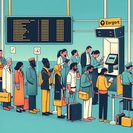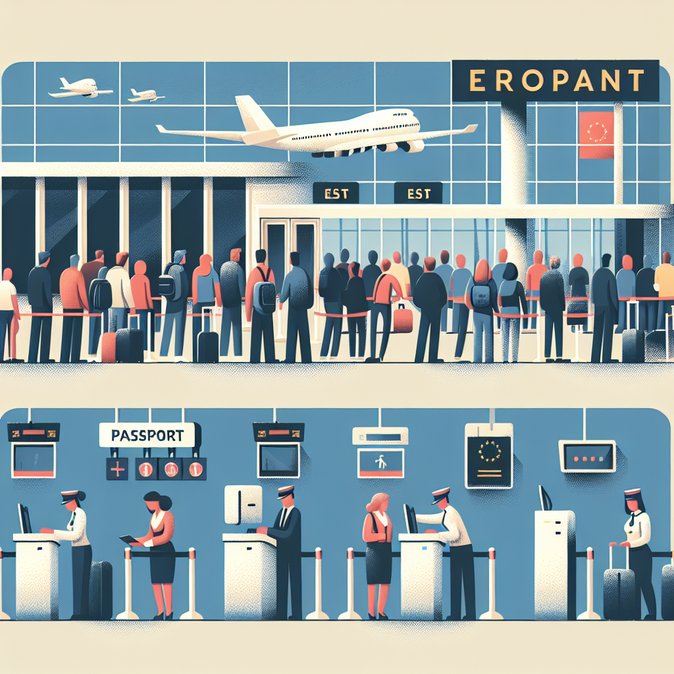
Holiday departures from Václav Havel Airport Prague were anything but festive after the EU’s new automated Entry/Exit System (EES) froze for almost two hours on the morning of 19 December. The fingerprint and facial-recognition kiosks—installed this autumn in preparation for the Schengen-wide rollout—failed to load a software patch pushed overnight by the EU contractor. Czech Foreign Police officers had to switch to manual stamping, immediately stretching the normal 30–40-minute process for third-country nationals to as long as three hours. Two long-haul flights (Etihad EY-62 to Abu Dhabi and Korean Air KE-936 to Seoul) were delayed, while dozens of short-haul services left with empty seats as transit passengers missed connections.
Airport management has ordered an urgent forensic review and will hire 60 temporary “border assistants” plus install 20 extra kiosks by mid-January. Industry body Airports Council International warns that first-generation EES deployments across Europe have added up to 70 % to processing times, jeopardising 2026 traffic forecasts. Prague handled 14.8 million passengers in 2025 and hopes to top 15 million next year; that target now hinges on stabilising the technology.
![Three-Hour Queues at Prague Airport After Biometric EES Crash]()
Against this backdrop, travelers can lean on VisaHQ’s Czech Republic portal (https://www.visahq.com/czech-republic/) to double-check Schengen day balances, validate documentation, and arrange expedited visa or residence-permit services; several Prague-based multinationals already use the platform’s real-time alerts to keep staff a step ahead of EES glitches.
Corporate travel managers are already adapting. Multinationals with regional hubs in Prague and Vienna are instructing staff to arrive at least three hours before departure, avoid tight intra-Schengen connections and carry printed itineraries in case re-routing is required. Mobility teams are also reminding non-EU frequent flyers that EES automatically tallies the 90/180-day rule—mis-recorded biometrics could trigger on-the-spot fines or multi-year entry bans.
Practical advice for assignees includes pre-completing any available EES web forms, keeping hard copies of bookings and proactively requesting the EU/EEA lane when holding a Czech biometric residence card. Employers may wish to update travel-insurance policies to cover missed connections attributable to border IT failures. If Prague’s mitigation measures succeed, neighbouring airports in Budapest and Vienna are expected to replicate the model; if they falter, mobility planners will reroute through Munich or Frankfurt until confidence returns.
Airport management has ordered an urgent forensic review and will hire 60 temporary “border assistants” plus install 20 extra kiosks by mid-January. Industry body Airports Council International warns that first-generation EES deployments across Europe have added up to 70 % to processing times, jeopardising 2026 traffic forecasts. Prague handled 14.8 million passengers in 2025 and hopes to top 15 million next year; that target now hinges on stabilising the technology.

Against this backdrop, travelers can lean on VisaHQ’s Czech Republic portal (https://www.visahq.com/czech-republic/) to double-check Schengen day balances, validate documentation, and arrange expedited visa or residence-permit services; several Prague-based multinationals already use the platform’s real-time alerts to keep staff a step ahead of EES glitches.
Corporate travel managers are already adapting. Multinationals with regional hubs in Prague and Vienna are instructing staff to arrive at least three hours before departure, avoid tight intra-Schengen connections and carry printed itineraries in case re-routing is required. Mobility teams are also reminding non-EU frequent flyers that EES automatically tallies the 90/180-day rule—mis-recorded biometrics could trigger on-the-spot fines or multi-year entry bans.
Practical advice for assignees includes pre-completing any available EES web forms, keeping hard copies of bookings and proactively requesting the EU/EEA lane when holding a Czech biometric residence card. Employers may wish to update travel-insurance policies to cover missed connections attributable to border IT failures. If Prague’s mitigation measures succeed, neighbouring airports in Budapest and Vienna are expected to replicate the model; if they falter, mobility planners will reroute through Munich or Frankfurt until confidence returns.