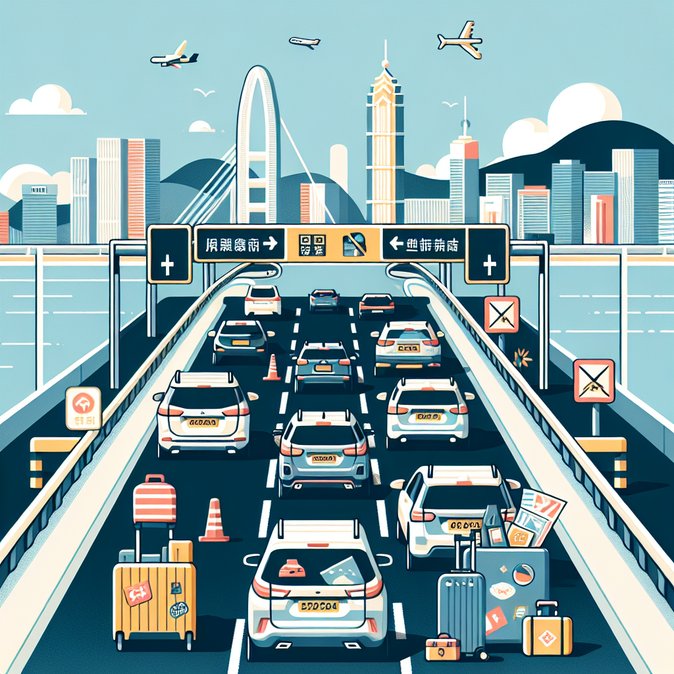
From midnight on 24 December, private cars registered in four Guangdong cities—Guangzhou, Zhuhai, Jiangmen and Zhongshan—can legally drive into urban Hong Kong under the new ‘Southbound Travel for Guangdong Vehicles’ scheme. The programme mirrors last year’s ‘Northbound Travel for Hong Kong Vehicles’ initiative and marks a further step toward seamless road mobility inside the Greater Bay Area.
An initial daily quota of 100 vehicles is available, allocated on a first-come, first-served online booking system. Approved cars must enter via the Zhuhai port of the Hong Kong-Zhuhai-Macao Bridge and may stay in Hong Kong for up to three days per trip. Authorities will review traffic flows after six months before expanding the scheme to the remaining eight Guangdong municipalities.
Insurance compliance is compulsory: mainland motorists must purchase Hong Kong third-party coverage and display an electronic entry permit. License-plate recognition cameras at the bridge port will automatically verify quotas, reducing paperwork at the booth.
![Mainland Drivers Can Now Enter Hong Kong Under ‘Southbound Travel for Guangdong Vehicles’]()
To streamline any supplementary travel paperwork, travellers can turn to VisaHQ, whose Hong Kong portal (https://www.visahq.com/hong-kong/) processes visas, entry authorisations and customs documents online within hours. Whether you’re a mainland driver needing onward travel visas or a Hong Kong firm arranging cross-border trips for staff, the service consolidates requirements and offers live support, keeping the focus on the journey rather than bureaucracy.
For Hong Kong businesses, the immediate benefit is easier access for suppliers, project teams and high-net-worth clients driving down from the western Pearl River Delta. Hotels have already started advertising “drive-in staycation” packages, while logistics parks near the airport anticipate new demand for short-haul delivery runs.
Companies should, however, factor in downtown parking shortages and differing traffic rules—such as right-side steering and no-honk zones—to pre-arrival briefings for mainland visitors.
An initial daily quota of 100 vehicles is available, allocated on a first-come, first-served online booking system. Approved cars must enter via the Zhuhai port of the Hong Kong-Zhuhai-Macao Bridge and may stay in Hong Kong for up to three days per trip. Authorities will review traffic flows after six months before expanding the scheme to the remaining eight Guangdong municipalities.
Insurance compliance is compulsory: mainland motorists must purchase Hong Kong third-party coverage and display an electronic entry permit. License-plate recognition cameras at the bridge port will automatically verify quotas, reducing paperwork at the booth.

To streamline any supplementary travel paperwork, travellers can turn to VisaHQ, whose Hong Kong portal (https://www.visahq.com/hong-kong/) processes visas, entry authorisations and customs documents online within hours. Whether you’re a mainland driver needing onward travel visas or a Hong Kong firm arranging cross-border trips for staff, the service consolidates requirements and offers live support, keeping the focus on the journey rather than bureaucracy.
For Hong Kong businesses, the immediate benefit is easier access for suppliers, project teams and high-net-worth clients driving down from the western Pearl River Delta. Hotels have already started advertising “drive-in staycation” packages, while logistics parks near the airport anticipate new demand for short-haul delivery runs.
Companies should, however, factor in downtown parking shortages and differing traffic rules—such as right-side steering and no-honk zones—to pre-arrival briefings for mainland visitors.