With Christmas travel at its height, Czech motorists and flyers are being warned to brace for congestion on both roads and runways. An Expats.cz briefing and VisaHQ analysis highlight the combined impact of Austria’s six-month extension of controls on the Czech border, Germany’s own checks and repeated glitches in the new Schengen Entry/Exit System (EES).
On the roads drivers using secondary crossings such as Slavonice, Nové Hrady and Valtice have reported queues of up to 45 minutes, while rail passengers on the Prague–Vienna and Prague–Dresden routes face on-board ID inspections that can add 20 minutes to journey times. Snow flurries and heavier holiday traffic could lengthen waits further, according to the Czech Transport Ministry.
To cut through much of this uncertainty, travelers and mobility teams can lean on VisaHQ’s real-time advisory tools. The platform’s Czech Republic hub (https://www.visahq.com/czech-republic/) aggregates entry rules, passport-validity calculators, and alerts on operational disruptions, helping users secure the right documents and avoid last-minute surprises at both land borders and Prague Airport.
![Holiday Travellers Face Double Hit of Border Checks and EES Delays Leaving Czechia]()
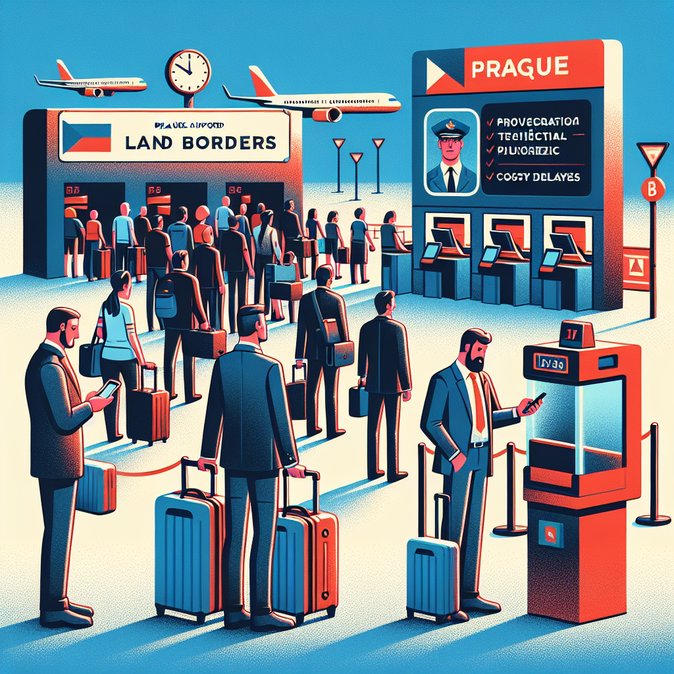
In the air, Prague Airport’s biometric kiosks can clear non-EU passengers in eight minutes—when they work. Two crashes in the past week left lines stretching back to duty-free shops and prompted airlines to advise economy passengers to arrive three hours before departure through 7 January. Mobility consultants at AON calculate that every hour of lost productivity costs employers about €68 per traveller once salary and overheads are factored in.
Corporate responses vary: some firms are moving meetings online; others are rerouting staff through Munich or Frankfurt; a few are even offering ‘bleisure’ days to offset travel fatigue. Travel managers should remind residence-permit holders that EES does not apply to them, but they may still be funnelled into the same queue. Carrying a Czech biometric residence card and proactively requesting the EU/EEA lane can shave minutes off processing times.
Action checklist: 1) monitor live border-wait apps; 2) advise flexible ticketing; 3) validate that employees’ passports have at least three months’ validity beyond their trip; and 4) maintain real-time communication channels so assignees can alert HR to sudden delays.
On the roads drivers using secondary crossings such as Slavonice, Nové Hrady and Valtice have reported queues of up to 45 minutes, while rail passengers on the Prague–Vienna and Prague–Dresden routes face on-board ID inspections that can add 20 minutes to journey times. Snow flurries and heavier holiday traffic could lengthen waits further, according to the Czech Transport Ministry.
To cut through much of this uncertainty, travelers and mobility teams can lean on VisaHQ’s real-time advisory tools. The platform’s Czech Republic hub (https://www.visahq.com/czech-republic/) aggregates entry rules, passport-validity calculators, and alerts on operational disruptions, helping users secure the right documents and avoid last-minute surprises at both land borders and Prague Airport.

In the air, Prague Airport’s biometric kiosks can clear non-EU passengers in eight minutes—when they work. Two crashes in the past week left lines stretching back to duty-free shops and prompted airlines to advise economy passengers to arrive three hours before departure through 7 January. Mobility consultants at AON calculate that every hour of lost productivity costs employers about €68 per traveller once salary and overheads are factored in.
Corporate responses vary: some firms are moving meetings online; others are rerouting staff through Munich or Frankfurt; a few are even offering ‘bleisure’ days to offset travel fatigue. Travel managers should remind residence-permit holders that EES does not apply to them, but they may still be funnelled into the same queue. Carrying a Czech biometric residence card and proactively requesting the EU/EEA lane can shave minutes off processing times.
Action checklist: 1) monitor live border-wait apps; 2) advise flexible ticketing; 3) validate that employees’ passports have at least three months’ validity beyond their trip; and 4) maintain real-time communication channels so assignees can alert HR to sudden delays.