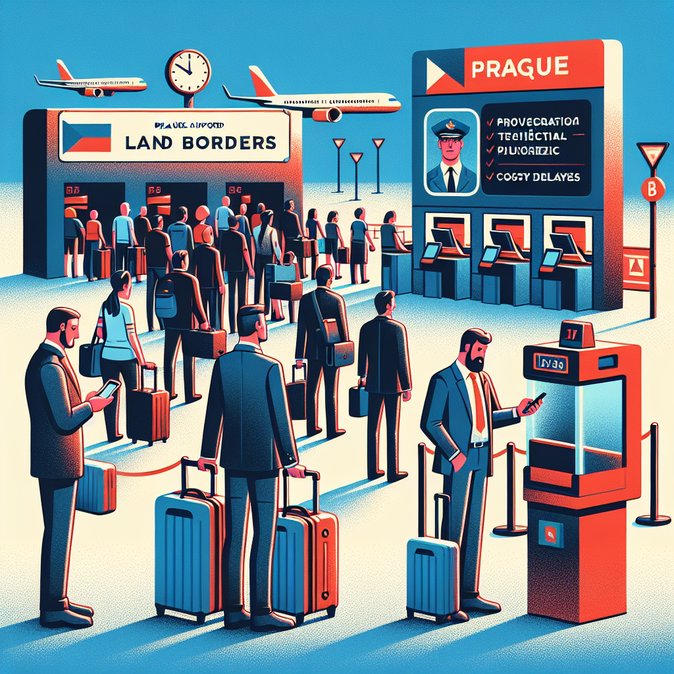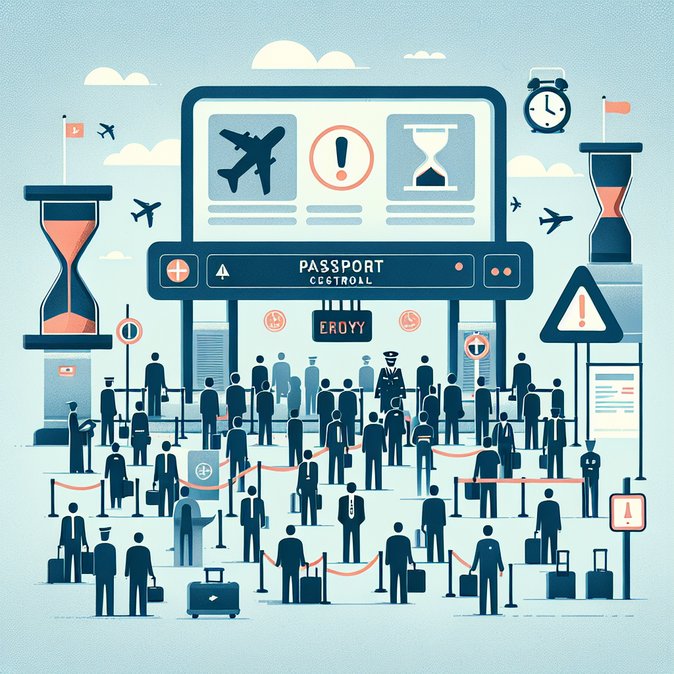
Christmas week travel through Václav Havel Airport Prague turned into a stress test for the EU’s new automated Entry/Exit System (EES). During the morning rush of 19 December the biometric kiosks that capture passengers’ fingerprints and facial images froze after an overnight software patch. Czech Foreign Police officers were forced to revert to manual processing, making non-EU travellers wait up to three hours at passport control—four to five times longer than normal. Two long-haul departures (Etihad EY-62 to Abu Dhabi and Korean Air KE-936 to Seoul) were delayed so that transit passengers could re-clear security, while dozens of short-haul flights left with empty seats.
Airport management says a forensic review traced the fault to a mis-configured database update supplied by the EU contractor. As an emergency fix, 60 temporary “border assistants” will be hired and 20 additional self-service kiosks installed by mid-January. Industry group Airports Council International warns that similar EES teething problems are adding up to 70 percent to border-processing times across Europe. Prague handled 14.8 million passengers in 2025 and hopes to surpass 15 million next year, but that target now depends on stabilising the new technology.
For business-travel planners the implications are immediate. Companies are advising staff to arrive at least three hours before departure, avoid tight connections through Prague or Vienna, and carry printed itineraries in case further delays require re-routing. Mobility managers should also brief non-EU frequent flyers that EES automatically calculates their remaining ‘90/180-day’ allowance—errors in the biometric data could trigger on-the-spot fines or multi-year entry bans.
![Biometric Entry/Exit System Crash Triggers 3-Hour Queues at Prague Airport]()
If you’re unsure whether your team’s paperwork is in order amid these changes, VisaHQ can simplify the process with real-time Czech Republic visa guidance and online applications (https://www.visahq.com/czech-republic/). The platform double-checks documentation, helps avoid common mistakes that could confuse the new EES scanners, and even offers courier pickup for urgent passports—extra peace of mind when border IT is unpredictable.
In the medium term, Prague Airport’s response will be watched closely by regional competitors. If the extra staff and kiosks work, the model could be copied by Budapest and Vienna. If not, travel managers may reroute traffic through Munich or Frankfurt until the system matures.
Practical tips: 1) Arrive early and pre-fill any available EES web forms; 2) keep paper copies of bookings; 3) instruct employees to ask proactively for the EU/EEA lane if they hold a Czech biometric residence card; and 4) update corporate insurance policies to cover missed connections attributable to border IT failures.
Airport management says a forensic review traced the fault to a mis-configured database update supplied by the EU contractor. As an emergency fix, 60 temporary “border assistants” will be hired and 20 additional self-service kiosks installed by mid-January. Industry group Airports Council International warns that similar EES teething problems are adding up to 70 percent to border-processing times across Europe. Prague handled 14.8 million passengers in 2025 and hopes to surpass 15 million next year, but that target now depends on stabilising the new technology.
For business-travel planners the implications are immediate. Companies are advising staff to arrive at least three hours before departure, avoid tight connections through Prague or Vienna, and carry printed itineraries in case further delays require re-routing. Mobility managers should also brief non-EU frequent flyers that EES automatically calculates their remaining ‘90/180-day’ allowance—errors in the biometric data could trigger on-the-spot fines or multi-year entry bans.

If you’re unsure whether your team’s paperwork is in order amid these changes, VisaHQ can simplify the process with real-time Czech Republic visa guidance and online applications (https://www.visahq.com/czech-republic/). The platform double-checks documentation, helps avoid common mistakes that could confuse the new EES scanners, and even offers courier pickup for urgent passports—extra peace of mind when border IT is unpredictable.
In the medium term, Prague Airport’s response will be watched closely by regional competitors. If the extra staff and kiosks work, the model could be copied by Budapest and Vienna. If not, travel managers may reroute traffic through Munich or Frankfurt until the system matures.
Practical tips: 1) Arrive early and pre-fill any available EES web forms; 2) keep paper copies of bookings; 3) instruct employees to ask proactively for the EU/EEA lane if they hold a Czech biometric residence card; and 4) update corporate insurance policies to cover missed connections attributable to border IT failures.