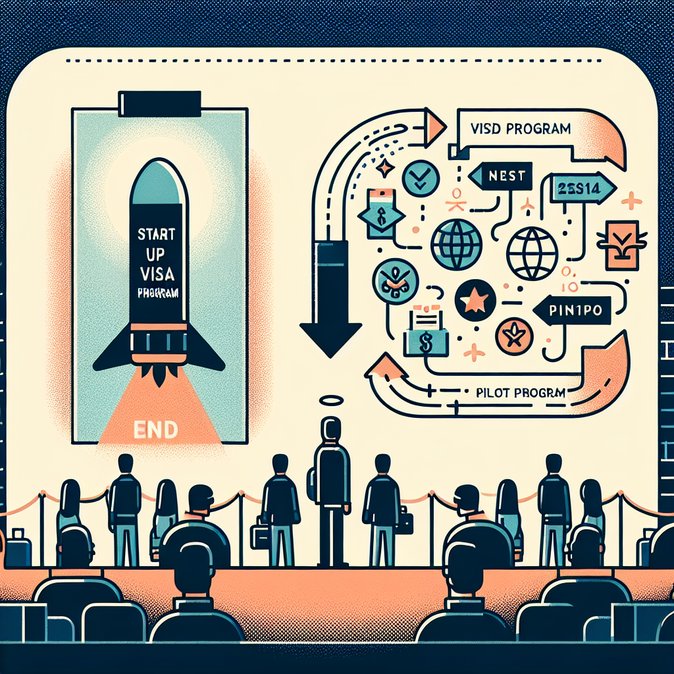
In a holiday-season policy bombshell, Immigration, Refugees and Citizenship Canada (IRCC) confirmed on 24 December that the decade-old Start-Up Visa (SUV) programme will stop accepting new permanent-residence applications at 11:59 p.m. on 31 December 2025. The optional SUV work-permit stream already closed on 19 December. Only founders who are physically in Canada may extend an existing SUV work permit while their PR file is pending.
IRCC says the pause is necessary to clear a backlog of more than 44,000 economic-class applications—some with advertised processing times of ten years—and to “set the foundation” for a new, more targeted entrepreneur pathway launching in 2026. Department sources indicate the forthcoming pilot will feature 12-month service standards, sector-specific quotas tied to clean-tech, AI and life-sciences clusters, and milestone-based work-permit extensions.
For organizations scrambling to recalibrate immigration strategies, VisaHQ’s team can streamline the switch to Canada’s alternative visa categories. Through its online portal (https://www.visahq.com/canada/), VisaHQ provides step-by-step support for Global Talent Stream, CUSMA professional visas, intra-company transfers and other permits, offering founders and HR leads real-time tracking and expert guidance while the Start-Up Visa route is paused.
![IRCC to shut Start-Up Visa intake on 31 December, signals entrepreneur pilot for 2026]()
For companies and investors, the shutdown up-ends relocation strategies that relied on the SUV’s direct PR route. HR teams should pivot to alternatives such as the Global Talent Stream, CUSMA professional visas, or intra-company transfers. Existing commitment-certificate holders have until 30 June 2026 to file, but IRCC warns that certificates issued after 31 December 2025 will not be honoured.
Venture capital funds that built deal pipelines around the SUV are urging portfolio founders to file immediately or explore jurisdictions like the U.K.’s Innovator Founder visa. Immigration counsel recommend auditing talent plans now, budgeting for bridging work permits in case the new pilot slips past Q1 2026.
The move underscores Ottawa’s broader shift from open-ended immigration pilots toward capped, performance-driven streams aimed at ‘critical skills’ rather than raw volume—a theme global-mobility leaders can expect to see repeated in 2026-28 policy roll-outs.
IRCC says the pause is necessary to clear a backlog of more than 44,000 economic-class applications—some with advertised processing times of ten years—and to “set the foundation” for a new, more targeted entrepreneur pathway launching in 2026. Department sources indicate the forthcoming pilot will feature 12-month service standards, sector-specific quotas tied to clean-tech, AI and life-sciences clusters, and milestone-based work-permit extensions.
For organizations scrambling to recalibrate immigration strategies, VisaHQ’s team can streamline the switch to Canada’s alternative visa categories. Through its online portal (https://www.visahq.com/canada/), VisaHQ provides step-by-step support for Global Talent Stream, CUSMA professional visas, intra-company transfers and other permits, offering founders and HR leads real-time tracking and expert guidance while the Start-Up Visa route is paused.

For companies and investors, the shutdown up-ends relocation strategies that relied on the SUV’s direct PR route. HR teams should pivot to alternatives such as the Global Talent Stream, CUSMA professional visas, or intra-company transfers. Existing commitment-certificate holders have until 30 June 2026 to file, but IRCC warns that certificates issued after 31 December 2025 will not be honoured.
Venture capital funds that built deal pipelines around the SUV are urging portfolio founders to file immediately or explore jurisdictions like the U.K.’s Innovator Founder visa. Immigration counsel recommend auditing talent plans now, budgeting for bridging work permits in case the new pilot slips past Q1 2026.
The move underscores Ottawa’s broader shift from open-ended immigration pilots toward capped, performance-driven streams aimed at ‘critical skills’ rather than raw volume—a theme global-mobility leaders can expect to see repeated in 2026-28 policy roll-outs.