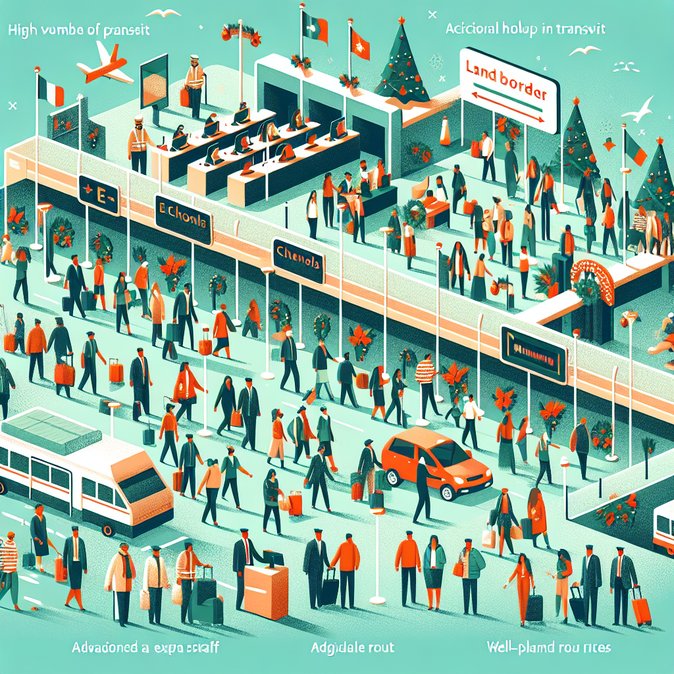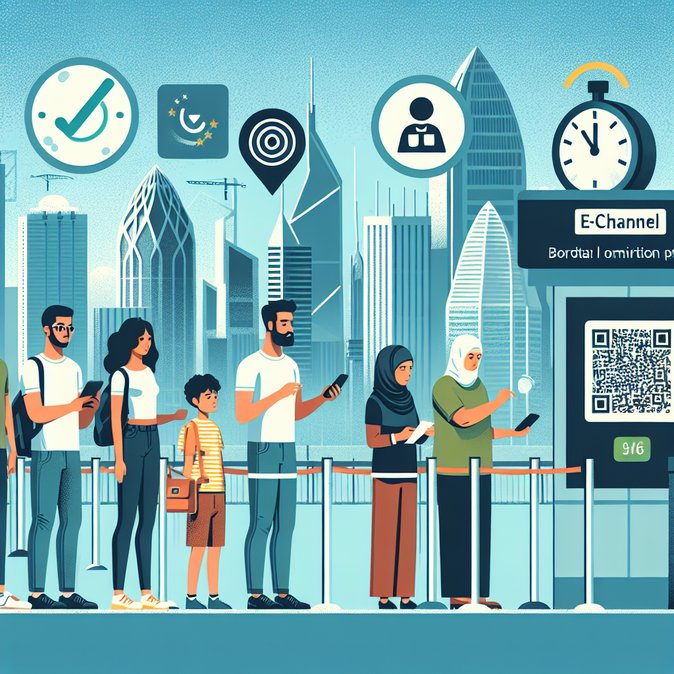
Alongside its holiday traffic bulletin, the Immigration Department has quietly confirmed the full roll-out of its contactless e-Channel system—branded ‘Smart Departure’—across all air, land and sea control points. After two years of pilot trials, travellers can now generate an encrypted QR code in the ImmD mobile app, scan it at the gate and complete biometric face-verification in under 20 seconds without touching any surfaces.
Eligibility has been expanded far beyond frequent-flyer business travellers. Hong Kong residents aged seven or above, holders of electronic travel documents from over 100 jurisdictions and People’s Republic of China (PRC) e-passport holders transiting through Hong Kong can all use the lanes without prior enrolment. The same age-seven threshold now applies to users of the mainland’s Electronic Exit-Entry Permit (e-EEP), bringing parents welcome relief during the family travel season.
If you’re wondering whether your travel documents qualify or need help securing the right visa before testing the new lanes, VisaHQ offers an easy solution. Its Hong Kong portal (https://www.visahq.com/hong-kong/) lets passengers check eligibility, apply for visas online and receive step-by-step guidance on Smart Departure requirements—saving valuable time for both holidaymakers and corporate road-warriors.
![QR-code ‘Smart Departure’ goes live at every Hong Kong checkpoint]()
ImmD data from the pilot shows the contactless channel processes 30 percent more passengers per hour than conventional e-Channels—capacity that will be critical during the coming 11.5 million-passenger surge. From a corporate-mobility angle, the advice is simple: ensure staff download the app before departure, pre-generate the QR code and double-check that children meet the 1.1 m height rule before joining the lane.
Technology vendors note that Hong Kong is Asia’s first hub to combine QR-token entry with dual-mode biometric verification at every checkpoint. Analysts say the move positions the SAR alongside Singapore and the UAE in the race for seamless, paper-free border clearance.
ImmD plans a phase-two upgrade in mid-2026 that will allow pre-cleared frequent travellers to ‘walk-through’ a facial-recognition tunnel without presenting documents at all, mirroring trials at Amsterdam Schiphol and Dubai.
Eligibility has been expanded far beyond frequent-flyer business travellers. Hong Kong residents aged seven or above, holders of electronic travel documents from over 100 jurisdictions and People’s Republic of China (PRC) e-passport holders transiting through Hong Kong can all use the lanes without prior enrolment. The same age-seven threshold now applies to users of the mainland’s Electronic Exit-Entry Permit (e-EEP), bringing parents welcome relief during the family travel season.
If you’re wondering whether your travel documents qualify or need help securing the right visa before testing the new lanes, VisaHQ offers an easy solution. Its Hong Kong portal (https://www.visahq.com/hong-kong/) lets passengers check eligibility, apply for visas online and receive step-by-step guidance on Smart Departure requirements—saving valuable time for both holidaymakers and corporate road-warriors.

ImmD data from the pilot shows the contactless channel processes 30 percent more passengers per hour than conventional e-Channels—capacity that will be critical during the coming 11.5 million-passenger surge. From a corporate-mobility angle, the advice is simple: ensure staff download the app before departure, pre-generate the QR code and double-check that children meet the 1.1 m height rule before joining the lane.
Technology vendors note that Hong Kong is Asia’s first hub to combine QR-token entry with dual-mode biometric verification at every checkpoint. Analysts say the move positions the SAR alongside Singapore and the UAE in the race for seamless, paper-free border clearance.
ImmD plans a phase-two upgrade in mid-2026 that will allow pre-cleared frequent travellers to ‘walk-through’ a facial-recognition tunnel without presenting documents at all, mirroring trials at Amsterdam Schiphol and Dubai.