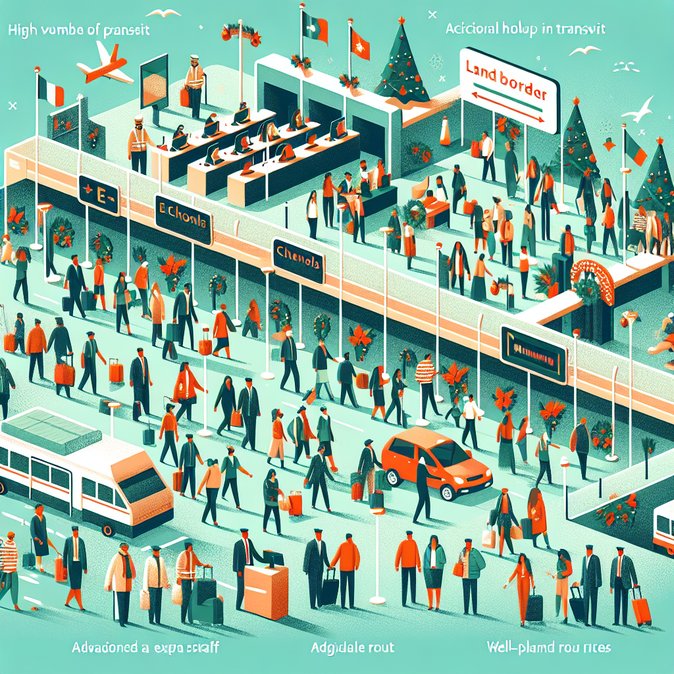
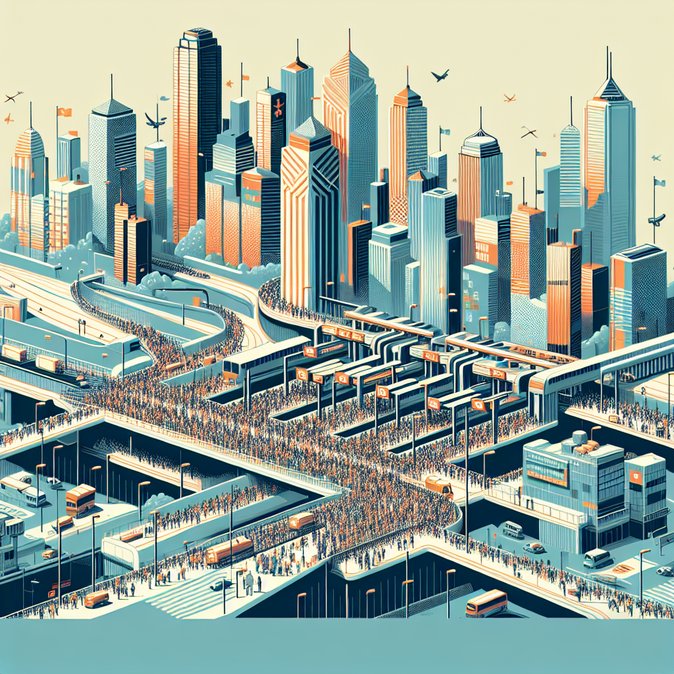
Hong Kong’s Interdepartmental Festival Arrangements Working Group has warned that the territory is about to experience its busiest festive travel period since the border fully reopened. In an official forecast released on 23 December, the Immigration Department (ImmD) projects that 11.52 million people will pass through the city’s air, land and sea checkpoints between 24 and 28 December and again from 31 December to 4 January. About 9.65 million of those journeys will be at land boundary control points, with Lo Wu, Lok Ma Chau Spur Line/Futian and Shenzhen Bay each expected to top 150,000 passengers a day.
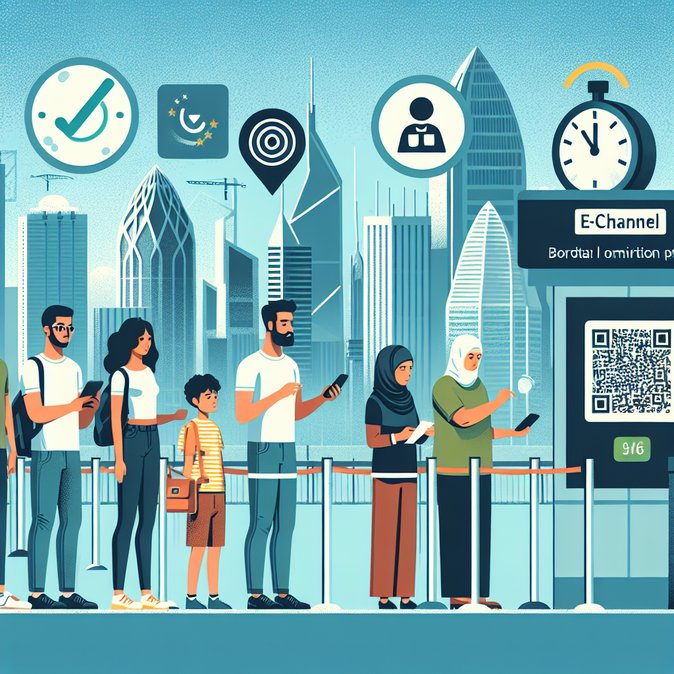
To keep queues manageable, ImmD has cancelled leave for frontline officers, opened temporary counters and—together with Police, Customs and MTR staff—set up a joint command centre at Lo Wu. The department is also emphasising the technology upgrades it completed this year: there are now more than 700 automated e-Channels across the city and the minimum age for Hong Kong residents to use them has been cut from 11 to seven, provided children are at least 1.1 m tall.
Business-travel managers are being urged to steer assignees away from the two forecast peak days—25 and 28 December—and to remind staff that replacement-ID acknowledgement slips are not accepted at e-Channels. Companies moving time-sensitive shipments across the border are similarly advised to avoid late-morning outbound slots, when combined holiday and freight traffic is heaviest.
![Hong Kong prepares for record 11.5 million border crossings over the Christmas-New Year peak]()
Travellers who still need to arrange entry permits—whether for Hong Kong itself, Mainland China, or onward destinations—can streamline the paperwork through VisaHQ’s online platform. The company’s Hong Kong portal (https://www.visahq.com/hong-kong/) provides step-by-step guidance, real-time status tracking and expert support, helping both corporate mobility teams and independent visitors avoid last-minute visa snags during this exceptionally busy period.
For visitors, the government is highlighting the ‘Easy Boundary’ portal, which now publishes near-real-time waiting-times for every land checkpoint. ImmD is also in discussions with Shenzhen to extend opening hours at several control points on New Year’s Eve; the Hong Kong–Zhuhai–Macao Bridge and Lok Ma Chau/Huanggang crossings will remain 24 hours regardless.
The surge is widely viewed as a stress-test of Hong Kong’s post-pandemic infrastructure. If queues remain orderly, officials say the city will be well placed to absorb the further passenger growth expected when a series of Greater Bay Area transport pilots—including south-bound Guangdong vehicle access—hit full stride in 2026.
To keep queues manageable, ImmD has cancelled leave for frontline officers, opened temporary counters and—together with Police, Customs and MTR staff—set up a joint command centre at Lo Wu. The department is also emphasising the technology upgrades it completed this year: there are now more than 700 automated e-Channels across the city and the minimum age for Hong Kong residents to use them has been cut from 11 to seven, provided children are at least 1.1 m tall.
Business-travel managers are being urged to steer assignees away from the two forecast peak days—25 and 28 December—and to remind staff that replacement-ID acknowledgement slips are not accepted at e-Channels. Companies moving time-sensitive shipments across the border are similarly advised to avoid late-morning outbound slots, when combined holiday and freight traffic is heaviest.
Travellers who still need to arrange entry permits—whether for Hong Kong itself, Mainland China, or onward destinations—can streamline the paperwork through VisaHQ’s online platform. The company’s Hong Kong portal (https://www.visahq.com/hong-kong/) provides step-by-step guidance, real-time status tracking and expert support, helping both corporate mobility teams and independent visitors avoid last-minute visa snags during this exceptionally busy period.
For visitors, the government is highlighting the ‘Easy Boundary’ portal, which now publishes near-real-time waiting-times for every land checkpoint. ImmD is also in discussions with Shenzhen to extend opening hours at several control points on New Year’s Eve; the Hong Kong–Zhuhai–Macao Bridge and Lok Ma Chau/Huanggang crossings will remain 24 hours regardless.
The surge is widely viewed as a stress-test of Hong Kong’s post-pandemic infrastructure. If queues remain orderly, officials say the city will be well placed to absorb the further passenger growth expected when a series of Greater Bay Area transport pilots—including south-bound Guangdong vehicle access—hit full stride in 2026.