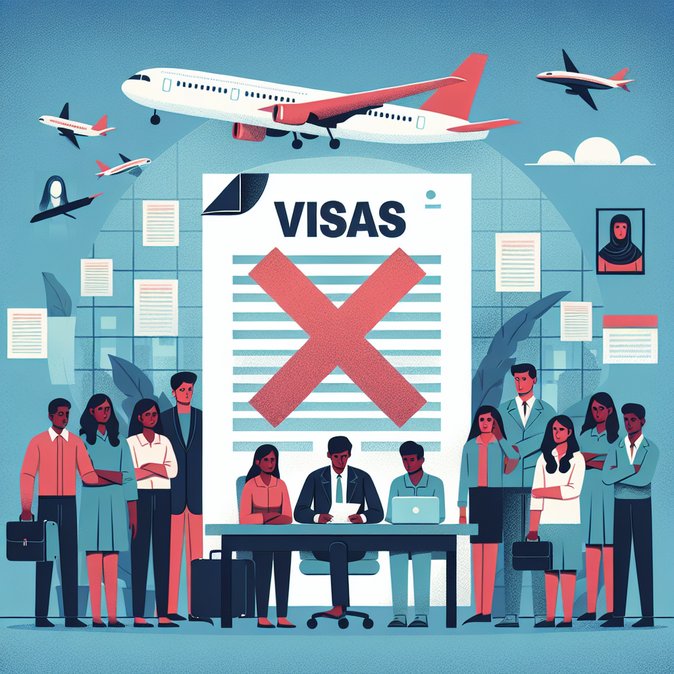
Roughly 300 Indian nationals enrolled in hybrid programmes at IU International University of Applied Sciences in Berlin learned on 24 December that their student visas have been rejected or cancelled, according to multiple reports and student-union statements. The city’s immigration office (LEA) ruled that the university’s blended-learning format fails to meet Germany’s requirement for “full-time, in-person” study, a standard tightened in early 2025.
Affected students say they invested €20,000–€30,000 each for what they believed would be a conventional on-campus experience. Many had already signed long-term leases. Several received departure orders instructing them to leave Germany within 30 days or risk deportation, while others were told they could continue their courses remotely from abroad.
![Berlin Immigration Office Revokes Visas for Hybrid-Course Students]()
For students suddenly confronted with new compliance hurdles, VisaHQ can provide timely guidance on German study-visa categories, document checklists and appeal procedures. Its dedicated Germany portal (https://www.visahq.com/germany/) tracks the latest policy shifts and offers personalised support, helping applicants prepare stronger files or explore alternative residence options.
Why it matters: The case highlights Germany’s stricter interpretation of study-visa rules at a time when the country is courting international talent. Education agents warn that uncertainty could push prospective applicants toward neighbouring countries with clearer distance-learning policies. Employers offering part-time student jobs also face last-minute staffing gaps during the holiday retail rush.
Next steps: IU has pledged legal support and is exploring a switch to fully on-site schedules to satisfy LEA requirements. Immigration lawyers advise students to file urgent appeals and request ‘Duldung’ (temporary stay) to avoid immediate status loss. HR teams sponsoring interns should double-check that enrolment certificates explicitly state face-to-face attendance.
Affected students say they invested €20,000–€30,000 each for what they believed would be a conventional on-campus experience. Many had already signed long-term leases. Several received departure orders instructing them to leave Germany within 30 days or risk deportation, while others were told they could continue their courses remotely from abroad.

For students suddenly confronted with new compliance hurdles, VisaHQ can provide timely guidance on German study-visa categories, document checklists and appeal procedures. Its dedicated Germany portal (https://www.visahq.com/germany/) tracks the latest policy shifts and offers personalised support, helping applicants prepare stronger files or explore alternative residence options.
Why it matters: The case highlights Germany’s stricter interpretation of study-visa rules at a time when the country is courting international talent. Education agents warn that uncertainty could push prospective applicants toward neighbouring countries with clearer distance-learning policies. Employers offering part-time student jobs also face last-minute staffing gaps during the holiday retail rush.
Next steps: IU has pledged legal support and is exploring a switch to fully on-site schedules to satisfy LEA requirements. Immigration lawyers advise students to file urgent appeals and request ‘Duldung’ (temporary stay) to avoid immediate status loss. HR teams sponsoring interns should double-check that enrolment certificates explicitly state face-to-face attendance.