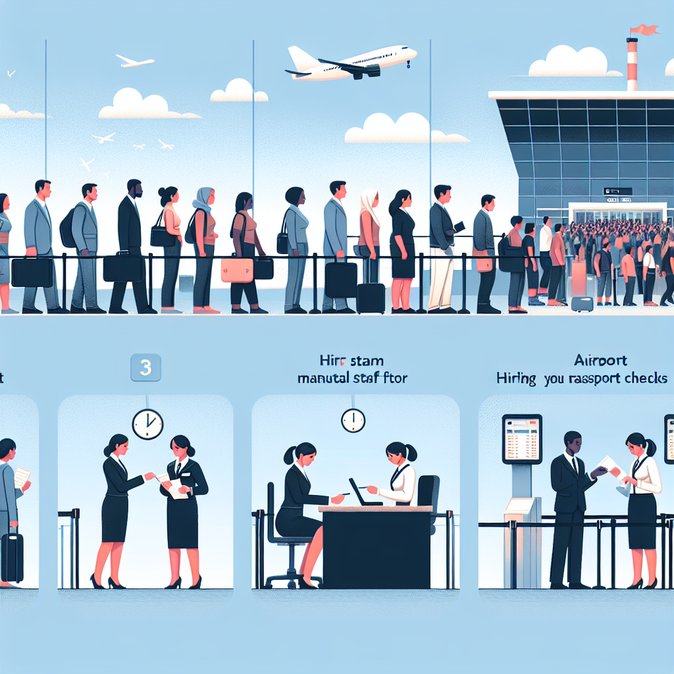
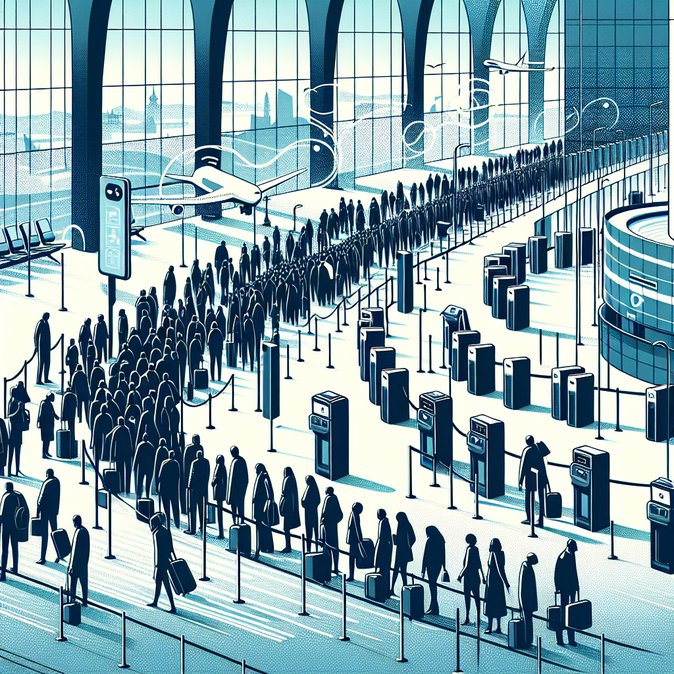
Christmas week began with frustration for international travellers at Václav Havel Airport Prague after the EU’s new automated Entry/Exit System (EES) froze for almost two hours during the morning rush on 19 December. With the kiosks unable to capture fingerprints or facial images, Czech Foreign Police officers reverted to manual processing, stretching the usual 30- to 40-minute passport-control procedure to as long as three hours for some non-EU passengers. Two long-haul departures—Etihad’s Abu Dhabi flight and Korean Air’s Seoul service—were held back to protect missed connections, while dozens of short-haul flights left with empty seats as transit passengers failed to re-clear security in time.
Airport management blamed a faulty overnight software patch supplied by the EU contractor and said it will hire 60 temporary “border assistants” and install 20 additional self-service kiosks by mid-January to avoid a repeat of the bottleneck. Industry representatives note that Prague handled 14.8 million passengers in 2025 and hopes to surpass 15 million next year—an ambition now tied to the stability of EES.
The incident comes amid broader concerns across the Schengen zone. Airports Council International (ACI) has warned that biometric teething troubles are adding up to 70 % to border-processing times at several hubs and could pose a safety risk if queues back into secure areas. The Czech Interior Ministry insists the country is on track for the EU-wide go-live of EES on 10 April 2026 but concedes more hiccups are likely as Christmas-market traffic peaks.
![Biometric EES Glitch Triggers Three-Hour Queues at Prague Airport]()
For individual travellers and corporate mobility managers alike, one way to reduce uncertainty is to prepare documentation well in advance. VisaHQ, the online visa and passport specialist, can streamline Schengen visa applications, provide real-time updates on biometric requirements, and flag any rule changes specific to the Czech Republic (see https://www.visahq.com/czech-republic/). By consolidating paperwork and appointment scheduling in a single dashboard, the service helps travellers hit the ground running even when airport systems stumble.
For corporate mobility teams the implications are immediate. Companies are advising staff to arrive at least three hours before departure, avoid tight connections through Prague or Vienna, and carry backup paper copies of itineraries in case further delays force re-routing. Employers with frequent Schengen travellers should also remind employees that the biometric system automatically calculates each non-EU national’s remaining “90/180-day” allowance and flags overstays—errors that can now trigger on-the-spot fines or multi-year entry bans.
In the medium term, Prague Airport’s response—additional staff and kiosks—will be watched closely by other regional airports facing similar EES challenges. If the fixes work, they could become a template across Central Europe. If they fail, business-travel planners may need to shift connecting traffic to Munich or Frankfurt until the technology matures.
Airport management blamed a faulty overnight software patch supplied by the EU contractor and said it will hire 60 temporary “border assistants” and install 20 additional self-service kiosks by mid-January to avoid a repeat of the bottleneck. Industry representatives note that Prague handled 14.8 million passengers in 2025 and hopes to surpass 15 million next year—an ambition now tied to the stability of EES.
The incident comes amid broader concerns across the Schengen zone. Airports Council International (ACI) has warned that biometric teething troubles are adding up to 70 % to border-processing times at several hubs and could pose a safety risk if queues back into secure areas. The Czech Interior Ministry insists the country is on track for the EU-wide go-live of EES on 10 April 2026 but concedes more hiccups are likely as Christmas-market traffic peaks.
For individual travellers and corporate mobility managers alike, one way to reduce uncertainty is to prepare documentation well in advance. VisaHQ, the online visa and passport specialist, can streamline Schengen visa applications, provide real-time updates on biometric requirements, and flag any rule changes specific to the Czech Republic (see https://www.visahq.com/czech-republic/). By consolidating paperwork and appointment scheduling in a single dashboard, the service helps travellers hit the ground running even when airport systems stumble.
For corporate mobility teams the implications are immediate. Companies are advising staff to arrive at least three hours before departure, avoid tight connections through Prague or Vienna, and carry backup paper copies of itineraries in case further delays force re-routing. Employers with frequent Schengen travellers should also remind employees that the biometric system automatically calculates each non-EU national’s remaining “90/180-day” allowance and flags overstays—errors that can now trigger on-the-spot fines or multi-year entry bans.
In the medium term, Prague Airport’s response—additional staff and kiosks—will be watched closely by other regional airports facing similar EES challenges. If the fixes work, they could become a template across Central Europe. If they fail, business-travel planners may need to shift connecting traffic to Munich or Frankfurt until the technology matures.