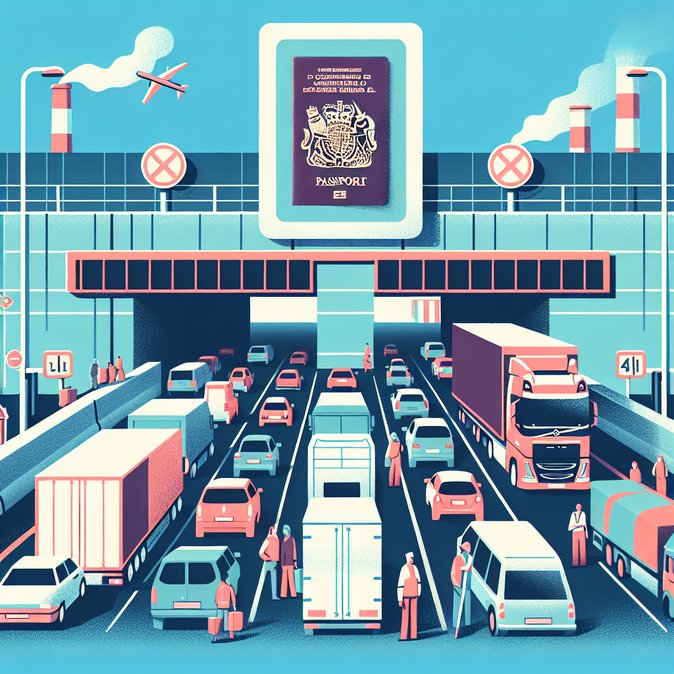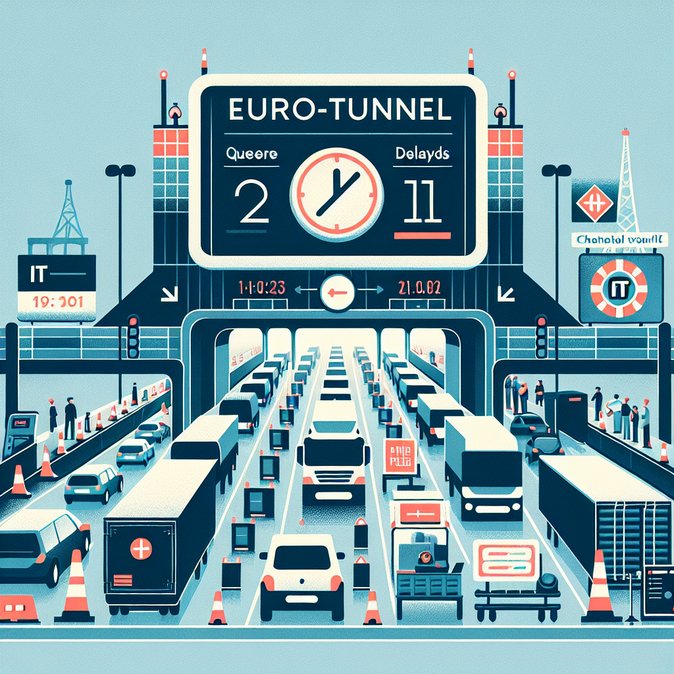
Even after French border-control systems were restored, drivers heading from Folkestone and Dover to Calais endured a third consecutive day of disruption on 23 December. Operation Brock – the post-Brexit traffic-management scheme that turns sections of the M20 motorway into a contraflow lorry park – was activated as car queues spilled back more than 15 km. Dover authorities declared a ‘critical incident’ when some holidaymakers reported 21-hour waits before reaching check-in.
Transport analysts blame a mix of record seasonal demand, Britain’s reduced port capacity since COVID, and the knock-on effect of Saturday’s French IT failure. The RAC Foundation said Operation Brock is a “sticking-plaster solution” and called for a permanent buffer facility inland.
Eurotunnel added six extra shuttle departures but warned that limited processing space on the French side makes it impossible to clear backlogs quickly. Logistics companies are diverting perishable loads via ferry routes to Spain or Belgium, incurring extra costs and insurance claims for spoiled goods.
![‘Holiday Hell’ Continues: Third Day of Congestion at Eurotunnel Despite System Fix]()
For travellers keen to avoid any additional paperwork hiccups while ports are under pressure, VisaHQ can help streamline the process of securing the right travel documents before departure. Its dedicated France page (https://www.visahq.com/france/) offers up-to-date guidance and fast-track options for visas and post-Brexit permits, removing one more potential hurdle when every minute in the queue counts.
Businesses with staff returning to continental offices after Christmas should monitor Highways England updates and consider rail alternatives via Eurostar, which is running additional trains between Paris and London. French authorities have asked UK counterparts to stagger vehicle release from the M20 to avoid overwhelming Calais inbound lanes.
The episode underscores how small system failures can snowball into multi-day disruption when cross-Channel capacity is saturated, a risk that will only rise once biometric EES checks lengthen processing times next autumn.
Transport analysts blame a mix of record seasonal demand, Britain’s reduced port capacity since COVID, and the knock-on effect of Saturday’s French IT failure. The RAC Foundation said Operation Brock is a “sticking-plaster solution” and called for a permanent buffer facility inland.
Eurotunnel added six extra shuttle departures but warned that limited processing space on the French side makes it impossible to clear backlogs quickly. Logistics companies are diverting perishable loads via ferry routes to Spain or Belgium, incurring extra costs and insurance claims for spoiled goods.

For travellers keen to avoid any additional paperwork hiccups while ports are under pressure, VisaHQ can help streamline the process of securing the right travel documents before departure. Its dedicated France page (https://www.visahq.com/france/) offers up-to-date guidance and fast-track options for visas and post-Brexit permits, removing one more potential hurdle when every minute in the queue counts.
Businesses with staff returning to continental offices after Christmas should monitor Highways England updates and consider rail alternatives via Eurostar, which is running additional trains between Paris and London. French authorities have asked UK counterparts to stagger vehicle release from the M20 to avoid overwhelming Calais inbound lanes.
The episode underscores how small system failures can snowball into multi-day disruption when cross-Channel capacity is saturated, a risk that will only rise once biometric EES checks lengthen processing times next autumn.