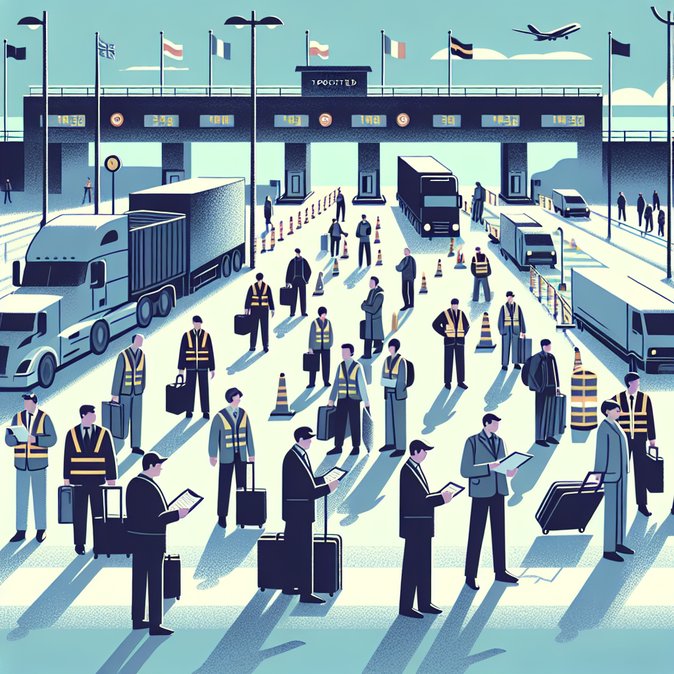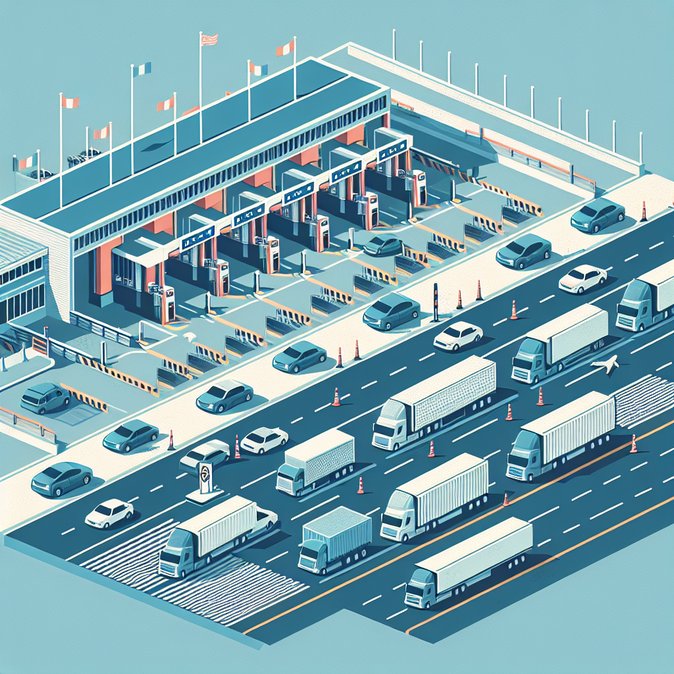
A new traffic configuration went live on 22 December at the fixed control point on the A12 motorway near Frankfurt (Oder), a crossing that has become notorious for ten-kilometre jams since permanent border checks returned last year. The redesign adds a dedicated lane for passenger cars, clearer signage and a buffer zone where trucks can be processed off the main carriageway.
For commuters and logistics planners who also need to keep their travel documents in perfect order amid the new controls, VisaHQ can help streamline the paperwork. The online platform (https://www.visahq.com/germany/) guides users through German and wider Schengen visa requirements, provides up-to-date rule alerts, and can even arrange courier pickup for completed applications—saving precious time that might otherwise be lost in traffic.
![A12 checkpoint redesign targets chronic tailbacks on German-Polish border]()
Mayor Axel Strasser called the project an “important step” for the twin-city economy of Frankfurt (Oder) and Słubice. More than 4 000 Polish residents commute daily to German employers, and just-in-time supply chains feed auto-parts and e-commerce warehouses on both sides of the Oder. Hauliers estimate each hour lost at the checkpoint costs €200 per lorry in driver time and missed delivery slots.
Early modelling by the local chamber of commerce suggests the new layout could cut average wait times by one-third, though business groups continue to lobby Berlin and Warsaw to phase out fixed controls once EU migration negotiations conclude in spring 2026.
Until then, mobility managers are advising drivers to carry employer letters explaining essential travel, monitor real-time traffic apps and consider rail alternatives via the nearby Küstrin crossing, where inspections remain mobile rather than stationary.
For commuters and logistics planners who also need to keep their travel documents in perfect order amid the new controls, VisaHQ can help streamline the paperwork. The online platform (https://www.visahq.com/germany/) guides users through German and wider Schengen visa requirements, provides up-to-date rule alerts, and can even arrange courier pickup for completed applications—saving precious time that might otherwise be lost in traffic.

Mayor Axel Strasser called the project an “important step” for the twin-city economy of Frankfurt (Oder) and Słubice. More than 4 000 Polish residents commute daily to German employers, and just-in-time supply chains feed auto-parts and e-commerce warehouses on both sides of the Oder. Hauliers estimate each hour lost at the checkpoint costs €200 per lorry in driver time and missed delivery slots.
Early modelling by the local chamber of commerce suggests the new layout could cut average wait times by one-third, though business groups continue to lobby Berlin and Warsaw to phase out fixed controls once EU migration negotiations conclude in spring 2026.
Until then, mobility managers are advising drivers to carry employer letters explaining essential travel, monitor real-time traffic apps and consider rail alternatives via the nearby Küstrin crossing, where inspections remain mobile rather than stationary.