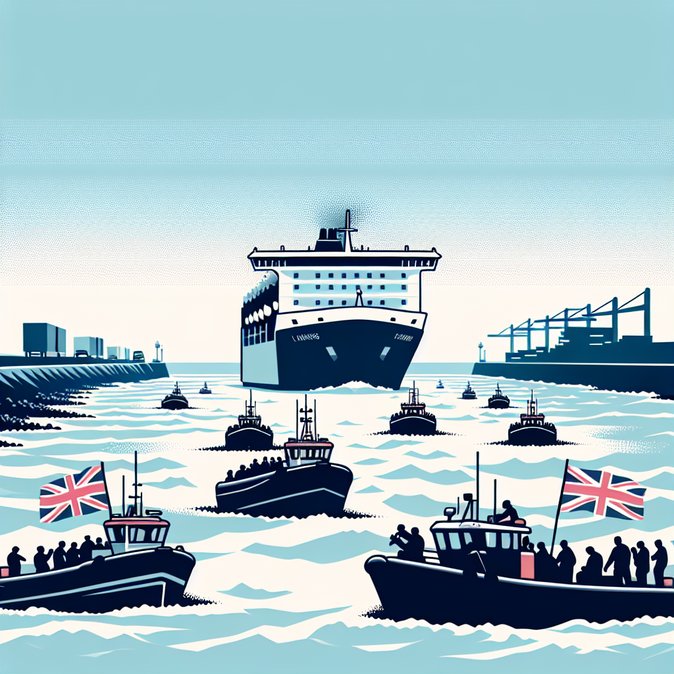
Favourable sea conditions on 20 December allowed 803 people to leave beaches near Dunkirk and Wimereux in 13 small boats, pushing the 2025 total to more than 41,400—just shy of last year’s record. The French Interior Ministry deployed extra patrols but intercepted only three vessels before launch, illustrating how quickly smuggling networks adapt. The surge, reported on 21 December, has dominated policy debate throughout the last 24 hours.
The numbers ratchet up political pressure in Paris and London. UK opposition MPs renewed calls to leave the European Convention on Human Rights so failed asylum seekers can be removed more easily, while France points to a €1.5 million deal with Greece to target smuggling rings in North Africa.
Beyond the politics, the crossings create practical challenges for logistics companies operating in the Calais corridor. Port security checks tighten whenever migrant numbers spike, causing unplanned halts that can snowball into ferry delays. Lorry operators risk fines if stowaways are discovered; hence, mobility managers should refresh driver protocols on secure parking, trailer seals and real-time border-status apps.
![Channel Crossings Spike: 803 Migrants Depart French Beaches in a Single Day]()
Amid such operational headaches, VisaHQ can relieve some administrative strain. The company’s France portal (https://www.visahq.com/france/) offers step-by-step guidance, expedited processing and live tracking for Schengen visas or work-permit renewals, enabling drivers, technicians and NGO staff to secure travel documents without diverting resources from core duties.
Humanitarian staff and technicians supporting reception centres also face mobility issues: last-minute travel into northern France may require expedited visas or residence-permit extensions, especially if staff must remain longer than the 90/180 Schengen limit. Visa service providers report a jump in urgent filings since Sunday.
Experts note that without expanded legal migration pathways and quicker asylum decisions on both shores of the Channel, enforcement alone is unlikely to stem departures—a reality UK and French negotiators will revisit in January.
The numbers ratchet up political pressure in Paris and London. UK opposition MPs renewed calls to leave the European Convention on Human Rights so failed asylum seekers can be removed more easily, while France points to a €1.5 million deal with Greece to target smuggling rings in North Africa.
Beyond the politics, the crossings create practical challenges for logistics companies operating in the Calais corridor. Port security checks tighten whenever migrant numbers spike, causing unplanned halts that can snowball into ferry delays. Lorry operators risk fines if stowaways are discovered; hence, mobility managers should refresh driver protocols on secure parking, trailer seals and real-time border-status apps.

Amid such operational headaches, VisaHQ can relieve some administrative strain. The company’s France portal (https://www.visahq.com/france/) offers step-by-step guidance, expedited processing and live tracking for Schengen visas or work-permit renewals, enabling drivers, technicians and NGO staff to secure travel documents without diverting resources from core duties.
Humanitarian staff and technicians supporting reception centres also face mobility issues: last-minute travel into northern France may require expedited visas or residence-permit extensions, especially if staff must remain longer than the 90/180 Schengen limit. Visa service providers report a jump in urgent filings since Sunday.
Experts note that without expanded legal migration pathways and quicker asylum decisions on both shores of the Channel, enforcement alone is unlikely to stem departures—a reality UK and French negotiators will revisit in January.