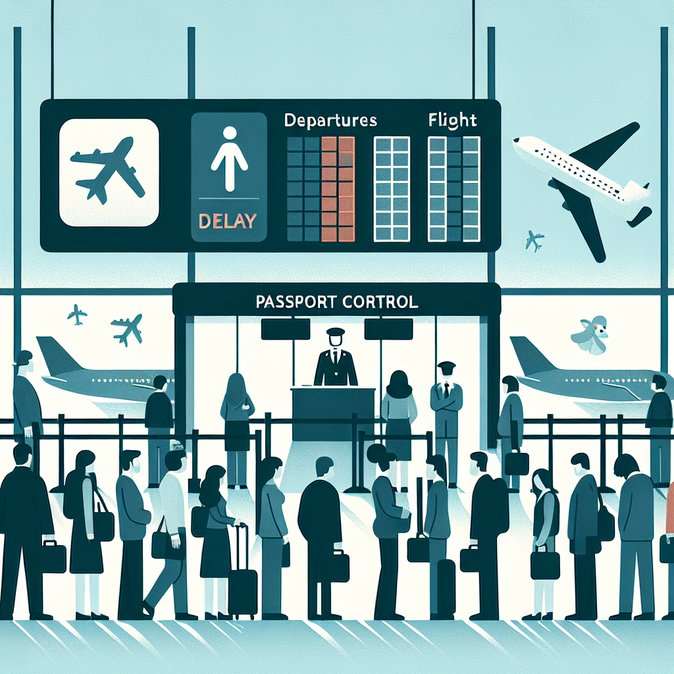
Christmas travel got off to a rocky start in Prague when Václav Havel Airport’s new Entry/Exit System (EES) froze for almost two hours during the morning rush on 19 December. The outage forced Czech Foreign Police officers to collect fingerprints and facial images manually, stretching the normal 30- to 40-minute passport-control process to as long as three hours for some non-EU passengers. Two long-haul departures—one to Abu Dhabi and another to Seoul—were delayed to protect missed connections, while dozens of short-haul flights left with empty seats as transit passengers failed to re-clear security in time.
Airport management said the glitch stemmed from a software patch rolled out overnight by the EU’s contractor and confirmed that it is hiring 60 temporary “border assistants” and installing 20 additional kiosks by mid-January. Airlines and Airports Council International (ACI) warned that Prague—and other EU hubs running the same build—may have to “switch off” EES if stability does not improve, citing potential safety hazards if crowds back up into secure areas.
For travellers coping with the new system, VisaHQ can smooth the journey: our Czech Republic portal (https://www.visahq.com/czech-republic/) provides real-time EES updates, Schengen-stay calculators and expedited visa services, helping passengers and mobility teams avoid last-minute paperwork snags when airport technology goes down.
![EES Meltdown Triggers Three-Hour Queues at Prague Airport]()
For business-travel planners, the incident is a wake-up call. Corporate mobility teams are now advising staff to arrive at least three hours before departure, avoid tight connections through Prague and Vienna, and ensure passports have at least two blank pages for emergency stamping should the digital system fail again. Relocation managers bringing talent into Czechia early in 2026 are building extra buffer days into onboarding schedules and budgeting for hotel overnights in case of renewed congestion.
The Czech Interior Ministry insists the country remains on track for the EU-wide go-live of EES on 10 April 2026, but admits more hiccups are likely as passenger numbers peak for Christmas markets and returning expatriates. Companies with frequent Schengen travellers are urged to remind employees that the biometric system automatically calculates every non-EU national’s remaining “90/180-day” stay and flags overstays—errors that can now trigger on-the-spot fines or multi-year entry bans.
Prague Airport handled 14.8 million passengers in 2025; management says it expects a record 15 million next year. Whether that milestone is reached may depend on how quickly the EES platform stabilises—making the issue one to watch closely for global-mobility teams supporting assignments in Central Europe.
Airport management said the glitch stemmed from a software patch rolled out overnight by the EU’s contractor and confirmed that it is hiring 60 temporary “border assistants” and installing 20 additional kiosks by mid-January. Airlines and Airports Council International (ACI) warned that Prague—and other EU hubs running the same build—may have to “switch off” EES if stability does not improve, citing potential safety hazards if crowds back up into secure areas.
For travellers coping with the new system, VisaHQ can smooth the journey: our Czech Republic portal (https://www.visahq.com/czech-republic/) provides real-time EES updates, Schengen-stay calculators and expedited visa services, helping passengers and mobility teams avoid last-minute paperwork snags when airport technology goes down.

For business-travel planners, the incident is a wake-up call. Corporate mobility teams are now advising staff to arrive at least three hours before departure, avoid tight connections through Prague and Vienna, and ensure passports have at least two blank pages for emergency stamping should the digital system fail again. Relocation managers bringing talent into Czechia early in 2026 are building extra buffer days into onboarding schedules and budgeting for hotel overnights in case of renewed congestion.
The Czech Interior Ministry insists the country remains on track for the EU-wide go-live of EES on 10 April 2026, but admits more hiccups are likely as passenger numbers peak for Christmas markets and returning expatriates. Companies with frequent Schengen travellers are urged to remind employees that the biometric system automatically calculates every non-EU national’s remaining “90/180-day” stay and flags overstays—errors that can now trigger on-the-spot fines or multi-year entry bans.
Prague Airport handled 14.8 million passengers in 2025; management says it expects a record 15 million next year. Whether that milestone is reached may depend on how quickly the EES platform stabilises—making the issue one to watch closely for global-mobility teams supporting assignments in Central Europe.