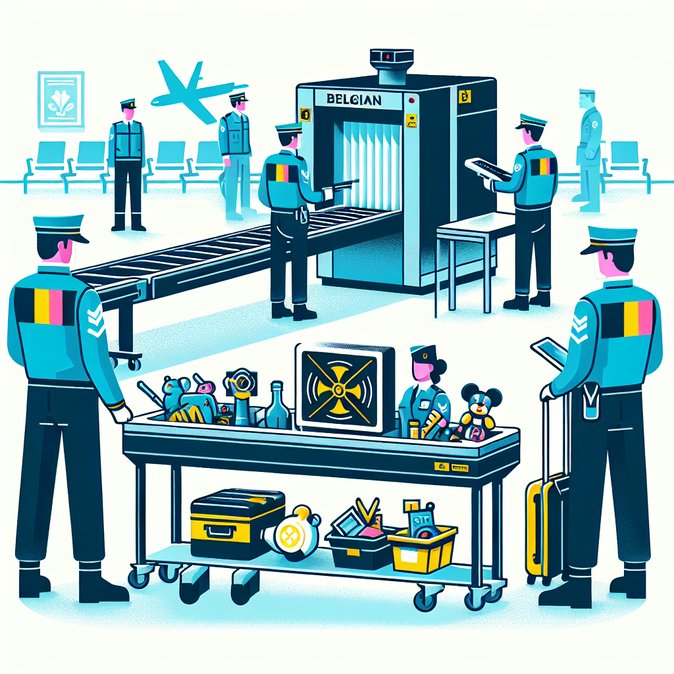
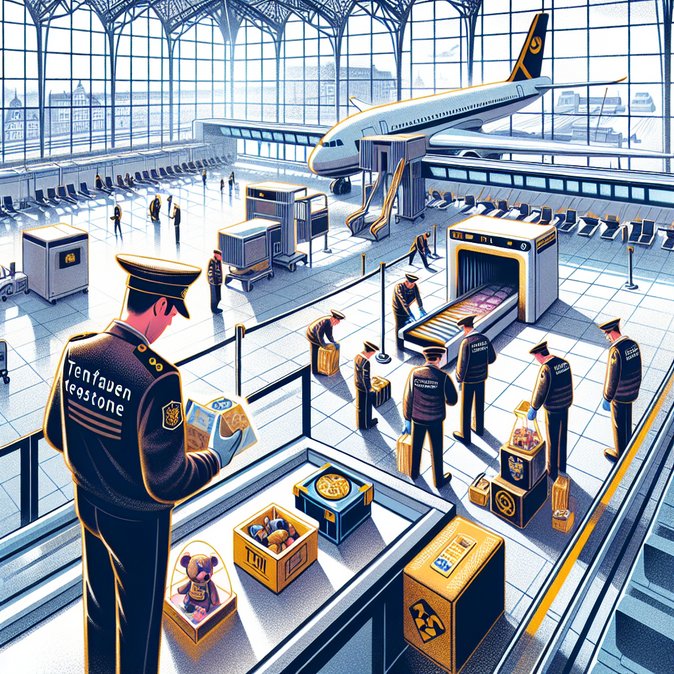
Belgium’s General Administration of Customs & Excise has revealed that nearly nine tonnes of narcotics were intercepted at Brussels Airport (Zaventem) in 2025 – double last year’s total. Cannabis (1.77 t) and ketamine (245 kg) topped the haul, but inspectors also discovered smaller shipments of cocaine, MDMA and new psychoactive substances hidden inside Lego Duplo bricks, framed artworks and other children’s toys.
While Antwerp’s seaport remains Europe’s cocaine hotspot, air-cargo traffickers are increasingly exploiting Brussels’ fast-parcel networks and belly-hold capacity on passenger flights. Customs chief Kristian Vanderwaeren said criminals “pivoted to high-margin, low-volume consignments that can move quickly through express facilities,” adding that ketamine parcels were mainly transiting to Australia, the United States and New Zealand where street prices are up to ten times higher.
The surge has prompted Belgian customs to deploy additional X-ray scanners and mobile trace-detection teams in the freight village. Officers now board selected flights on arrival to inspect courier containers before they reach land-side handlers – a measure that has already netted several multi-kilo cannabis loads from North America.
![Brussels Airport logs record drug seizures in 2025, customs warn of new concealment tactics]()
Travelers and mobility planners wrestling with these tighter border controls may also need to revisit their documentation. VisaHQ’s Belgium hub (https://www.visahq.com/belgium/) offers a streamlined way to secure visas, residence permits, and other travel papers, monitoring real-time regulatory changes and providing expedited options that keep itineraries on track despite the heightened scrutiny.
Industry sources say the tighter checks are causing short-term delays for time-critical pharma shipments, although most forwarders support the crackdown as it reduces reputational risk.
For corporate mobility managers the message is clear: advise staff that personal baggage screenings are likely to be more stringent during the holiday peak and that couriered samples or prototypes could face extra clearance time. Companies moving valuable cargo through Brussels may wish to build a 24- to 48-hour buffer into supply-chain schedules until the new enforcement rhythm stabilises.
The record seizures also strengthen calls in the European Parliament for a unified air-cargo risk-profiling system to complement the maritime EU COCAIR initiative. Belgium is lobbying for an EU-funded pilot that would mirror its “green-lane” channel for compliant shippers while concentrating inspections on high-risk profiles.
While Antwerp’s seaport remains Europe’s cocaine hotspot, air-cargo traffickers are increasingly exploiting Brussels’ fast-parcel networks and belly-hold capacity on passenger flights. Customs chief Kristian Vanderwaeren said criminals “pivoted to high-margin, low-volume consignments that can move quickly through express facilities,” adding that ketamine parcels were mainly transiting to Australia, the United States and New Zealand where street prices are up to ten times higher.
The surge has prompted Belgian customs to deploy additional X-ray scanners and mobile trace-detection teams in the freight village. Officers now board selected flights on arrival to inspect courier containers before they reach land-side handlers – a measure that has already netted several multi-kilo cannabis loads from North America.
Travelers and mobility planners wrestling with these tighter border controls may also need to revisit their documentation. VisaHQ’s Belgium hub (https://www.visahq.com/belgium/) offers a streamlined way to secure visas, residence permits, and other travel papers, monitoring real-time regulatory changes and providing expedited options that keep itineraries on track despite the heightened scrutiny.
Industry sources say the tighter checks are causing short-term delays for time-critical pharma shipments, although most forwarders support the crackdown as it reduces reputational risk.
For corporate mobility managers the message is clear: advise staff that personal baggage screenings are likely to be more stringent during the holiday peak and that couriered samples or prototypes could face extra clearance time. Companies moving valuable cargo through Brussels may wish to build a 24- to 48-hour buffer into supply-chain schedules until the new enforcement rhythm stabilises.
The record seizures also strengthen calls in the European Parliament for a unified air-cargo risk-profiling system to complement the maritime EU COCAIR initiative. Belgium is lobbying for an EU-funded pilot that would mirror its “green-lane” channel for compliant shippers while concentrating inspections on high-risk profiles.