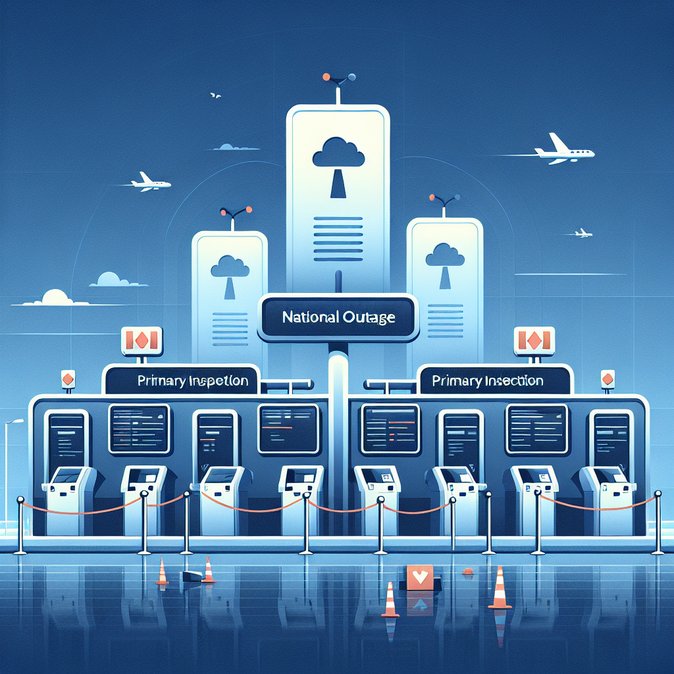
Travellers landing at Canadian airports late Friday faced longer-than-usual customs queues after a technical failure knocked out Canada Border Services Agency (CBSA) primary inspection kiosks across the country. The outage began mid-afternoon on December 19 and hit Toronto Pearson’s Terminals 1 and 3 particularly hard, forcing officers to process passengers manually. CBSA declared the issue resolved just before 6 p.m., but warned that wait times could persist while operations normalized.
Primary inspection kiosks are self-service machines that capture biometric data and speed up customs declarations. A nationwide shutdown can instantly choke passenger flow, as evidenced by social-media images of snaking line-ups in Toronto and Vancouver. Airlines were forced to hold arriving aircraft at gates because arrivals halls were at capacity.
In light of the unpredictable nature of such border disruptions, travelers can ease some of the stress by preparing documentation well in advance. VisaHQ’s Canada portal (https://www.visahq.com/canada/) helps visitors secure the correct visas, eTAs, and other entry documents online, offers real-time application tracking, and provides responsive customer support—valuable assistance when airport technology falters and every minute counts.
![Nationwide airport kiosk outage resolved, residual customs delays expected]()
CBSA did not disclose the root cause but said it is reviewing system resilience. Similar outages occurred on October 2 and October 17, raising questions about the robustness of the kiosks’ software and network connectivity. Industry groups are urging Public Safety Canada to accelerate contingency planning ahead of the-February ski-break surge.
Business travellers should budget extra time for arrivals over the next few days and consider enrolling in NEXUS or ArriveCAN Advance Declaration to bypass kiosk lines where available. Airport authorities recommend completing declarations on mobile devices before landing to minimize processing times.
While the incident had no security implications, it underscores the fragility of Canada’s border-technology stack and the operational risks it poses to airlines and passengers alike.
Primary inspection kiosks are self-service machines that capture biometric data and speed up customs declarations. A nationwide shutdown can instantly choke passenger flow, as evidenced by social-media images of snaking line-ups in Toronto and Vancouver. Airlines were forced to hold arriving aircraft at gates because arrivals halls were at capacity.
In light of the unpredictable nature of such border disruptions, travelers can ease some of the stress by preparing documentation well in advance. VisaHQ’s Canada portal (https://www.visahq.com/canada/) helps visitors secure the correct visas, eTAs, and other entry documents online, offers real-time application tracking, and provides responsive customer support—valuable assistance when airport technology falters and every minute counts.

CBSA did not disclose the root cause but said it is reviewing system resilience. Similar outages occurred on October 2 and October 17, raising questions about the robustness of the kiosks’ software and network connectivity. Industry groups are urging Public Safety Canada to accelerate contingency planning ahead of the-February ski-break surge.
Business travellers should budget extra time for arrivals over the next few days and consider enrolling in NEXUS or ArriveCAN Advance Declaration to bypass kiosk lines where available. Airport authorities recommend completing declarations on mobile devices before landing to minimize processing times.
While the incident had no security implications, it underscores the fragility of Canada’s border-technology stack and the operational risks it poses to airlines and passengers alike.