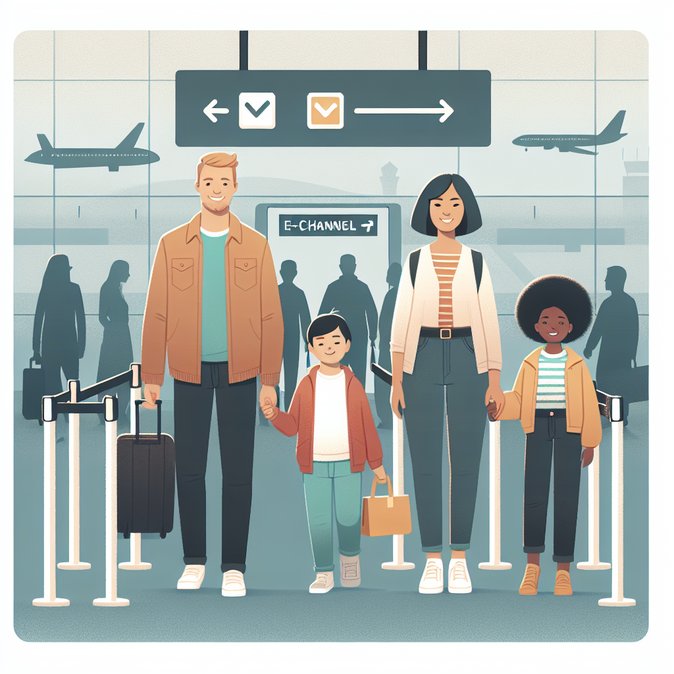
Hong Kong’s Immigration Department (ImmD) has given families travelling to the city an early holiday gift. In a press release issued on 19 December, ImmD announced that, starting Monday 22 December, the minimum age for visitors to use the territory’s automated immigration clearance (e-Channel) system will drop from 11 to seven. The change applies to three categories of non-resident travellers who collectively account for the bulk of cross-boundary arrivals: (1) holders of the Electronic Exit-Entry Permit for Travelling to and from Hong Kong and Macao (e-EEP); (2) holders of electronic ordinary passports issued by the People’s Republic of China; and (3) passengers departing Hong Kong International Airport under the “Smart Departure” programme.
The e-Channel gates use facial-recognition cameras and encrypted travel-document data to match the traveller’s biometrics with the chip in their permit or passport. The process typically takes 20–30 seconds—significantly faster than presenting documents at a staffed counter—and requires no prior enrolment. ImmD says the lower age threshold will reduce queues at peak periods while aligning visitor eligibility with the seven-and-up standard already granted to Hong Kong residents earlier this year.
Travellers who still need to secure the appropriate visas or travel permits before benefiting from the upgraded e-Channel can simplify that step by using VisaHQ. The platform (https://www.visahq.com/hong-kong/) walks applicants through Hong Kong’s entry requirements, handles document uploads and courier logistics, and supports visa needs for other destinations as well—helping families and corporate groups arrive with complete paperwork and fewer surprises at the border.
![Hong Kong lowers e-Channel clearance age for visiting PRC passport and e-EEP holders to 7]()
For mobility managers, the upgrade removes a recurring pain-point when relocating employees with primary-school-age children or arranging incentive trips that involve family members. Previously, parents could sail through e-Channel while children under 11 were diverted to manual counters—sometimes creating logistical headaches and missed transport connections. From Monday, entire families can clear immigration together, easing the hand-off to ground transport and reducing duty-of-care exposures for travel organisers.
Companies should update pre-trip briefings, intranet FAQs and arrival letters to reflect the new age rule, and remind staff that children must still reach the minimum height of 1.1 metres to be recognised by the cameras. ImmD has confirmed that close to 700 e-Channel gates are now in service across all sea, land and air control points, giving visitors multiple self-service options even if one checkpoint experiences a surge.
Looking ahead, officials hinted that future iterations of e-Channel may incorporate iris or palm-vein recognition—technologies already piloted at Shenzhen and Singapore Changi—to further accelerate clearance and accommodate travellers who wear masks for medical reasons. For now, however, the immediate win is clear: faster family travel at one of Asia’s busiest gateways.
The e-Channel gates use facial-recognition cameras and encrypted travel-document data to match the traveller’s biometrics with the chip in their permit or passport. The process typically takes 20–30 seconds—significantly faster than presenting documents at a staffed counter—and requires no prior enrolment. ImmD says the lower age threshold will reduce queues at peak periods while aligning visitor eligibility with the seven-and-up standard already granted to Hong Kong residents earlier this year.
Travellers who still need to secure the appropriate visas or travel permits before benefiting from the upgraded e-Channel can simplify that step by using VisaHQ. The platform (https://www.visahq.com/hong-kong/) walks applicants through Hong Kong’s entry requirements, handles document uploads and courier logistics, and supports visa needs for other destinations as well—helping families and corporate groups arrive with complete paperwork and fewer surprises at the border.
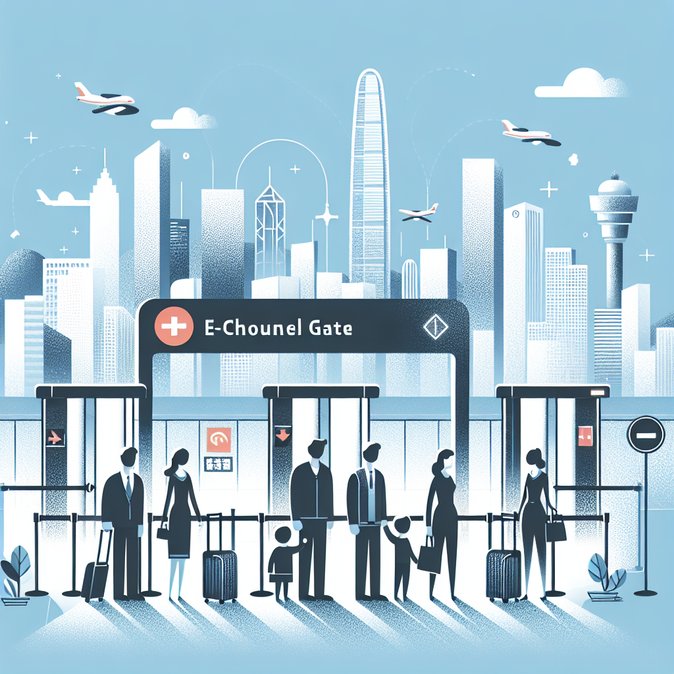
For mobility managers, the upgrade removes a recurring pain-point when relocating employees with primary-school-age children or arranging incentive trips that involve family members. Previously, parents could sail through e-Channel while children under 11 were diverted to manual counters—sometimes creating logistical headaches and missed transport connections. From Monday, entire families can clear immigration together, easing the hand-off to ground transport and reducing duty-of-care exposures for travel organisers.
Companies should update pre-trip briefings, intranet FAQs and arrival letters to reflect the new age rule, and remind staff that children must still reach the minimum height of 1.1 metres to be recognised by the cameras. ImmD has confirmed that close to 700 e-Channel gates are now in service across all sea, land and air control points, giving visitors multiple self-service options even if one checkpoint experiences a surge.
Looking ahead, officials hinted that future iterations of e-Channel may incorporate iris or palm-vein recognition—technologies already piloted at Shenzhen and Singapore Changi—to further accelerate clearance and accommodate travellers who wear masks for medical reasons. For now, however, the immediate win is clear: faster family travel at one of Asia’s busiest gateways.