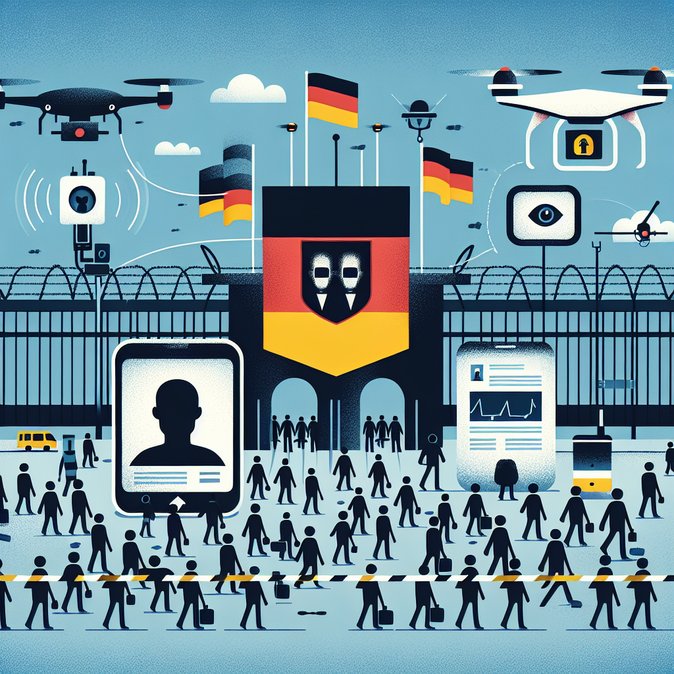
In a heated plenary session on 18 December, MPs exchanged blows over the government’s draft "Modernisation of the Federal Police Act", which would give the Bundespolizei broader authority to deploy drones, use real-time facial recognition at airports and railway hubs, and conduct mobile checks up to 30 km inside Germany’s borders.
Supporters from the CDU/CSU–SPD coalition argued the tools are indispensable to curb irregular migration and dismantle smuggling networks that have shifted routes after this year’s Balkan crack-downs. Interior Minister Alexander Dobrindt told parliament that temporary Schengen controls introduced in 2024 had stopped 58,000 unauthorised entries but were "resource-intensive and technologically outdated".
![Parliament debates new Bundespolizei law widening border-control powers]()
Whether you’re an HR professional overseeing international assignments or a traveller arranging a quick business visit, VisaHQ’s Germany hub (https://www.visahq.com/germany/) can streamline the paperwork and keep you alert to evolving border-control measures. The service delivers real-time visa guidance, renewal reminders and document-processing support—valuable safeguards if intermittent in-country ID checks start eating into tight travel schedules.
Opposition parties warned of mission creep. The Greens fear bulk data collection could deter legitimate business travellers, while the Liberal FDP demanded strict sunset clauses and independent oversight. Corporate mobility managers are watching closely: random ID checks beyond the immediate border could slow airport transfers and coach services used for assignee orientation trips.
The draft now heads to the Home Affairs Committee, which will hear expert testimony in January. If the law passes unchanged, HR departments should brief travellers that passport or residence-permit checks may occur well inside German territory and factor buffer time into schedules, especially on high-risk routes from Austria, Poland and the Czech Republic.
Supporters from the CDU/CSU–SPD coalition argued the tools are indispensable to curb irregular migration and dismantle smuggling networks that have shifted routes after this year’s Balkan crack-downs. Interior Minister Alexander Dobrindt told parliament that temporary Schengen controls introduced in 2024 had stopped 58,000 unauthorised entries but were "resource-intensive and technologically outdated".

Whether you’re an HR professional overseeing international assignments or a traveller arranging a quick business visit, VisaHQ’s Germany hub (https://www.visahq.com/germany/) can streamline the paperwork and keep you alert to evolving border-control measures. The service delivers real-time visa guidance, renewal reminders and document-processing support—valuable safeguards if intermittent in-country ID checks start eating into tight travel schedules.
Opposition parties warned of mission creep. The Greens fear bulk data collection could deter legitimate business travellers, while the Liberal FDP demanded strict sunset clauses and independent oversight. Corporate mobility managers are watching closely: random ID checks beyond the immediate border could slow airport transfers and coach services used for assignee orientation trips.
The draft now heads to the Home Affairs Committee, which will hear expert testimony in January. If the law passes unchanged, HR departments should brief travellers that passport or residence-permit checks may occur well inside German territory and factor buffer time into schedules, especially on high-risk routes from Austria, Poland and the Czech Republic.