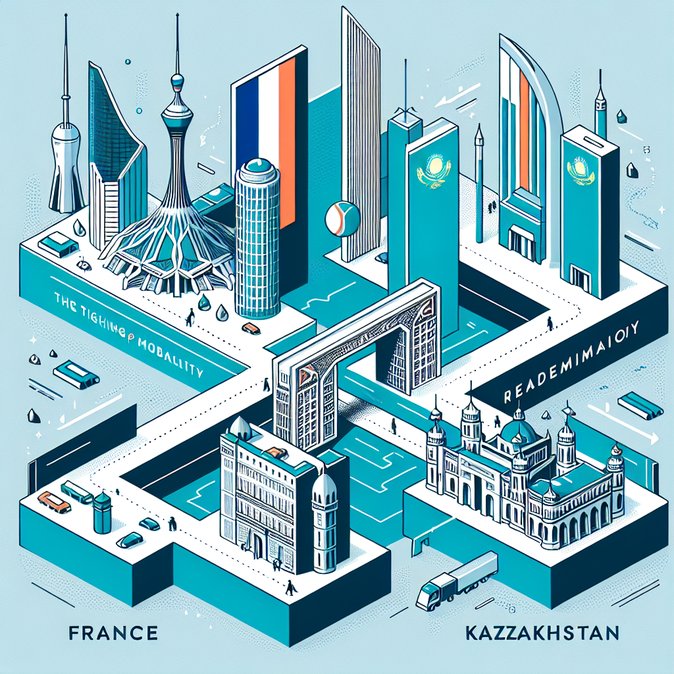
The weekly meeting of France’s Council of Ministers on 17 December 2025 formally endorsed a draft bill that would authorise ratification of a bilateral readmission accord with Kazakhstan.
Signed in Paris on 5 November 2024, the treaty sets out fast-track procedures for identifying and returning French, Kazakh and third-country nationals who no longer meet the conditions of entry or stay in either country. Under the agreement, the state requesting readmission must supply identity evidence within six working days and organise the transfer of the person concerned within 30 days of acceptance, limiting protracted detention. The accord also covers transit operations for return flights routed through the other party’s territory.
![France Moves to Ratify Readmission Agreement With Kazakhstan]()
Against this backdrop, companies and individual travellers can simplify their paperwork by using VisaHQ’s dedicated France platform (https://www.visahq.com/france/). The service consolidates the latest visa requirements, offers step-by-step application assistance and arranges courier delivery, helping HR teams keep assignments compliant even as readmission timelines tighten.
For French employers, the initiative signals a tougher stance on irregular migration ahead of the 2026 presidential campaign. Executives moving staff between Paris and Almaty should ensure work-permit documentation is watertight, as overstaying may now trigger swifter removals. Conversely, the treaty could streamline the return of Kazakh assignees whose projects have ended, reducing administrative costs.
Practically, mobility managers should review compliance checklists for Kazakh nationals in France and brief travellers on the heightened enforcement environment at Schengen external borders and French overseas airports. Companies that rely on short-term project visas should build in additional lead time for security interviews or biometric checks once the law takes effect, likely in mid-2026.
Signed in Paris on 5 November 2024, the treaty sets out fast-track procedures for identifying and returning French, Kazakh and third-country nationals who no longer meet the conditions of entry or stay in either country. Under the agreement, the state requesting readmission must supply identity evidence within six working days and organise the transfer of the person concerned within 30 days of acceptance, limiting protracted detention. The accord also covers transit operations for return flights routed through the other party’s territory.
Against this backdrop, companies and individual travellers can simplify their paperwork by using VisaHQ’s dedicated France platform (https://www.visahq.com/france/). The service consolidates the latest visa requirements, offers step-by-step application assistance and arranges courier delivery, helping HR teams keep assignments compliant even as readmission timelines tighten.
For French employers, the initiative signals a tougher stance on irregular migration ahead of the 2026 presidential campaign. Executives moving staff between Paris and Almaty should ensure work-permit documentation is watertight, as overstaying may now trigger swifter removals. Conversely, the treaty could streamline the return of Kazakh assignees whose projects have ended, reducing administrative costs.
Practically, mobility managers should review compliance checklists for Kazakh nationals in France and brief travellers on the heightened enforcement environment at Schengen external borders and French overseas airports. Companies that rely on short-term project visas should build in additional lead time for security interviews or biometric checks once the law takes effect, likely in mid-2026.