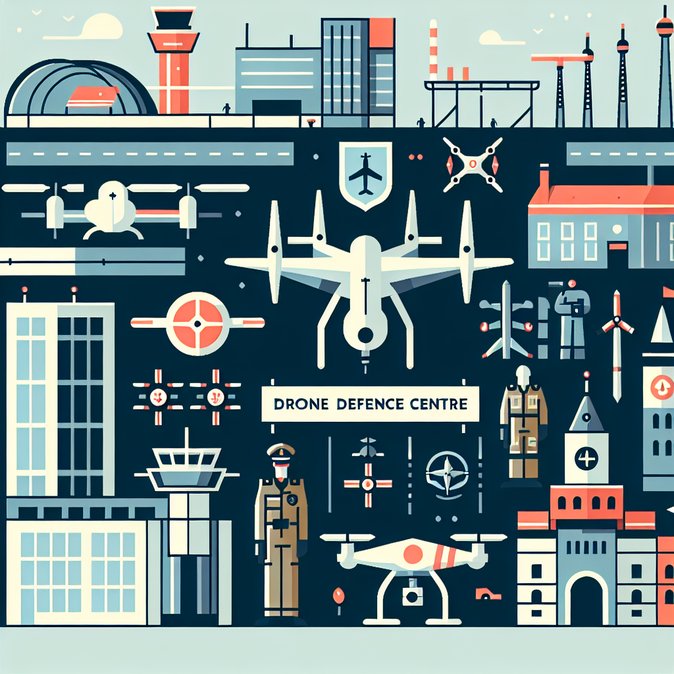
Germany today inaugurated the Joint Drone Defence Centre (Gemeinsame Drohnenabwehrzentrum – GDAZ) in Berlin, bringing under one roof the federal police (Bundespolizei), the Bundeswehr, state police forces and the Federal Criminal Police Office for the first time. Housed at the Interior Ministry’s crisis-response complex, the centre will operate around the clock to detect, analyse and – where legally possible – neutralise hostile, reckless or unidentified drones that threaten airports, critical infrastructure or mass gatherings.
Background – Civil-use drones have exploded in popularity in Germany: the Transport Ministry estimates more than 1 million systems in circulation. At the same time, security agencies recorded 183 illegal drone incidents near German airports in 2024 – up 40 percent year-on-year – including an episode that closed Frankfurt Airport for 45 minutes and disrupted 180 flights. Intelligence services also link several unexplained drone sightings at LNG terminals and Bundeswehr training areas to Russian reconnaissance. Until now, competencies were fragmented between the Luftwaffe’s anti-aircraft units, the federal police (responsible for aviation security) and the 16 Länder police forces.
For international business travellers now weighing trips to Germany, ensuring that travel documents and visas are in order is just as critical as monitoring potential flight disruptions. VisaHQ’s online platform (https://www.visahq.com/germany/) offers a streamlined way to check entry requirements, complete visa applications and receive real-time status updates, allowing companies to keep their staff mobile even as new drone-security protocols come into force.
![Germany opens 24/7 national drone-defence centre in Berlin]()
What the new centre does – The GDAZ will act as a real-time fusion hub, pooling radar feeds, radio-frequency sensors and camera networks deployed by individual authorities. A joint situation picture will allow specialists to attribute drones, classify intent and decide which agency has legal authority to act – for instance, electronic jamming by the Bundeswehr or a police marksman in the airport precinct. The Interior Ministry stresses that existing chains of command remain intact; the centre’s value lies in speed and common rules of engagement.
Business-travel and mobility impact – Frequent flyers and corporate travel managers can expect fewer last-minute air-space closures once the coordinated response is bedded in. Airports are installing geo-fencing beacons that force compliant drones to land automatically, and the government is drafting amendments to the Aviation Security Act that would grant police limited ‘soft-kill’ powers within 5 km of runways. Logistics companies experimenting with delivery drones gain regulatory clarity but will need to integrate their fleet telemetry with the GDAZ network.
Looking ahead – Phase-two (mid-2026) will extend coverage to Germany’s seaports and major rail hubs; phase-three aims for an EU-level data exchange. Companies operating critical infrastructure should audit their drone-response plans and designate a liaison officer for the centre – a prerequisite that will be written into forthcoming security directives.
Background – Civil-use drones have exploded in popularity in Germany: the Transport Ministry estimates more than 1 million systems in circulation. At the same time, security agencies recorded 183 illegal drone incidents near German airports in 2024 – up 40 percent year-on-year – including an episode that closed Frankfurt Airport for 45 minutes and disrupted 180 flights. Intelligence services also link several unexplained drone sightings at LNG terminals and Bundeswehr training areas to Russian reconnaissance. Until now, competencies were fragmented between the Luftwaffe’s anti-aircraft units, the federal police (responsible for aviation security) and the 16 Länder police forces.
For international business travellers now weighing trips to Germany, ensuring that travel documents and visas are in order is just as critical as monitoring potential flight disruptions. VisaHQ’s online platform (https://www.visahq.com/germany/) offers a streamlined way to check entry requirements, complete visa applications and receive real-time status updates, allowing companies to keep their staff mobile even as new drone-security protocols come into force.
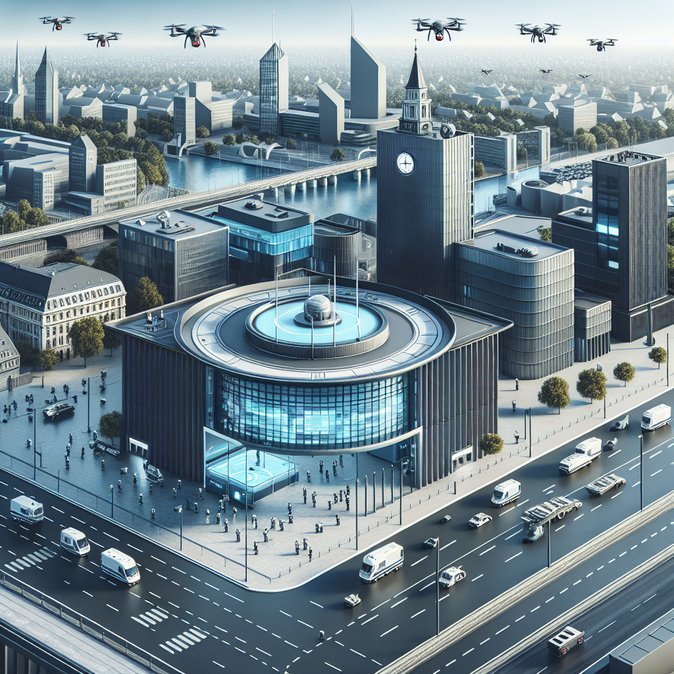
What the new centre does – The GDAZ will act as a real-time fusion hub, pooling radar feeds, radio-frequency sensors and camera networks deployed by individual authorities. A joint situation picture will allow specialists to attribute drones, classify intent and decide which agency has legal authority to act – for instance, electronic jamming by the Bundeswehr or a police marksman in the airport precinct. The Interior Ministry stresses that existing chains of command remain intact; the centre’s value lies in speed and common rules of engagement.
Business-travel and mobility impact – Frequent flyers and corporate travel managers can expect fewer last-minute air-space closures once the coordinated response is bedded in. Airports are installing geo-fencing beacons that force compliant drones to land automatically, and the government is drafting amendments to the Aviation Security Act that would grant police limited ‘soft-kill’ powers within 5 km of runways. Logistics companies experimenting with delivery drones gain regulatory clarity but will need to integrate their fleet telemetry with the GDAZ network.
Looking ahead – Phase-two (mid-2026) will extend coverage to Germany’s seaports and major rail hubs; phase-three aims for an EU-level data exchange. Companies operating critical infrastructure should audit their drone-response plans and designate a liaison officer for the centre – a prerequisite that will be written into forthcoming security directives.