The Brussels-Capital Region’s Expat Welcome Desk has released a detailed briefing on how the EU’s new Entry/Exit System (EES) and the forthcoming ETIAS travel authorisation will affect non-EU nationals visiting or residing in Belgium. The note, dated 16 December 2025, explains that the EES has been fully operational at Belgian borders since late October and is already replacing passport stamps with biometric registration.
Under EES, fingerprints and facial images are captured the first time a traveller enters the Schengen Area and then verified at each subsequent crossing. The system automatically calculates remaining days of stay under the 90/180-day rule and flags overstays in real time. Non-EU assignees and frequent business visitors should therefore monitor their Schengen days even more carefully; inadvertent overstays will surface immediately at exit and could trigger fines or future entry bans.
For travellers and employers looking for practical assistance with these evolving entry rules, VisaHQ can simplify the process. Through its Belgium portal (https://www.visahq.com/belgium/), the service provides step-by-step guidance on Schengen-day calculations, ETIAS pre-authorisation, and any supporting visa paperwork, helping companies and individuals stay fully compliant without last-minute surprises.
![Brussels Expat Welcome Desk Issues Guidance on New EES and Upcoming ETIAS Requirements]()
The desk also confirms that ETIAS, the EU’s electronic travel authorisation for visa-exempt nationals, will launch in Q4 2026 with a six-month grace period before it becomes mandatory in April 2027. Companies that rotate staff from the US, UK, Canada or Japan into Belgium should prepare to incorporate ETIAS checks into travel-approval workflows next year.
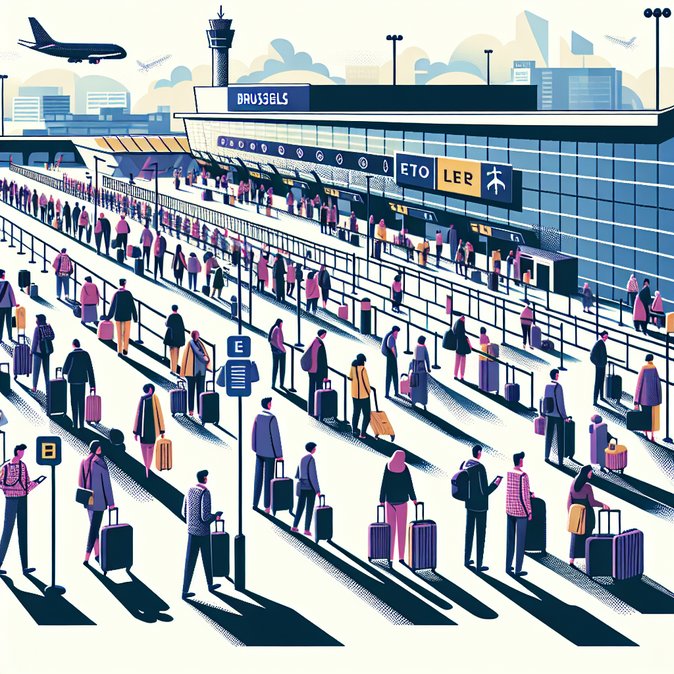
To cope with higher processing times, Brussels Airport has installed 61 self-service pre-registration kiosks and 36 new e-gates, but officials warn that queues may still lengthen during the learning phase. The Expat Desk recommends arriving at least 30 minutes earlier than pre-EES practice and ensuring passports are machine-readable and undamaged.
Finally, the briefing underscores data-privacy safeguards: biometric data are stored by the Federal Police under EU GDPR rules and retained for three years after the traveller’s last exit. Employers should update privacy notices and inform travelling staff accordingly.
Under EES, fingerprints and facial images are captured the first time a traveller enters the Schengen Area and then verified at each subsequent crossing. The system automatically calculates remaining days of stay under the 90/180-day rule and flags overstays in real time. Non-EU assignees and frequent business visitors should therefore monitor their Schengen days even more carefully; inadvertent overstays will surface immediately at exit and could trigger fines or future entry bans.
For travellers and employers looking for practical assistance with these evolving entry rules, VisaHQ can simplify the process. Through its Belgium portal (https://www.visahq.com/belgium/), the service provides step-by-step guidance on Schengen-day calculations, ETIAS pre-authorisation, and any supporting visa paperwork, helping companies and individuals stay fully compliant without last-minute surprises.

The desk also confirms that ETIAS, the EU’s electronic travel authorisation for visa-exempt nationals, will launch in Q4 2026 with a six-month grace period before it becomes mandatory in April 2027. Companies that rotate staff from the US, UK, Canada or Japan into Belgium should prepare to incorporate ETIAS checks into travel-approval workflows next year.
To cope with higher processing times, Brussels Airport has installed 61 self-service pre-registration kiosks and 36 new e-gates, but officials warn that queues may still lengthen during the learning phase. The Expat Desk recommends arriving at least 30 minutes earlier than pre-EES practice and ensuring passports are machine-readable and undamaged.
Finally, the briefing underscores data-privacy safeguards: biometric data are stored by the Federal Police under EU GDPR rules and retained for three years after the traveller’s last exit. Employers should update privacy notices and inform travelling staff accordingly.