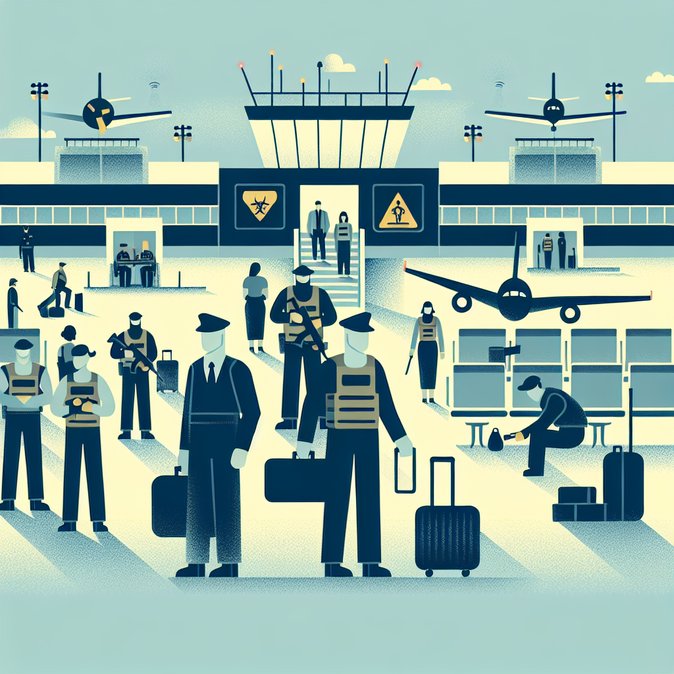
Customs authorities at Brussels Airport sounded the alarm on 16 December after publishing year-end statistics that show narcotics seizures more than doubled in 2025. According to the Federal Public Service (FPS) Finance, officers intercepted 1,767 kg of cannabis and 245 kg of ketamine in passengers’ luggage—up 50 per cent on 2024—while parcel and cargo interceptions also jumped sharply.
Senior customs director Kristian Vanderwaeren told reporters that traffickers are increasingly using Belgium’s main gateway as a transit point between North America and Asia-Pacific. Cannabis shipments now originate largely from the United States, Canada and Thailand, whereas ketamine discovered in hand-carried bags is usually headed for Australia and New Zealand, where street prices can be ten times higher.
For travellers and mobility teams looking to stay ahead of these tightening controls, VisaHQ’s Belgium portal (https://www.visahq.com/belgium/) offers consolidated visa processing, work-permit support and real-time customs guidance, helping assignees arrive with the right documentation and fewer surprises at the border.
![Drug seizures at Brussels Airport soar, prompting tighter passenger screening]()
The spike has operational consequences for corporate mobility teams. Longer secondary inspections could add 30-45 minutes to arrivals processing for passengers randomly selected for swabbing or baggage X-ray. Employers moving assignees through Brussels Airport are being advised to factor the delay into onward travel or relocation schedules and to remind travellers of Belgium’s strict zero-tolerance rules on controlled substances.
Customs officials say the trend is being met with additional resources: plain-clothes patrols inside the arrivals hall, AI-driven risk-profiling of advance passenger information, and closer collaboration with airport police and freight forwarders. The measures are intended to reassure legitimate travellers while maintaining Belgium’s reputation as a fast-transfer hub within the EU’s Schengen Area.
Industry analysts note that heightened enforcement at nearby ports such as Antwerp has already displaced smuggling routes toward passenger channels. If volumes continue to rise, companies could see more frequent spot checks of staff shipments (unaccompanied bags, household goods) as customs widens its net. Global mobility managers should therefore review their compliance briefings and ensure that assignees understand Belgian penalties for drug possession, which include fines and custodial sentences.
Senior customs director Kristian Vanderwaeren told reporters that traffickers are increasingly using Belgium’s main gateway as a transit point between North America and Asia-Pacific. Cannabis shipments now originate largely from the United States, Canada and Thailand, whereas ketamine discovered in hand-carried bags is usually headed for Australia and New Zealand, where street prices can be ten times higher.
For travellers and mobility teams looking to stay ahead of these tightening controls, VisaHQ’s Belgium portal (https://www.visahq.com/belgium/) offers consolidated visa processing, work-permit support and real-time customs guidance, helping assignees arrive with the right documentation and fewer surprises at the border.

The spike has operational consequences for corporate mobility teams. Longer secondary inspections could add 30-45 minutes to arrivals processing for passengers randomly selected for swabbing or baggage X-ray. Employers moving assignees through Brussels Airport are being advised to factor the delay into onward travel or relocation schedules and to remind travellers of Belgium’s strict zero-tolerance rules on controlled substances.
Customs officials say the trend is being met with additional resources: plain-clothes patrols inside the arrivals hall, AI-driven risk-profiling of advance passenger information, and closer collaboration with airport police and freight forwarders. The measures are intended to reassure legitimate travellers while maintaining Belgium’s reputation as a fast-transfer hub within the EU’s Schengen Area.
Industry analysts note that heightened enforcement at nearby ports such as Antwerp has already displaced smuggling routes toward passenger channels. If volumes continue to rise, companies could see more frequent spot checks of staff shipments (unaccompanied bags, household goods) as customs widens its net. Global mobility managers should therefore review their compliance briefings and ensure that assignees understand Belgian penalties for drug possession, which include fines and custodial sentences.