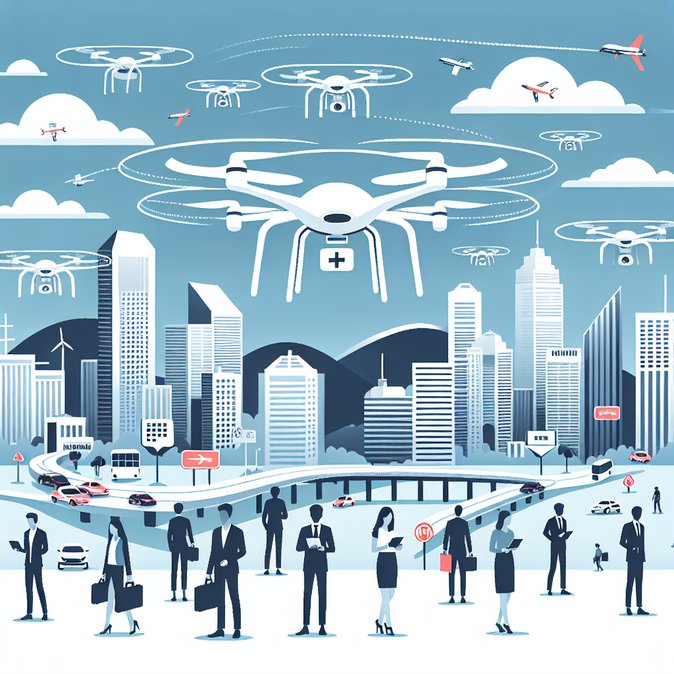
Hong Kong has put a concrete timeline on one of its most eye-catching mobility initiatives: launching large electric vertical-take-off-and-landing (eVTOL) aircraft that can ferry passengers across the city and the wider Greater Bay Area. Speaking at a low-altitude-economy conference in Beijing on 14 December, Deputy Director-General of Civil Aviation Dominic Chow Wing-hang said the city aims to certify and commercially deploy pilotless passenger drones “within the next two to three years.” He stressed that point-to-point fares could be “significantly cheaper than today’s helicopter services,” positioning the aircraft as a mass-market alternative rather than a luxury novelty.
The roadmap builds on the Transport and Logistics Bureau’s “Regulatory Sandbox X,” launched earlier this month, which allows manufacturers such as EHang and AutoFlight to test eVTOL vehicles weighing more than 150 kg along predefined corridors under real-world conditions. The Civil Aviation Department is using data from those trials to draft a type-certification framework, flight-crew licensing rules and vertiport design standards that will mirror—yet streamline—the International Civil Aviation Organization’s emerging global guidance.
Amid these developments, foreign professionals eyeing frequent cross-border mobility will also have to navigate evolving visa and permit requirements. VisaHQ’s Hong Kong office (https://www.visahq.com/hong-kong/) can streamline the paperwork for regional visas and business travel documents, advising companies on the latest entry rules for China, Macau and the wider Greater Bay Area. This allows executives to step straight from an eVTOL cabin to the boardroom without administrative delays.
![Hong Kong sets 2-to-3-year timetable for passenger-carrying drones]()
From a business-mobility perspective, city officials see eVTOLs as a way to relieve saturated ground crossings and allow time-pressed executives to hop between Hong Kong, Shenzhen, Qianhai and Macau in minutes. Industry sources estimate that a 35-kilometre drone flight from Central to Qianhai could take 15 minutes door-to-door, compared with 90 minutes by car during peak hours. The technology also dovetails with Beijing’s push to build a “low-altitude economy” worth ¥1 trillion (US$140 billion) by 2030, giving Hong Kong a chance to anchor regional manufacturing, maintenance and command-and-control hubs.
The city is already preparing physical infrastructure. Airport Authority Hong Kong is mapping sites for rooftop vertiports in Central, Kowloon East and at Hong Kong International Airport’s third-runway district, while the MTR Corporation has floated the idea of integrating drone pads into new rail-station developments. Real-estate giants Sun Hung Kai and Henderson Land are reported to be in talks to retrofit their Grade-A towers with battery-swap stations and passenger lounges.
For global-mobility managers, the announcement underscores Hong Kong’s determination to stay ahead of rival hubs such as Singapore and Dubai in next-generation air mobility. While regulatory certainty is still two years away, multinationals with large commuter flows between Hong Kong and mainland cities should start factoring eVTOL transfers, vertiport locations and new safety rules into their future travel policies and duty-of-care programmes.
The roadmap builds on the Transport and Logistics Bureau’s “Regulatory Sandbox X,” launched earlier this month, which allows manufacturers such as EHang and AutoFlight to test eVTOL vehicles weighing more than 150 kg along predefined corridors under real-world conditions. The Civil Aviation Department is using data from those trials to draft a type-certification framework, flight-crew licensing rules and vertiport design standards that will mirror—yet streamline—the International Civil Aviation Organization’s emerging global guidance.
Amid these developments, foreign professionals eyeing frequent cross-border mobility will also have to navigate evolving visa and permit requirements. VisaHQ’s Hong Kong office (https://www.visahq.com/hong-kong/) can streamline the paperwork for regional visas and business travel documents, advising companies on the latest entry rules for China, Macau and the wider Greater Bay Area. This allows executives to step straight from an eVTOL cabin to the boardroom without administrative delays.
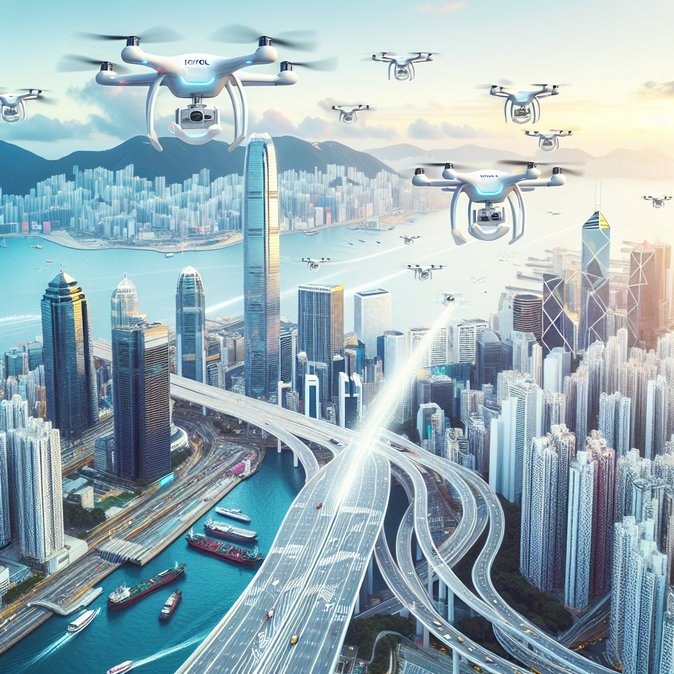
From a business-mobility perspective, city officials see eVTOLs as a way to relieve saturated ground crossings and allow time-pressed executives to hop between Hong Kong, Shenzhen, Qianhai and Macau in minutes. Industry sources estimate that a 35-kilometre drone flight from Central to Qianhai could take 15 minutes door-to-door, compared with 90 minutes by car during peak hours. The technology also dovetails with Beijing’s push to build a “low-altitude economy” worth ¥1 trillion (US$140 billion) by 2030, giving Hong Kong a chance to anchor regional manufacturing, maintenance and command-and-control hubs.
The city is already preparing physical infrastructure. Airport Authority Hong Kong is mapping sites for rooftop vertiports in Central, Kowloon East and at Hong Kong International Airport’s third-runway district, while the MTR Corporation has floated the idea of integrating drone pads into new rail-station developments. Real-estate giants Sun Hung Kai and Henderson Land are reported to be in talks to retrofit their Grade-A towers with battery-swap stations and passenger lounges.
For global-mobility managers, the announcement underscores Hong Kong’s determination to stay ahead of rival hubs such as Singapore and Dubai in next-generation air mobility. While regulatory certainty is still two years away, multinationals with large commuter flows between Hong Kong and mainland cities should start factoring eVTOL transfers, vertiport locations and new safety rules into their future travel policies and duty-of-care programmes.
More From Hong Kong
View all
UK Foreign Office warns dual-national travellers that BNO holders may be treated as Chinese citizens on entry to Hong Kong
Hong Kong Airlines inaugurates thrice-weekly Hong Kong–Melbourne service, adding 93,000 seats a year