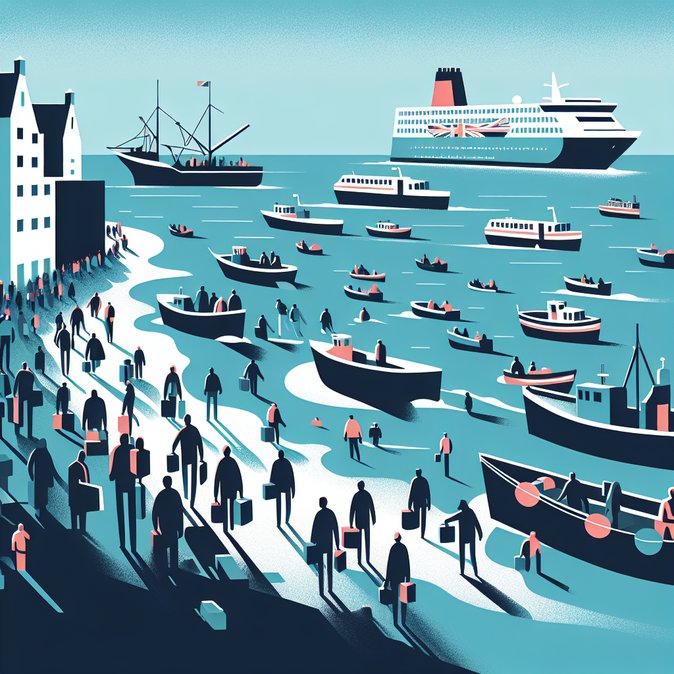
Border Force confirmed on Sunday morning that small-boat crossings in the English Channel restarted on 13 December after a 28-day weather-driven pause – the longest halt since records began in 2018. Hundreds of people were brought ashore at Dover, reviving a politically sensitive issue that had briefly receded from headlines.
Home Secretary Shabana Mahmood told Sky News that more than 20,000 attempted crossings had been prevented so far this year through joint patrols and a £500 million funding deal with France, but conceded that smugglers were “adaptable” and that winter conditions merely delayed, rather than deterred, departures.
For travellers and businesses navigating the knock-on effects of these policy shifts, VisaHQ provides up-to-date visa information, document checking and application support through its UK portal (https://www.visahq.com/united-kingdom/). Corporate mobility teams can quickly confirm requirements for staff transiting Kent ports, helping to minimise unexpected hold-ups at the border.
![Small-Boat Crossings Resume After 28-Day Lull, Putting Channel Migration Back in Spotlight]()
The resumption piles pressure on the government ahead of the holiday travel peak. Airlines and ferry operators fear that any surge in arrivals could trigger ad-hoc Border Force redeployments, lengthening queues for legitimate travellers. Corporate mobility teams should warn staff arriving from EU destinations that processing times at Kent ports may fluctuate unpredictably during the next cold-weather window.
Policy implications are equally stark. Parliament is due to debate secondary legislation in January that would operationalise the UK-France “one-in, one-out” returns pilot and criminalise social-media adverts for crossings. Observers say the weekend’s arrivals will harden back-bench demands for faster implementation – and could complicate Labour’s planned review of safe-route quotas.
Businesses employing seasonal EU workers should follow proceedings closely: any accelerated removal mechanism could reduce availability of short-notice labour in agriculture, hospitality and logistics if workers fall foul of visa conditions or encounter documentation delays.
Home Secretary Shabana Mahmood told Sky News that more than 20,000 attempted crossings had been prevented so far this year through joint patrols and a £500 million funding deal with France, but conceded that smugglers were “adaptable” and that winter conditions merely delayed, rather than deterred, departures.
For travellers and businesses navigating the knock-on effects of these policy shifts, VisaHQ provides up-to-date visa information, document checking and application support through its UK portal (https://www.visahq.com/united-kingdom/). Corporate mobility teams can quickly confirm requirements for staff transiting Kent ports, helping to minimise unexpected hold-ups at the border.

The resumption piles pressure on the government ahead of the holiday travel peak. Airlines and ferry operators fear that any surge in arrivals could trigger ad-hoc Border Force redeployments, lengthening queues for legitimate travellers. Corporate mobility teams should warn staff arriving from EU destinations that processing times at Kent ports may fluctuate unpredictably during the next cold-weather window.
Policy implications are equally stark. Parliament is due to debate secondary legislation in January that would operationalise the UK-France “one-in, one-out” returns pilot and criminalise social-media adverts for crossings. Observers say the weekend’s arrivals will harden back-bench demands for faster implementation – and could complicate Labour’s planned review of safe-route quotas.
Businesses employing seasonal EU workers should follow proceedings closely: any accelerated removal mechanism could reduce availability of short-notice labour in agriculture, hospitality and logistics if workers fall foul of visa conditions or encounter documentation delays.