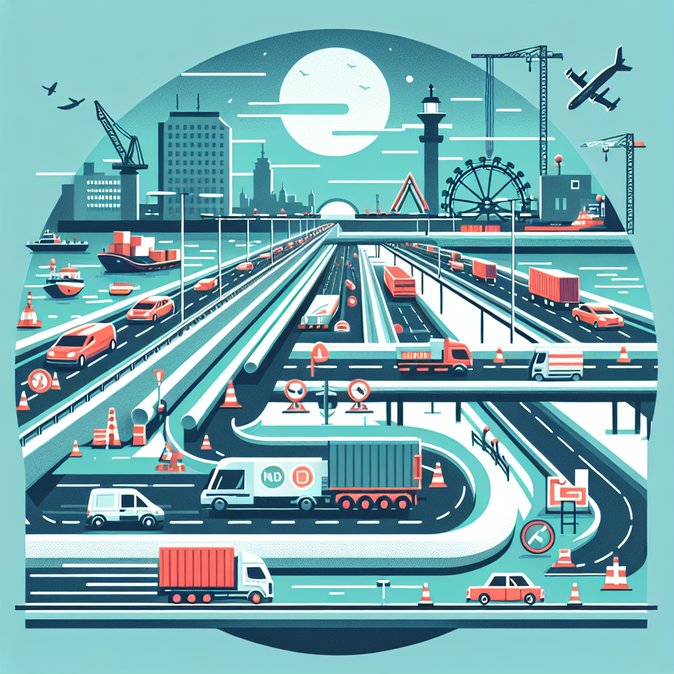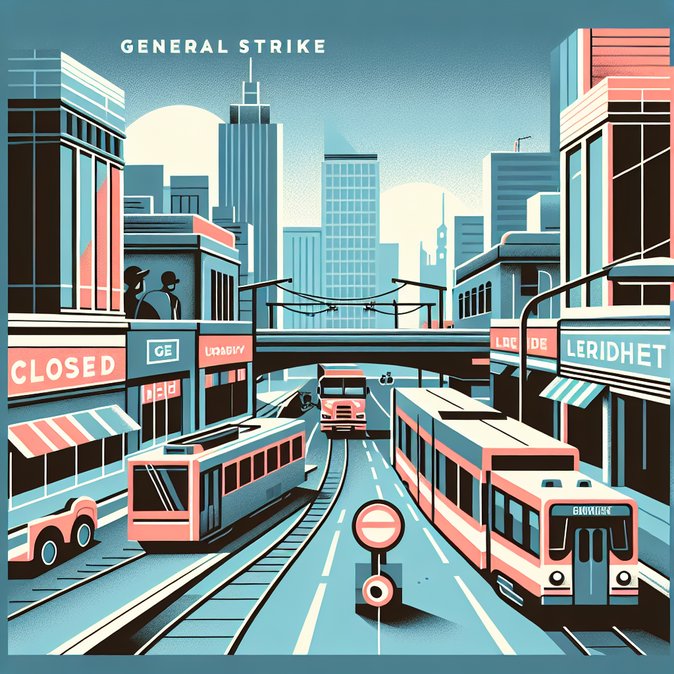
A 24-hour general strike led by Italy’s largest trade-union confederation CGIL on 12 December 2025 brought large parts of the country’s mobility infrastructure to a stand-still. Trains were the worst hit: state operator Trenitalia cancelled or rescheduled hundreds of regional and long-distance services, while high-speed rival Italo ran a heavily reduced timetable. Urban transport authorities in Rome, Milan, Naples and Turin curtailed metro and bus frequencies, and Venice’s ACTV suspended several vaporetti lines except for a skeleton service on the car-ferry Line 17 across the lagoon.
The walk-out was called to protest the draft 2026 Budget Law, which unions say under-funds health care, education and wage growth. CGIL’s secretary Maurizio Landini told a rally of 30,000 protesters in Florence that “low salaries are Italy’s real emergency”, accusing Prime Minister Giorgia Meloni’s government of ignoring inflation and precarious work. Cabinet members dismissed the action as politically motivated, but the Ministry of Transport confirmed that contingency staffing was insufficient to guarantee normal service.
For mobility managers the timing—two weeks before the Christmas peak—was awkward. Companies moving project teams between Italian cities had to re-book last-minute flights or lay on coaches, incurring higher costs and lost productivity. Supply-chain operators reported delays on rail-freight corridors linking the ports of Genoa and Trieste to central Europe, although trucking continued with minor slow-downs on the A1 and A14 motorways.
![Nation-wide 24-hour strike paralyses Italy’s transport network and delays corporate travel]()
For international staff caught up in such disruptions, verifying travel documents can be just as critical as securing alternative transport. VisaHQ’s dedicated Italy page (https://www.visahq.com/italy/) simplifies the process of checking visa requirements, requesting urgent extensions, or arranging emergency business visas at short notice, ensuring that documentation keeps pace with rapidly changing itineraries.
Travellers learned several practical lessons. First, Italy no longer maintains a statutory ‘guaranteed time-band’ for high-speed rail during national strikes, so even premium services can be cancelled outright. Second, electronic tickets issued by Trenitalia and Italo remain valid for 48 hours on the first available service, but seat availability is not assured. Finally, any future strike notices should trigger immediate passport-carrying reminders for cross-border staff, as ad-hoc route changes can push travellers through Austria or Slovenia where ID checks are temporarily in force.
CGIL signalled more industrial action if the budget is not amended before the Senate’s final vote expected on 22 December. Mobility teams therefore face a real possibility of further disruptions in the last working week of the year—right when many expats fly home or start year-end assignment moves.
The walk-out was called to protest the draft 2026 Budget Law, which unions say under-funds health care, education and wage growth. CGIL’s secretary Maurizio Landini told a rally of 30,000 protesters in Florence that “low salaries are Italy’s real emergency”, accusing Prime Minister Giorgia Meloni’s government of ignoring inflation and precarious work. Cabinet members dismissed the action as politically motivated, but the Ministry of Transport confirmed that contingency staffing was insufficient to guarantee normal service.
For mobility managers the timing—two weeks before the Christmas peak—was awkward. Companies moving project teams between Italian cities had to re-book last-minute flights or lay on coaches, incurring higher costs and lost productivity. Supply-chain operators reported delays on rail-freight corridors linking the ports of Genoa and Trieste to central Europe, although trucking continued with minor slow-downs on the A1 and A14 motorways.
For international staff caught up in such disruptions, verifying travel documents can be just as critical as securing alternative transport. VisaHQ’s dedicated Italy page (https://www.visahq.com/italy/) simplifies the process of checking visa requirements, requesting urgent extensions, or arranging emergency business visas at short notice, ensuring that documentation keeps pace with rapidly changing itineraries.
Travellers learned several practical lessons. First, Italy no longer maintains a statutory ‘guaranteed time-band’ for high-speed rail during national strikes, so even premium services can be cancelled outright. Second, electronic tickets issued by Trenitalia and Italo remain valid for 48 hours on the first available service, but seat availability is not assured. Finally, any future strike notices should trigger immediate passport-carrying reminders for cross-border staff, as ad-hoc route changes can push travellers through Austria or Slovenia where ID checks are temporarily in force.
CGIL signalled more industrial action if the budget is not amended before the Senate’s final vote expected on 22 December. Mobility teams therefore face a real possibility of further disruptions in the last working week of the year—right when many expats fly home or start year-end assignment moves.
More From Italy
View all
Sea Watch 5 allowed to land minors in Pantelleria after four-day standoff with Italian authorities
UK confirms 25 February 2026 ‘no ETA, no flight’ rule—Italian leisure and business travellers must apply in advance