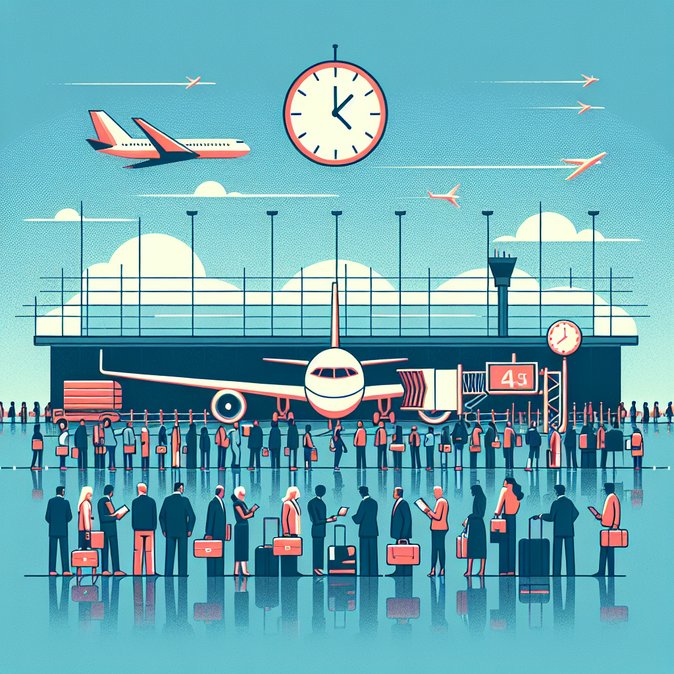
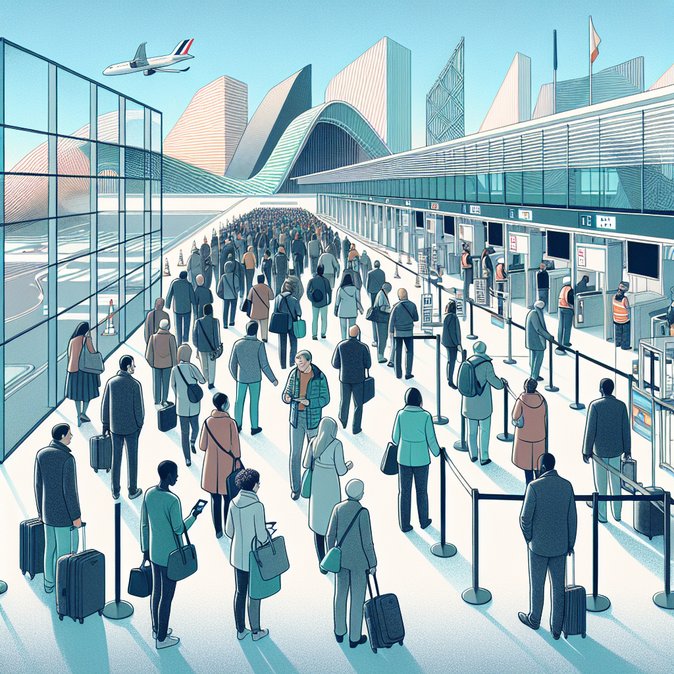
Paris-Charles-de-Gaulle (CDG) and Paris-Orly are warning that non-EU passengers could face passport-control waits of up to four hours over the Christmas period, as France’s Police aux Frontières presses ahead with the EU Entry/Exit System (EES). The new scheme, live since 12 October, requires first-time Schengen visitors to provide facial images and four fingerprints before entering France. Analysts note that British leisure and business travellers—now treated as third-country nationals—will make up a large share of first-time enrolees this month.
Although airlines and airport operators support EES in principle, they say a phased roll-out during one of the busiest travel seasons was always going to be risky. A single biometric enrolment can take 90 seconds, compared with the 30-second passport scan it replaces; multiplied by the 47,000 daily arrivals CDG handles at peak, even minor glitches can cascade into multi-hour queues.
Air France and Aéroports de Paris have redeployed staff to help travellers use the new kiosks and have added clearer signage in English, French and Spanish.
![Paris airports brace for four-hour queues as EU biometric border checks hit peak holiday rush]()
For travellers who want to be absolutely certain their paperwork is in order before facing the new biometric kiosks, VisaHQ can remove much of the guesswork. Through its France portal (https://www.visahq.com/france/), the service allows passengers to check real-time visa requirements, pre-screen passport validity, and even arrange expedited renewals—streamlining the process and reducing the risk of delays at the EES barrier.
Nevertheless, unions representing border guards say staffing levels remain inadequate and warn that overtime budgets are already exhausted. Corporate-mobility managers are therefore advising assignees and frequent flyers to schedule longer connection times, travel with printed meeting invitations, and—if possible—arrive on flights that land outside the 07:00-11:00 and 17:00-21:00 peaks.
From an immigration-compliance standpoint, EES will eventually make overstays far easier to detect and will eliminate the “missing stamp” problem that has plagued posted-worker audits since Brexit. Yet the immediate business impact is operational: missed rail and domestic-flight connections, additional hotel nights, and the risk that key staff start important meetings fatigued or delayed. Travel-risk teams are also updating duty-of-care protocols, reminding travellers to carry medication and power banks in hand luggage in case of prolonged border-hall waits.
Looking beyond Christmas, the French Interior Ministry intends to enrol at least 35 % of all external-border crossings in EES within three months. A full roll-out—covering Orly, Nice, Lyon, Marseille, and the juxtaposed controls in the UK—is slated for April 2026. Until the system beds in, global-mobility leaders should keep contingency plans in place and build extra lead-time into project schedules.
Although airlines and airport operators support EES in principle, they say a phased roll-out during one of the busiest travel seasons was always going to be risky. A single biometric enrolment can take 90 seconds, compared with the 30-second passport scan it replaces; multiplied by the 47,000 daily arrivals CDG handles at peak, even minor glitches can cascade into multi-hour queues.
Air France and Aéroports de Paris have redeployed staff to help travellers use the new kiosks and have added clearer signage in English, French and Spanish.
For travellers who want to be absolutely certain their paperwork is in order before facing the new biometric kiosks, VisaHQ can remove much of the guesswork. Through its France portal (https://www.visahq.com/france/), the service allows passengers to check real-time visa requirements, pre-screen passport validity, and even arrange expedited renewals—streamlining the process and reducing the risk of delays at the EES barrier.
Nevertheless, unions representing border guards say staffing levels remain inadequate and warn that overtime budgets are already exhausted. Corporate-mobility managers are therefore advising assignees and frequent flyers to schedule longer connection times, travel with printed meeting invitations, and—if possible—arrive on flights that land outside the 07:00-11:00 and 17:00-21:00 peaks.
From an immigration-compliance standpoint, EES will eventually make overstays far easier to detect and will eliminate the “missing stamp” problem that has plagued posted-worker audits since Brexit. Yet the immediate business impact is operational: missed rail and domestic-flight connections, additional hotel nights, and the risk that key staff start important meetings fatigued or delayed. Travel-risk teams are also updating duty-of-care protocols, reminding travellers to carry medication and power banks in hand luggage in case of prolonged border-hall waits.
Looking beyond Christmas, the French Interior Ministry intends to enrol at least 35 % of all external-border crossings in EES within three months. A full roll-out—covering Orly, Nice, Lyon, Marseille, and the juxtaposed controls in the UK—is slated for April 2026. Until the system beds in, global-mobility leaders should keep contingency plans in place and build extra lead-time into project schedules.