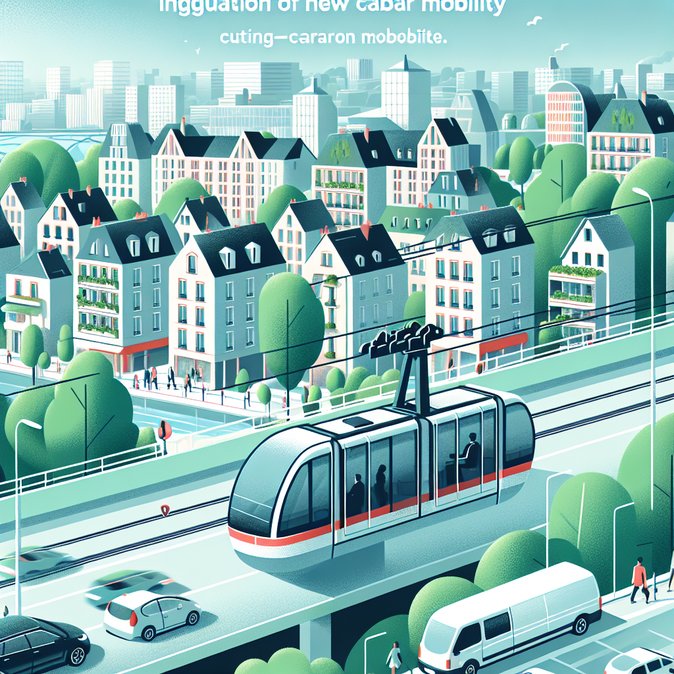
At 11 a.m. on 13 December the first ten-seater gondola of the Câble C1 glided out of Créteil-Pointe-du-Lac station, marking France’s entry into the small club of countries using aerial cable cars as part of everyday public transport. The 4.5-kilometre line links four underserved suburbs—Créteil, Limeil-Brévannes, Valenton and Villeneuve-Saint-Georges—in just 17 minutes, bypassing freight yards and motorways that have long hampered bus reliability.
Funded by Île-de-France Mobilités and operated by Transdev, the system expects 11,000 passengers a day, many of them hospital staff and students commuting to the booming biocluster south-east of Paris. Fares are fully integrated into the Navigo pass, so expatriates and business travellers posted to the capital can use existing travel cards without surcharges.
![Île-de-France launches Câble C1, France’s first urban cable-car line]()
For internationally mobile employees and their HR managers, arranging the right paperwork is every bit as important as securing a smooth commute. VisaHQ’s France platform (https://www.visahq.com/france/) simplifies applications for work permits, talent-passport visas and dependents’ documents, offering online filing, real-time tracking and expert guidance—helping newcomers settle in and start riding the city’s growing network of eco-friendly transport options without administrative delays.
While the project is domestic, it matters for global mobility: Paris is the most popular city for intra-company transfers in continental Europe, and assignees often settle in affordable outer suburbs with poor east-west public-transport links. Faster, low-carbon options could therefore expand the housing radius available to multinational employers.
Urban-cable experts point to Medellín and La Paz as proof that gondolas can knit fragmented suburbs into metropolitan labour markets. Île-de-France has already green-lit four additional lines for 2026-28, hinting at a broader rethink of last-mile mobility that will benefit internationally mobile staff and their families.
Funded by Île-de-France Mobilités and operated by Transdev, the system expects 11,000 passengers a day, many of them hospital staff and students commuting to the booming biocluster south-east of Paris. Fares are fully integrated into the Navigo pass, so expatriates and business travellers posted to the capital can use existing travel cards without surcharges.

For internationally mobile employees and their HR managers, arranging the right paperwork is every bit as important as securing a smooth commute. VisaHQ’s France platform (https://www.visahq.com/france/) simplifies applications for work permits, talent-passport visas and dependents’ documents, offering online filing, real-time tracking and expert guidance—helping newcomers settle in and start riding the city’s growing network of eco-friendly transport options without administrative delays.
While the project is domestic, it matters for global mobility: Paris is the most popular city for intra-company transfers in continental Europe, and assignees often settle in affordable outer suburbs with poor east-west public-transport links. Faster, low-carbon options could therefore expand the housing radius available to multinational employers.
Urban-cable experts point to Medellín and La Paz as proof that gondolas can knit fragmented suburbs into metropolitan labour markets. Île-de-France has already green-lit four additional lines for 2026-28, hinting at a broader rethink of last-mile mobility that will benefit internationally mobile staff and their families.