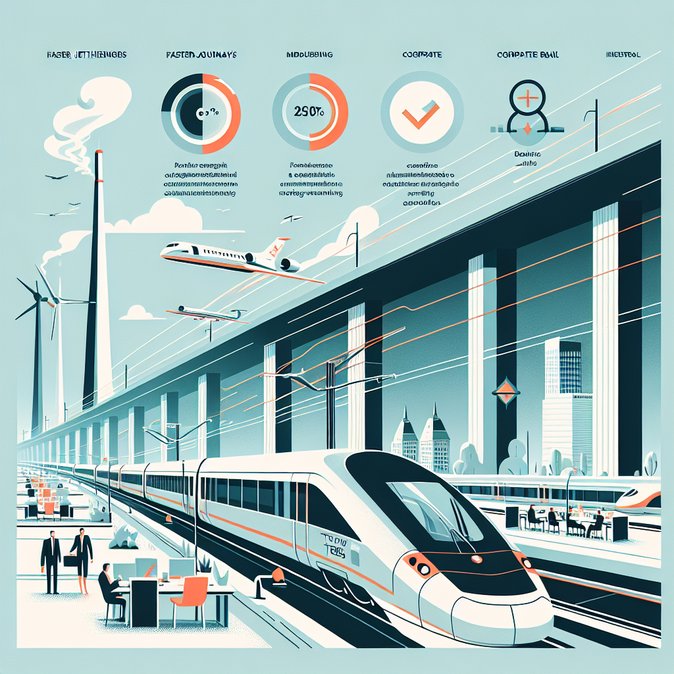
Alstom and SNCF Voyageurs confirmed on Thursday that they have lodged the last technical dossiers for the TGV-M high-speed train with the European Union Agency for Railways, keeping the programme on track for commercial launch on 1 July 2026. The ‘M’ stands for « modulaire » – a reference to wide-body coaches that can be re-configured for premium, standard or café modules within hours. The first route will link Paris-Gare du Nord with Brussels-Midi in 1 hr 20 min, shaving 15 minutes off current best timings.
For France the approval is more than a technological milestone; it underpins government pledges to shift 15 % of short-haul air traffic to rail by 2030. Business travellers who routinely hop between European capitals stand to gain faster door-to-door times and a lower-carbon alternative eligible for many corporate sustainability targets.
Business travellers heading from France to Belgium—and onward to the UK via through-ticketing—will still need to ensure their travel documents are in order. VisaHQ’s online platform (https://www.visahq.com/france/) streamlines visa and passport services with door-to-door courier options and real-time status updates, allowing corporate mobility managers to integrate seamless document compliance into the new rail-first itineraries. Whether it’s a Schengen renewal, a last-minute UK entry visa, or guidance on electronic travel authorisations, VisaHQ keeps teams moving just as fast as the TGV-M.
![Next-generation TGV-M clears final certification hurdle, paving way for Paris-Brussels debut in July 2026]()
The TGV-M’s passenger experience is also a step up: 5G-ready wifi, larger work tables, and 20 % more overhead luggage space address long-standing complaints from laptop-toting executives. Accessibility has improved too, with level boarding and tactile signage. Power consumption per seat-kilometre is 20 % lower than previous TGVs, thanks to regenerative braking and lightweight composite bogies.
Supply-chain watchers note that the project has weathered component shortages by dual-sourcing critical semiconductors, a strategy SNCF Voyageurs says will allow it to receive two train-sets a month from April 2026. That cadence should see at least 15 train-sets available for the initial Paris-Brussels/Lille service and for pilot runs to Lyon before year-end 2026.
Corporate mobility teams should start mapping rail-first travel policies now. Once in service, the Paris-Brussels corridor will support up to 12 round trips a day, with fully flexible business-class fares priced 15 % below equivalent air shuttles. Eurostar – now a partner in the TGV-M joint timetable – plans through-ticketing to London, extending low-carbon options for cross-Channel commuters.
For France the approval is more than a technological milestone; it underpins government pledges to shift 15 % of short-haul air traffic to rail by 2030. Business travellers who routinely hop between European capitals stand to gain faster door-to-door times and a lower-carbon alternative eligible for many corporate sustainability targets.
Business travellers heading from France to Belgium—and onward to the UK via through-ticketing—will still need to ensure their travel documents are in order. VisaHQ’s online platform (https://www.visahq.com/france/) streamlines visa and passport services with door-to-door courier options and real-time status updates, allowing corporate mobility managers to integrate seamless document compliance into the new rail-first itineraries. Whether it’s a Schengen renewal, a last-minute UK entry visa, or guidance on electronic travel authorisations, VisaHQ keeps teams moving just as fast as the TGV-M.

The TGV-M’s passenger experience is also a step up: 5G-ready wifi, larger work tables, and 20 % more overhead luggage space address long-standing complaints from laptop-toting executives. Accessibility has improved too, with level boarding and tactile signage. Power consumption per seat-kilometre is 20 % lower than previous TGVs, thanks to regenerative braking and lightweight composite bogies.
Supply-chain watchers note that the project has weathered component shortages by dual-sourcing critical semiconductors, a strategy SNCF Voyageurs says will allow it to receive two train-sets a month from April 2026. That cadence should see at least 15 train-sets available for the initial Paris-Brussels/Lille service and for pilot runs to Lyon before year-end 2026.
Corporate mobility teams should start mapping rail-first travel policies now. Once in service, the Paris-Brussels corridor will support up to 12 round trips a day, with fully flexible business-class fares priced 15 % below equivalent air shuttles. Eurostar – now a partner in the TGV-M joint timetable – plans through-ticketing to London, extending low-carbon options for cross-Channel commuters.