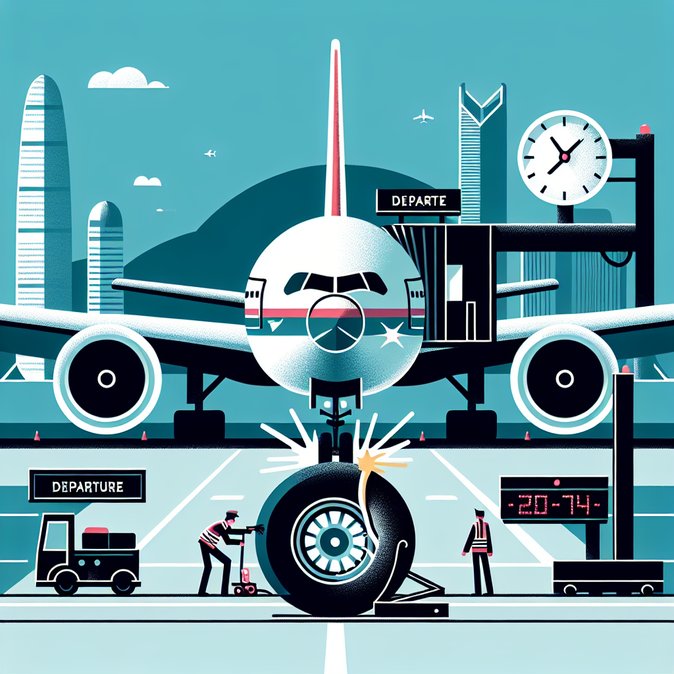
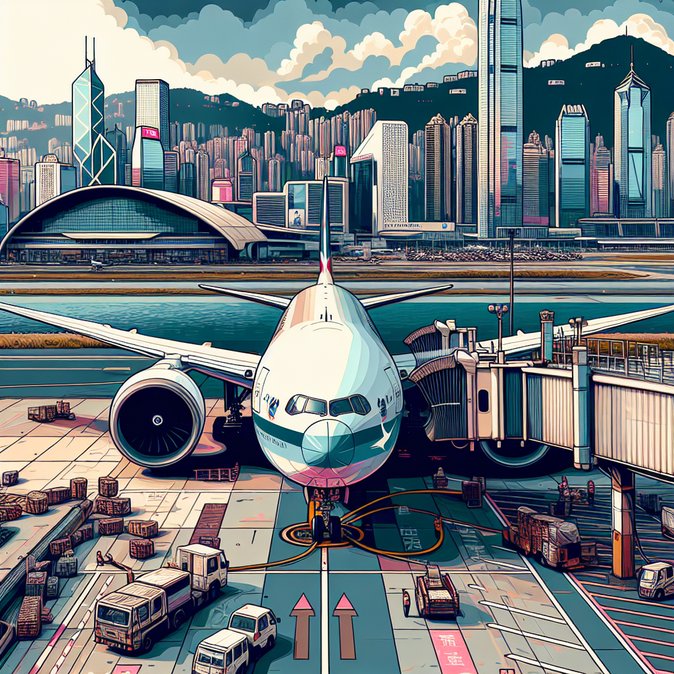
Cathay Pacific’s flagship long-haul service CX105 was forced to abort its climb out of Hong Kong International Airport on the afternoon of 10 December after pilots detected a burst main-gear tyre. The Boeing 777-300 (registration B-KQC) stopped its ascent at 5,000 ft, circled to dump fuel and landed safely on runway 07L about 25 minutes later. No injuries were reported, but the incident triggered a full emergency response and temporarily closed one of the airport’s two departure runways, causing knock-on delays during the late-afternoon peak.
Cathay arranged a replacement aircraft (B-KQY) that eventually reached Melbourne six hours and 45 minutes behind schedule. The airline said it is cooperating with Hong Kong’s Civil Aviation Department to determine why the tyre failed, and whether foreign-object debris on runway 07R contributed. The 777-300 remained grounded for inspection and tyre-rim replacement, highlighting the logistical challenges carriers face in sourcing spares during the holiday surge.
Whenever unexpected events force travellers to re-route through different countries at short notice, fresh transit or entry requirements can appear out of nowhere. VisaHQ’s Hong Kong team (https://www.visahq.com/hong-kong/) specialises in fast, hassle-free visa processing and real-time advisory support, helping corporate mobility managers secure any last-minute authorisations their employees might need so projects stay on track even when flights do not.
![Burst tyre forces Cathay Pacific flight back to Hong Kong, delaying Melbourne-bound travellers]()
For corporate mobility managers the episode underlines the importance of robust duty-of-care and travel-disruption protocols. December is one of Cathay’s busiest months for expatriate rotation and student traffic; a single long-haul cancellation can strand hundreds of connecting travellers. Companies with time-critical projects in Australia should consider dual-sourcing routings (for example via Singapore or Kuala Lumpur) and ensure employees have access to real-time flight alerts and automated re-ticketing tools.
The incident also puts a spotlight on Hong Kong airport’s runway-resilience programme. Although the airport handled the emergency efficiently, partial runway closures ripple through its tightly-banked departure waves. With the third runway now operational, regulators are expected to review contingency procedures so that a tyre-burst on one runway does not paralyse the network.
From a traveller-relations standpoint Cathay earned praise for quickly posting updates on its website and offering meal vouchers to delayed passengers. Yet travel-risk consultants note that, under Hong Kong’s Carriage by Air Ordinance and Australia’s consumer-protection rules, employers remain liable for subsistence costs if staff are stranded overnight. Mobility teams should therefore remind employees to keep receipts and to use company-approved accommodation booking channels when disruptions occur.
Cathay arranged a replacement aircraft (B-KQY) that eventually reached Melbourne six hours and 45 minutes behind schedule. The airline said it is cooperating with Hong Kong’s Civil Aviation Department to determine why the tyre failed, and whether foreign-object debris on runway 07R contributed. The 777-300 remained grounded for inspection and tyre-rim replacement, highlighting the logistical challenges carriers face in sourcing spares during the holiday surge.
Whenever unexpected events force travellers to re-route through different countries at short notice, fresh transit or entry requirements can appear out of nowhere. VisaHQ’s Hong Kong team (https://www.visahq.com/hong-kong/) specialises in fast, hassle-free visa processing and real-time advisory support, helping corporate mobility managers secure any last-minute authorisations their employees might need so projects stay on track even when flights do not.
For corporate mobility managers the episode underlines the importance of robust duty-of-care and travel-disruption protocols. December is one of Cathay’s busiest months for expatriate rotation and student traffic; a single long-haul cancellation can strand hundreds of connecting travellers. Companies with time-critical projects in Australia should consider dual-sourcing routings (for example via Singapore or Kuala Lumpur) and ensure employees have access to real-time flight alerts and automated re-ticketing tools.
The incident also puts a spotlight on Hong Kong airport’s runway-resilience programme. Although the airport handled the emergency efficiently, partial runway closures ripple through its tightly-banked departure waves. With the third runway now operational, regulators are expected to review contingency procedures so that a tyre-burst on one runway does not paralyse the network.
From a traveller-relations standpoint Cathay earned praise for quickly posting updates on its website and offering meal vouchers to delayed passengers. Yet travel-risk consultants note that, under Hong Kong’s Carriage by Air Ordinance and Australia’s consumer-protection rules, employers remain liable for subsistence costs if staff are stranded overnight. Mobility teams should therefore remind employees to keep receipts and to use company-approved accommodation booking channels when disruptions occur.
More From Hong Kong
View all
US proposes compulsory five-year social-media disclosure for Visa Waiver visitors, raising privacy concerns for Hong Kong BN(O) holders

UAE introduces fines up to AED 5 million for harbouring illegal migrants, a warning to Hong Kong firms with Gulf operations