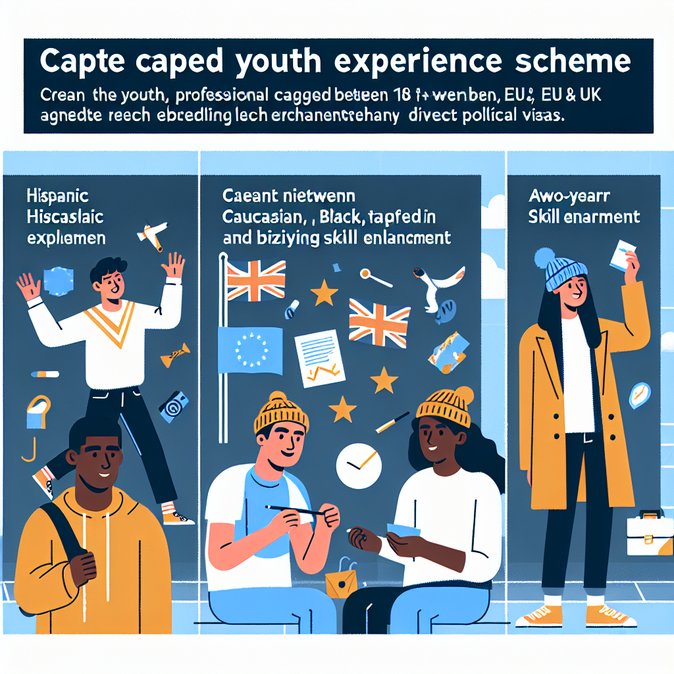
The long-discussed idea of restoring some freedom of movement for young people between Britain and the European Union took a decisive step forward on 10 December after the cross-party UK Trade and Business Commission (UKTBC) published a detailed blueprint for a time-limited Youth Experience Scheme (YES). The report recommends an initial cap of 44,000 visas per year for 18- to 30-year-olds on each side, mirroring the flow of young Britons who already head to Australia, New Zealand and Canada under existing Youth Mobility arrangements.
Although the Labour government has promised to cut overall net migration, the Commission argues that the outflow of 44,000 young Britons under other schemes in 2024 creates “visa head-room” that would allow an EU deal without increasing net numbers. Polling for the study shows 72 % public support, including a majority of Reform UK voters—a significant political signal that two-way mobility for graduates, interns and working-holiday makers is no longer taboo. Europe minister Nick Thomas-Symonds will meet EU vice-president Maroš Šefčovič in Brussels this week to scope a formal negotiating mandate, with officials hinting at a draft agreement by spring 2026.
Business groups such as MakeUK and techUK say access to short-term EU talent would help fill skills gaps and deepen supply-chain links created by the post-Brexit Trade and Co-operation Agreement. Universities UK believes a mobility scheme could partially offset the sharp fall in Erasmus+ exchanges and boost regional language skills at home. For employers, the YES visas would be processed entirely online, cost about £350, and last two years—considerably lighter and cheaper than today’s Skilled Worker route.
![UK–EU Youth Mobility Scheme Gains Momentum With Proposal for 44,000 Reciprocal Visas]()
Prospective applicants and employers wondering how to navigate any future YES application process—or the array of existing Youth Mobility routes—can turn to VisaHQ’s United Kingdom portal (https://www.visahq.com/united-kingdom/) for up-to-date guidance, document checklists and a streamlined online submission service. The company already supports thousands of UK travellers in securing visas worldwide, and its dedicated team stands ready to monitor negotiations and advise as soon as the new scheme goes live.
Analysts caution that agreement will depend on EU capitals accepting the UK’s insistence on a firm annual cap and on the Home Office’s ability to automate compliance monitoring through its forthcoming Electronic Travel Authorisation (ETA) platform. Even within Britain, some MPs fear the scheme could be a “back-door route” to settlement, although the draft rules would expressly prohibit extensions or switching to longer-term categories.
If concluded, the YES would be the first bespoke mobility treaty between London and Brussels since Brexit and could serve as a confidence-building measure ahead of the 2026 review of wider UK-EU trade terms.
Although the Labour government has promised to cut overall net migration, the Commission argues that the outflow of 44,000 young Britons under other schemes in 2024 creates “visa head-room” that would allow an EU deal without increasing net numbers. Polling for the study shows 72 % public support, including a majority of Reform UK voters—a significant political signal that two-way mobility for graduates, interns and working-holiday makers is no longer taboo. Europe minister Nick Thomas-Symonds will meet EU vice-president Maroš Šefčovič in Brussels this week to scope a formal negotiating mandate, with officials hinting at a draft agreement by spring 2026.
Business groups such as MakeUK and techUK say access to short-term EU talent would help fill skills gaps and deepen supply-chain links created by the post-Brexit Trade and Co-operation Agreement. Universities UK believes a mobility scheme could partially offset the sharp fall in Erasmus+ exchanges and boost regional language skills at home. For employers, the YES visas would be processed entirely online, cost about £350, and last two years—considerably lighter and cheaper than today’s Skilled Worker route.

Prospective applicants and employers wondering how to navigate any future YES application process—or the array of existing Youth Mobility routes—can turn to VisaHQ’s United Kingdom portal (https://www.visahq.com/united-kingdom/) for up-to-date guidance, document checklists and a streamlined online submission service. The company already supports thousands of UK travellers in securing visas worldwide, and its dedicated team stands ready to monitor negotiations and advise as soon as the new scheme goes live.
Analysts caution that agreement will depend on EU capitals accepting the UK’s insistence on a firm annual cap and on the Home Office’s ability to automate compliance monitoring through its forthcoming Electronic Travel Authorisation (ETA) platform. Even within Britain, some MPs fear the scheme could be a “back-door route” to settlement, although the draft rules would expressly prohibit extensions or switching to longer-term categories.
If concluded, the YES would be the first bespoke mobility treaty between London and Brussels since Brexit and could serve as a confidence-building measure ahead of the 2026 review of wider UK-EU trade terms.
More From United Kingdom
View all
UK Tightens Transit Controls: Nauru Added to Passenger Transit Visa List From 10 December

Britain Joins 26 Nations Urging Narrower Interpretation of ECHR in Bid to Ease Deportations