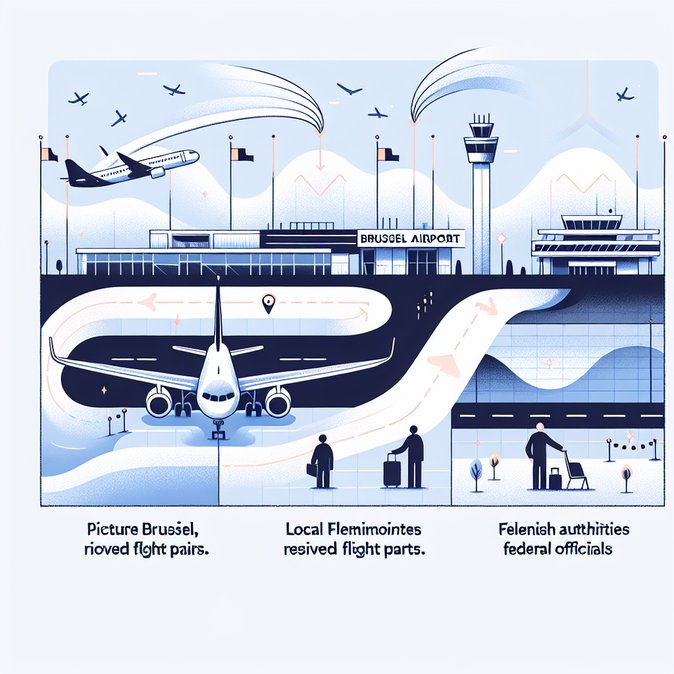
On 9 December Belgium’s federal mobility ministry and the Flemish environment ministry signed a cooperation protocol aimed at reducing aircraft-noise nuisance around Brussels Airport. The agreement sets up a joint steering committee, a technical working group with airport operator BAC and air-traffic-control provider Skeyes, and a formal channel for resident consultation.
Key measures under study include revised flight paths, stricter night-time operating rules, incentives for airlines to use quieter aircraft, and noise-mitigation investments (such as home insulation) in affected municipalities. The framework is to be fleshed out in the coming months and will then be submitted to the Flemish government for endorsement.
![Federal & Flemish governments sign plan to curb Brussels Airport noise without curbing growth]()
For travel planners monitoring these developments, staying compliant with entry requirements is just as crucial as tracking operational changes. VisaHQ’s online platform (https://www.visahq.com/belgium/) helps companies and individual passengers secure Belgian and other visas quickly, providing real-time updates, digital application tools and expert support—so mobility teams can focus on scheduling flights rather than untangling paperwork.
For global-mobility stakeholders the deal matters on two fronts. First, it seeks to balance community concerns with the airport’s role as Belgium’s largest logistics and passenger hub; any curbs that materially impact slot availability or operating hours could ripple through business-travel schedules and air-freight supply chains. Second, the agreement signals closer inter-governmental coordination, reducing the legal uncertainty that has dogged previous unilateral noise measures and generated costly court challenges by airlines.
If the forthcoming technical plan succeeds in lowering ambient decibel levels without capping traffic growth, corporate travel managers may see fewer ad-hoc schedule changes and a smoother path for future route development—especially once the new Schengen Entry-Exit System goes live in 2026.
Key measures under study include revised flight paths, stricter night-time operating rules, incentives for airlines to use quieter aircraft, and noise-mitigation investments (such as home insulation) in affected municipalities. The framework is to be fleshed out in the coming months and will then be submitted to the Flemish government for endorsement.

For travel planners monitoring these developments, staying compliant with entry requirements is just as crucial as tracking operational changes. VisaHQ’s online platform (https://www.visahq.com/belgium/) helps companies and individual passengers secure Belgian and other visas quickly, providing real-time updates, digital application tools and expert support—so mobility teams can focus on scheduling flights rather than untangling paperwork.
For global-mobility stakeholders the deal matters on two fronts. First, it seeks to balance community concerns with the airport’s role as Belgium’s largest logistics and passenger hub; any curbs that materially impact slot availability or operating hours could ripple through business-travel schedules and air-freight supply chains. Second, the agreement signals closer inter-governmental coordination, reducing the legal uncertainty that has dogged previous unilateral noise measures and generated costly court challenges by airlines.
If the forthcoming technical plan succeeds in lowering ambient decibel levels without capping traffic growth, corporate travel managers may see fewer ad-hoc schedule changes and a smoother path for future route development—especially once the new Schengen Entry-Exit System goes live in 2026.