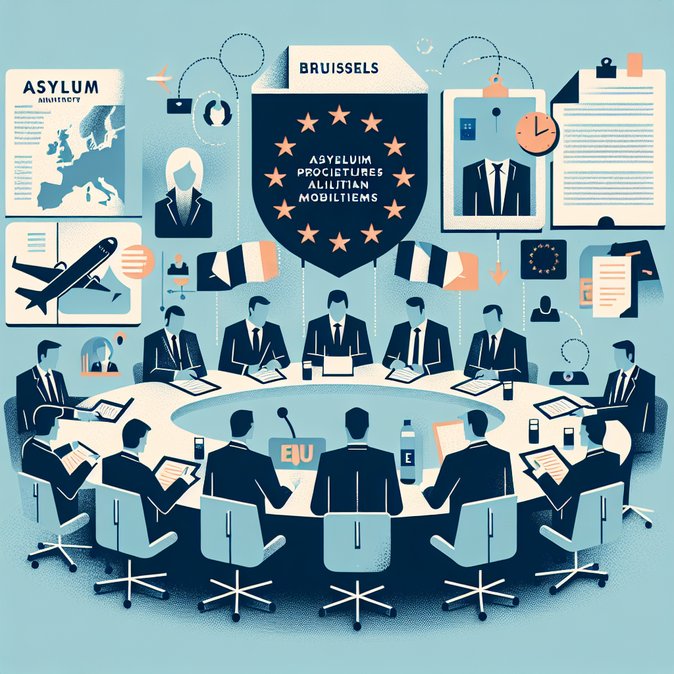
Meeting in Brussels on 8 December, EU Justice and Home Affairs ministers reached a long-awaited political agreement on three pillars of the Pact on Migration and Asylum. The Council’s general approach backs: (1) amendments to the Asylum Procedure Regulation that allow wider use of the ‘safe third country’ concept; (2) an EU-wide list of safe countries of origin; and (3) a harmonised system for returning third-country nationals with no right to stay.
The deal—confirmed in a communiqué released on 9 December—unlocks negotiations with the European Parliament early in 2026 and is viewed in Brussels as essential for having the new rules in force before elections later that year. Commissioner for Home Affairs Magnus Brunner said the agreement would “decrease secondary movements and bring clarity for both applicants and Member States”.
![EU ministers in Brussels seal breakthrough on asylum procedures and ‘safe country’ lists]()
Amid these forthcoming regulatory shifts, organisations and travellers can streamline compliance by tapping VisaHQ’s digital visa and travel-document services. The platform—accessible at https://www.visahq.com/belgium/—provides real-time guidance on Schengen entry requirements, biometric registration, and return-flight documentation, helping corporate mobility teams adapt to the expanded ‘safe third country’ rules and the upcoming Eurodac upgrades.
For Belgium, host of the talks, the outcome strengthens its push for common procedures that alleviate pressure on national asylum systems. Corporate mobility teams should note the planned upgrade of the Eurodac biometric database and a 2027-28 roadmap for fully interoperable border-management IT systems—developments that could shorten airport queues but also tighten enforcement of overstay rules.
The ministers also endorsed the 2026 Annual Solidarity Pool, a mechanism allowing Member States to pledge relocations or financial support when partners face sudden inflows. While details remain to be finalised, Belgian relocation commitments are expected to rise modestly, affecting municipal integration budgets and housing demand in major cities such as Antwerp and Ghent.
The deal—confirmed in a communiqué released on 9 December—unlocks negotiations with the European Parliament early in 2026 and is viewed in Brussels as essential for having the new rules in force before elections later that year. Commissioner for Home Affairs Magnus Brunner said the agreement would “decrease secondary movements and bring clarity for both applicants and Member States”.

Amid these forthcoming regulatory shifts, organisations and travellers can streamline compliance by tapping VisaHQ’s digital visa and travel-document services. The platform—accessible at https://www.visahq.com/belgium/—provides real-time guidance on Schengen entry requirements, biometric registration, and return-flight documentation, helping corporate mobility teams adapt to the expanded ‘safe third country’ rules and the upcoming Eurodac upgrades.
For Belgium, host of the talks, the outcome strengthens its push for common procedures that alleviate pressure on national asylum systems. Corporate mobility teams should note the planned upgrade of the Eurodac biometric database and a 2027-28 roadmap for fully interoperable border-management IT systems—developments that could shorten airport queues but also tighten enforcement of overstay rules.
The ministers also endorsed the 2026 Annual Solidarity Pool, a mechanism allowing Member States to pledge relocations or financial support when partners face sudden inflows. While details remain to be finalised, Belgian relocation commitments are expected to rise modestly, affecting municipal integration budgets and housing demand in major cities such as Antwerp and Ghent.