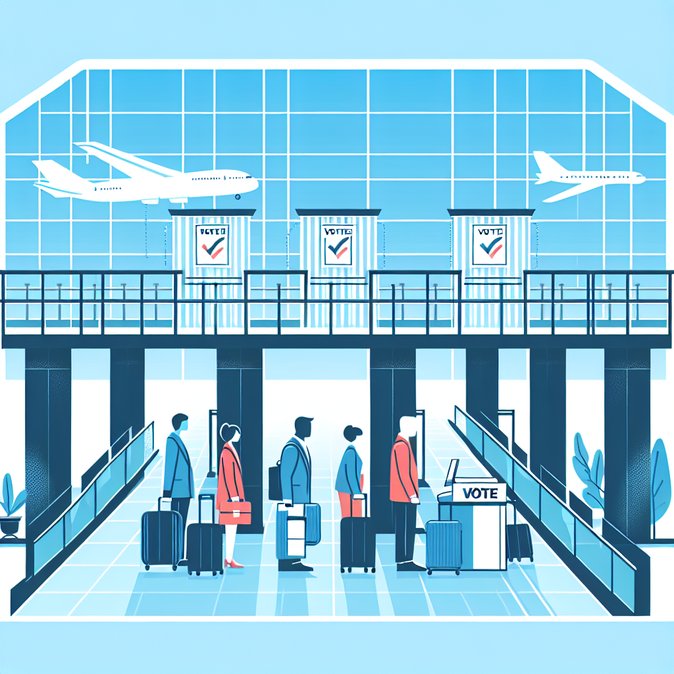
In a first for the city, the Electoral Affairs Commission (EAC) and Airport Authority Hong Kong operated fully functional polling stations inside Terminal 2 of Hong Kong International Airport and at the Hong Kong–Zhuhai–Macao Bridge coach hall during the Legislative Council election on 8 December. Travellers holding same-day boarding passes—or vehicle permits in the case of bridge users—could cast ballots after clearing security, thanks to newly installed biometric voter-ID kiosks linked to the Immigration Department’s API.
The innovation tackles a perennial problem for Hong Kong’s globally mobile electorate: election days often coincide with heavy outbound traffic, forcing business travellers and holiday-makers to choose between civic duty and travel plans. Industry groups welcomed the move; the Board of Airline Representatives of Hong Kong reported flight loads 12 per cent above the weekly average once the ‘vote-or-fly’ conflict was removed.
Operationally, the air-side stations required tight coordination. Passengers scanned both their Hong Kong ID and boarding pass; the system instantly checked for duplicate voting and updated turn-out tallies. Security was handled jointly by the Aviation Security Company and immigration officers, with a dedicated sterile corridor to ensure voters did not mix with arriving passengers who had not cleared immigration.
![Hong Kong opens air-side and bridge polling stations, removing ‘vote-or-travel’ dilemma for Sunday flyers]()
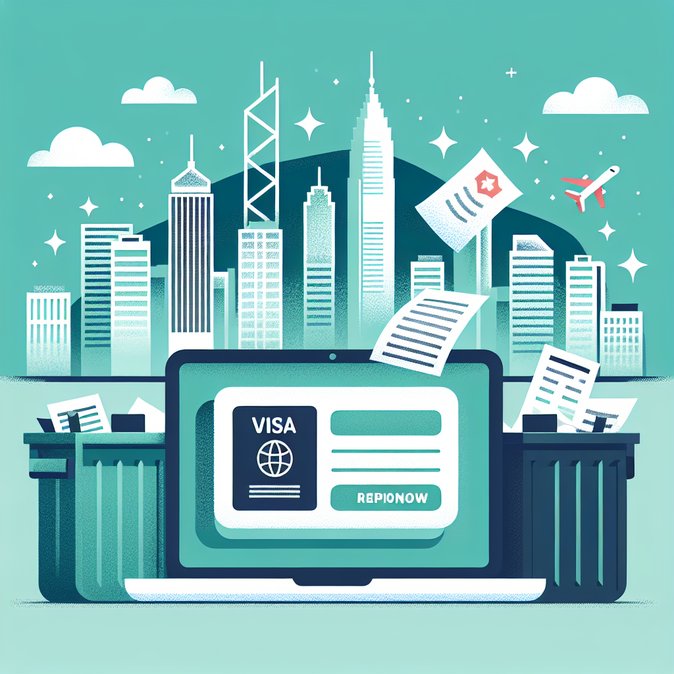
For travellers who may need rapid visa renewals or entry permits before flying, services such as VisaHQ’s Hong Kong platform can simplify paperwork and cut processing time. By allowing applications and status tracking online (https://www.visahq.com/hong-kong/), the company helps ensure that voters taking advantage of the airport polling booths can resolve any last-minute travel documentation snags without derailing either their itinerary or their civic participation.
Corporate travel managers should account for slightly longer dwell times—five to ten minutes—for staff transiting the airport on future election dates, as the government has signalled the model will be replicated in subsequent polls. The success of the pilot also opens the door to other ‘government-service-in-transit’ concepts, such as customs pre-clearance counters for outbound cargo specialists or on-the-spot tax-refund processing for short-stay visitors.
The EAC indicated that voter-turnout data from the special stations will feed into a post-election review, potentially adjusting staffing ratios or adding kiosks at land boundary control points to further streamline cross-boundary voting.
The innovation tackles a perennial problem for Hong Kong’s globally mobile electorate: election days often coincide with heavy outbound traffic, forcing business travellers and holiday-makers to choose between civic duty and travel plans. Industry groups welcomed the move; the Board of Airline Representatives of Hong Kong reported flight loads 12 per cent above the weekly average once the ‘vote-or-fly’ conflict was removed.
Operationally, the air-side stations required tight coordination. Passengers scanned both their Hong Kong ID and boarding pass; the system instantly checked for duplicate voting and updated turn-out tallies. Security was handled jointly by the Aviation Security Company and immigration officers, with a dedicated sterile corridor to ensure voters did not mix with arriving passengers who had not cleared immigration.

For travellers who may need rapid visa renewals or entry permits before flying, services such as VisaHQ’s Hong Kong platform can simplify paperwork and cut processing time. By allowing applications and status tracking online (https://www.visahq.com/hong-kong/), the company helps ensure that voters taking advantage of the airport polling booths can resolve any last-minute travel documentation snags without derailing either their itinerary or their civic participation.
Corporate travel managers should account for slightly longer dwell times—five to ten minutes—for staff transiting the airport on future election dates, as the government has signalled the model will be replicated in subsequent polls. The success of the pilot also opens the door to other ‘government-service-in-transit’ concepts, such as customs pre-clearance counters for outbound cargo specialists or on-the-spot tax-refund processing for short-stay visitors.
The EAC indicated that voter-turnout data from the special stations will feed into a post-election review, potentially adjusting staffing ratios or adding kiosks at land boundary control points to further streamline cross-boundary voting.