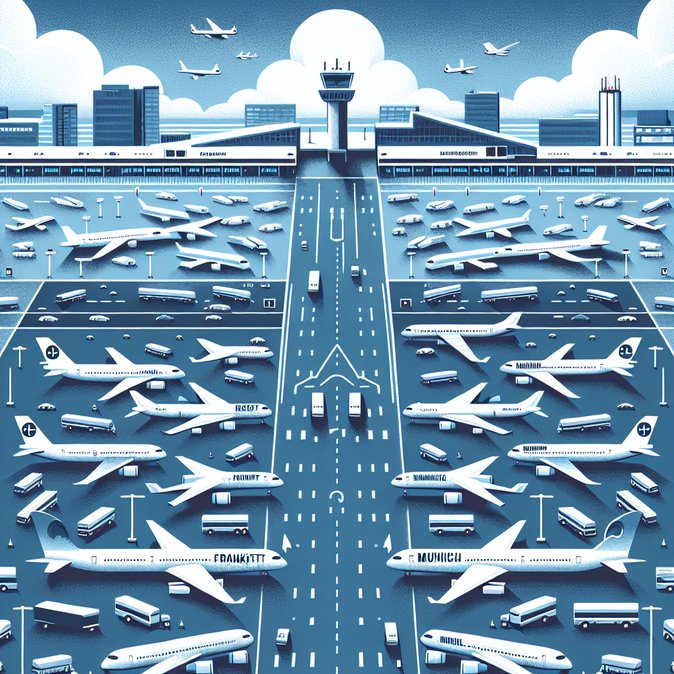
Travellers passing through Germany’s two busiest airports faced a cascade of delays on 9 December, with Frankfurt logging 195 late departures and Munich 105. Although only five flights were cancelled outright, the ripple effect spread to Berlin, Hamburg and Düsseldorf, and onward to major European cities such as London, Amsterdam and Barcelona. Lufthansa and its group carriers accounted for the largest share of disruption, while several foreign airlines – including United, Iberia and Pegasus – recorded delay rates above 50 percent.
Airport operators blamed a combination of winter weather, staffing shortages in ground handling and an unscheduled IT outage at a regional air-traffic control centre. Long queues formed at rebooking counters, and missed connections triggered hotel-accommodation obligations under EU261 rules.
![Flight disruption hits Germany: 300+ delays and cancellations snarl Frankfurt and Munich hubs]()
While flight disruptions can’t always be prevented, travellers can at least make sure their paperwork is flawless. VisaHQ’s online platform (https://www.visahq.com/germany/) simplifies the process of securing visas and passport renewals for Germany and many other destinations, offering real-time status updates and digital applications—helping passengers avoid last-minute document hassles when schedules are already tight.
For corporate travel managers the episode underscores the need for real-time itinerary tracking and contingency budgets in peak holiday season. Experts note that Frankfurt’s hub-and-spoke model magnifies knock-on effects: a two-hour delay on an early-morning long-haul arrival can cascade through the network for the rest of the day.
The German Aviation Association (BDL) called for accelerated recruitment of security staff and for the incoming government to approve ‘trusted-traveller’ lanes to cut screening times. In the meantime, airlines advised passengers to allow extra connection buffers and to check in online to avoid terminal bottlenecks.
Airport operators blamed a combination of winter weather, staffing shortages in ground handling and an unscheduled IT outage at a regional air-traffic control centre. Long queues formed at rebooking counters, and missed connections triggered hotel-accommodation obligations under EU261 rules.
While flight disruptions can’t always be prevented, travellers can at least make sure their paperwork is flawless. VisaHQ’s online platform (https://www.visahq.com/germany/) simplifies the process of securing visas and passport renewals for Germany and many other destinations, offering real-time status updates and digital applications—helping passengers avoid last-minute document hassles when schedules are already tight.
For corporate travel managers the episode underscores the need for real-time itinerary tracking and contingency budgets in peak holiday season. Experts note that Frankfurt’s hub-and-spoke model magnifies knock-on effects: a two-hour delay on an early-morning long-haul arrival can cascade through the network for the rest of the day.
The German Aviation Association (BDL) called for accelerated recruitment of security staff and for the incoming government to approve ‘trusted-traveller’ lanes to cut screening times. In the meantime, airlines advised passengers to allow extra connection buffers and to check in online to avoid terminal bottlenecks.