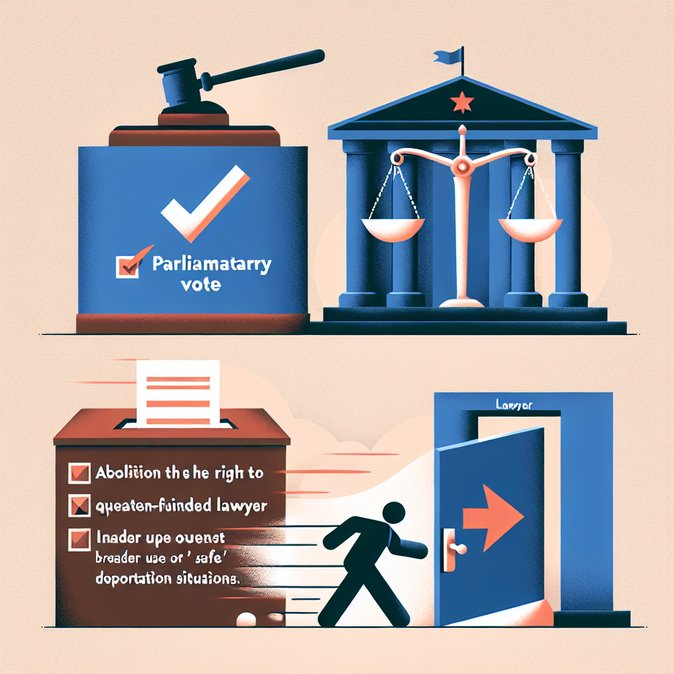
Germany’s lower house of parliament adopted the most far-reaching immigration clamp-down since the 2016 asylum crisis during a rare Sunday sitting that stretched past midnight on 7 December. The bill amends the Residence Act in two decisive ways.
First, anyone placed in deportation detention (Abschiebungshaft) or the shorter pre-departure custody (Ausreisegewahrsam) will no longer receive a publicly-funded defence lawyer as a matter of course. Judges must now appoint counsel only in “particularly complex individual cases”. The automatic right to legal aid had been introduced only last year after Germany lost several cases at the European Court of Human Rights; the government argues that it has since become a magnet for “procedural delaying tactics”. Migrant-rights groups counter that removing counsel will increase wrongful detentions and prolong cases—exactly the outcome the Strasbourg judges sought to avoid.
Second, the bill transfers the power to declare “safe countries of origin” from the Bundesrat (upper house) to the Interior Ministry via simple regulation. In practical terms this means no second-chamber veto when Berlin wants to accelerate returns to nations such as Morocco, Algeria or Georgia. Business associations welcomed the change, saying it should shorten deportation proceedings that can currently last over a year and burden local authorities; humanitarian NGOs warned that political rather than legal criteria will now determine safety assessments.
![Bundestag strips migrants in detention of automatic legal counsel and lets Interior Ministry label ‘safe countries’ by decree]()
Amid such shifting rules, VisaHQ (https://www.visahq.com/germany/) can help companies and individuals stay compliant by monitoring real-time immigration updates, pre-screening documentation, and securing the correct German visas or residence permits—streamlining global-mobility processes before tighter enforcement kicks in.
For global-mobility managers the immediate impact is two-fold. Companies that employ third-country nationals whose asylum claims have been rejected will face a steeper compliance burden: once a worker is detained, counsel may have to be retained privately and at short notice. At the same time, faster designation of “safe” countries could ease outbound assignments for German staff because the Interior Ministry has hinted it will strike labour-migration agreements with those very states to offset deportations with legal work pathways.
The amendments still require approval by the Bundesrat on 20 December, but that chamber can now only delay, not block, most provisions. Interior Minister Alexander Dobrindt has promised that the first expanded “safe country” list will be published in January—signalling a tougher stance that multinationals operating in Germany will need to monitor closely.
First, anyone placed in deportation detention (Abschiebungshaft) or the shorter pre-departure custody (Ausreisegewahrsam) will no longer receive a publicly-funded defence lawyer as a matter of course. Judges must now appoint counsel only in “particularly complex individual cases”. The automatic right to legal aid had been introduced only last year after Germany lost several cases at the European Court of Human Rights; the government argues that it has since become a magnet for “procedural delaying tactics”. Migrant-rights groups counter that removing counsel will increase wrongful detentions and prolong cases—exactly the outcome the Strasbourg judges sought to avoid.
Second, the bill transfers the power to declare “safe countries of origin” from the Bundesrat (upper house) to the Interior Ministry via simple regulation. In practical terms this means no second-chamber veto when Berlin wants to accelerate returns to nations such as Morocco, Algeria or Georgia. Business associations welcomed the change, saying it should shorten deportation proceedings that can currently last over a year and burden local authorities; humanitarian NGOs warned that political rather than legal criteria will now determine safety assessments.

Amid such shifting rules, VisaHQ (https://www.visahq.com/germany/) can help companies and individuals stay compliant by monitoring real-time immigration updates, pre-screening documentation, and securing the correct German visas or residence permits—streamlining global-mobility processes before tighter enforcement kicks in.
For global-mobility managers the immediate impact is two-fold. Companies that employ third-country nationals whose asylum claims have been rejected will face a steeper compliance burden: once a worker is detained, counsel may have to be retained privately and at short notice. At the same time, faster designation of “safe” countries could ease outbound assignments for German staff because the Interior Ministry has hinted it will strike labour-migration agreements with those very states to offset deportations with legal work pathways.
The amendments still require approval by the Bundesrat on 20 December, but that chamber can now only delay, not block, most provisions. Interior Minister Alexander Dobrindt has promised that the first expanded “safe country” list will be published in January—signalling a tougher stance that multinationals operating in Germany will need to monitor closely.
More From Germany
View all
EU ministers back asylum overhaul and common 'safe-country' list; Berlin prepares rapid implementation

German foreign minister begins first China visit, signalling closer scrutiny of trade dependencies and new travel protocols