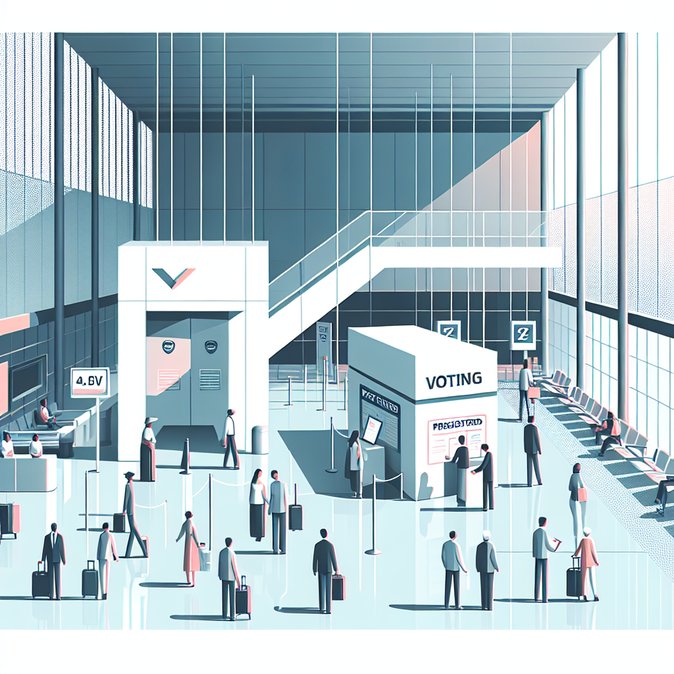
Late on Saturday, 6 December, Chief Executive John Lee announced two last-minute polling additions: one inside Hong Kong International Airport’s Terminal 2 departure hall and another at the Hong Kong–Zhuhai–Macao Bridge checkpoint. The extra venues are tailored to ‘people in motion’—business travellers, logistics drivers and holidaymakers—who might otherwise miss their chance to vote.
The move follows voter-registration data showing that more than 120,000 electors were scheduled to leave or enter Hong Kong on election day. By locating ballot boxes at points of departure, the government says it eliminates the need for special exit-permits or voting affidavits common in other jurisdictions.
Travel-industry groups welcomed the decision. The Board of Airline Representatives of Hong Kong noted that flight loads on 7 December are 12 percent above the weekly average thanks to post-pandemic pent-up demand; removing the ‘vote-or-travel’ dilemma helps avoid costly itinerary changes and no-shows.
![Hong Kong Adds Terminal-2 & Bridge Polling Stations Day Before Election to Ease Voter Mobility]()
Travellers and corporates scrambling to align documents can lean on VisaHQ’s digital concierge: its Hong Kong portal (https://www.visahq.com/hong-kong/) aggregates visa rules, health declarations and timely alerts—such as the new in-terminal polling stations—ensuring staff stay compliant without derailing tight flight schedules.
Operationally, both new venues use the same biometric voter-ID kiosks deployed at traditional polling places, but with added security: travellers must scan boarding passes or vehicle permits to verify they are genuinely in transit. The systems link to the Immigration Department API to prevent duplicate voting.
For global-mobility managers, the lesson is clear: regulatory bodies can—and increasingly will—insert civic or compliance processes directly into the travel journey. Companies sending staff through Hong Kong should update travel briefs to account for potential dwell-time at these hybrid civic-mobility touchpoints.
The move follows voter-registration data showing that more than 120,000 electors were scheduled to leave or enter Hong Kong on election day. By locating ballot boxes at points of departure, the government says it eliminates the need for special exit-permits or voting affidavits common in other jurisdictions.
Travel-industry groups welcomed the decision. The Board of Airline Representatives of Hong Kong noted that flight loads on 7 December are 12 percent above the weekly average thanks to post-pandemic pent-up demand; removing the ‘vote-or-travel’ dilemma helps avoid costly itinerary changes and no-shows.

Travellers and corporates scrambling to align documents can lean on VisaHQ’s digital concierge: its Hong Kong portal (https://www.visahq.com/hong-kong/) aggregates visa rules, health declarations and timely alerts—such as the new in-terminal polling stations—ensuring staff stay compliant without derailing tight flight schedules.
Operationally, both new venues use the same biometric voter-ID kiosks deployed at traditional polling places, but with added security: travellers must scan boarding passes or vehicle permits to verify they are genuinely in transit. The systems link to the Immigration Department API to prevent duplicate voting.
For global-mobility managers, the lesson is clear: regulatory bodies can—and increasingly will—insert civic or compliance processes directly into the travel journey. Companies sending staff through Hong Kong should update travel briefs to account for potential dwell-time at these hybrid civic-mobility touchpoints.