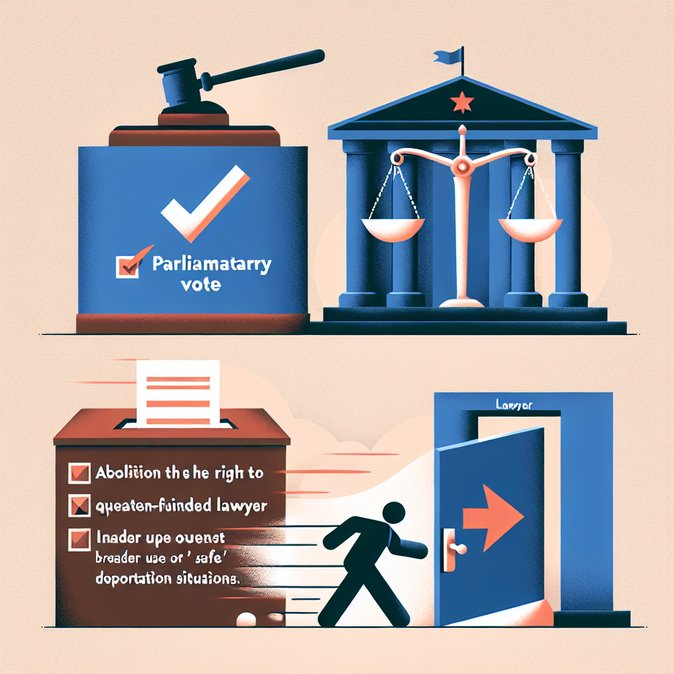
Germany’s lower house passed contentious amendments to the Residence Act late on Sunday, 7 December 2025, marking the toughest immigration crackdown since the 2016 asylum crisis. The package eliminates the automatic right to a publicly-funded defence lawyer for migrants placed in deportation detention or short-term ‘Ausreisegewahrsam’. From now on, only in “particularly complex individual cases” must judges appoint counsel, a reversal of protections introduced just last year.
At the heart of the bill is a shift of power away from the Bundesrat to the executive. The Interior Ministry will be able to list “safe countries of origin” by simple regulation, cutting the second-chamber veto that previously slowed removals to nations such as Morocco, Algeria or Georgia. Once a state is labelled safe, asylum claims from its citizens are deemed “manifestly unfounded”, shortening appeals and speeding expulsions. Government parties CDU/CSU and SPD argue the measure will unclog over-burdened courts and deter unfounded applications.
Business groups welcomed faster procedures, saying thousands of corporate assignments are held up because border police are redeployed to handle protracted asylum cases. Human-rights NGOs and the German Bar Association, however, warn that stripping detainees of counsel violates constitutional guarantees and EU law. They predict a surge in wrongful removals, costly court challenges and reputational damage for Germany’s rule-of-law image, which is critical when courting foreign talent.
![Bundestag scraps mandatory legal counsel in deportation detention and gives government sole power to declare ‘safe countries’]()
For organisations and travellers needing certainty amid these shifting requirements, VisaHQ’s Germany portal (https://www.visahq.com/germany/) offers real-time updates on residence permits, Blue Cards and business visas, along with customised document checklists and application support. The platform’s expertise can help global-mobility teams stay compliant and avoid the costly disruptions that the new rules may trigger.
For global-mobility managers the change has several immediate implications: companies may see deportation proceedings against rejected assignees conclude within days rather than weeks; employees from newly-designated “safe” states will need watertight employment contracts or Blue-Card approvals before travelling; and corporate travel teams must brief all third-country nationals on the shrinking window to contest removal orders. Multinationals sponsoring trainees from North Africa or the Western Balkans should consult counsel on contingency plans.
Because the measure was adopted as an ordinary law, it could take effect as early as January 2026 once the Bundesrat’s consultative period expires. Opposition parties have already flagged a constitutional complaint in Karlsruhe, so further legal volatility is likely. Until jurisprudence clarifies the limits of the reform, mobility teams should monitor case law closely and build in extra compliance checks when relocating staff to or from Germany.
At the heart of the bill is a shift of power away from the Bundesrat to the executive. The Interior Ministry will be able to list “safe countries of origin” by simple regulation, cutting the second-chamber veto that previously slowed removals to nations such as Morocco, Algeria or Georgia. Once a state is labelled safe, asylum claims from its citizens are deemed “manifestly unfounded”, shortening appeals and speeding expulsions. Government parties CDU/CSU and SPD argue the measure will unclog over-burdened courts and deter unfounded applications.
Business groups welcomed faster procedures, saying thousands of corporate assignments are held up because border police are redeployed to handle protracted asylum cases. Human-rights NGOs and the German Bar Association, however, warn that stripping detainees of counsel violates constitutional guarantees and EU law. They predict a surge in wrongful removals, costly court challenges and reputational damage for Germany’s rule-of-law image, which is critical when courting foreign talent.

For organisations and travellers needing certainty amid these shifting requirements, VisaHQ’s Germany portal (https://www.visahq.com/germany/) offers real-time updates on residence permits, Blue Cards and business visas, along with customised document checklists and application support. The platform’s expertise can help global-mobility teams stay compliant and avoid the costly disruptions that the new rules may trigger.
For global-mobility managers the change has several immediate implications: companies may see deportation proceedings against rejected assignees conclude within days rather than weeks; employees from newly-designated “safe” states will need watertight employment contracts or Blue-Card approvals before travelling; and corporate travel teams must brief all third-country nationals on the shrinking window to contest removal orders. Multinationals sponsoring trainees from North Africa or the Western Balkans should consult counsel on contingency plans.
Because the measure was adopted as an ordinary law, it could take effect as early as January 2026 once the Bundesrat’s consultative period expires. Opposition parties have already flagged a constitutional complaint in Karlsruhe, so further legal volatility is likely. Until jurisprudence clarifies the limits of the reform, mobility teams should monitor case law closely and build in extra compliance checks when relocating staff to or from Germany.
More From Germany
View all
Germany’s new ‘Chancenkarte’ and other skilled-migration tools under-perform, Green Party slams lack of ‘welcome culture’

Foreign Office issues urgent travel alerts for Greece, Thailand, Bulgaria and Trinidad & Tobago amid rising security risks