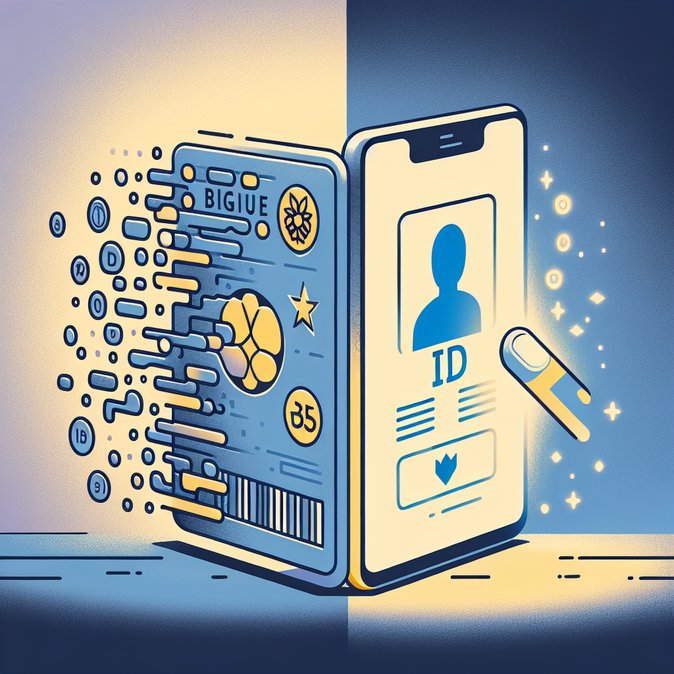
Belgium will become one of the first EU member states to let residents carry a legally-valid identity card on a phone. Minister for Government Modernisation Vanessa Matz told The Brussels Times that a fully-digital credential will go live in the MyGov.be app during the first half of 2026. The mobile eID will mirror every function of the current plastic card: the chip-based signature used to access government portals, the QR code that police officers scan during roadside checks and the data strip that Schengen border guards read when travellers fly within Europe.
For global-mobility managers the change removes one of the biggest onboarding headaches in Belgium. At present, newly-arrived expatriates must register at their local commune, wait up to three weeks for the residence card to be produced and then return in person to collect it. Once the digital credential is activated, foreign assignees will be able to download proof of residence minutes after their address is verified—cutting relocation timelines and reducing courier costs for employers.
For newcomers who still need help navigating the visa and residence-permit steps before they can even think about downloading the eID, VisaHQ’s online platform (https://www.visahq.com/belgium/) is a quick way to check requirements, upload documents and schedule commune appointments. The service streamlines the bureaucratic legwork so employees arrive with everything in order, letting them activate their digital card as soon as the scheme launches.
![Belgium Confirms Smartphone-Based eID Cards for 2026 Roll-Out]()
The Interior Ministry is writing operational guidelines so that Federal Police at Brussels, Charleroi and Liège airports can accept the app for intra-Schengen travel, following the example of the Dutch DigiD pilot. Talks are also under way with Eurostar and Thalys so that the QR-code can double as an automated ticket ID, further streamlining cross-border commuting for Belgian professionals who split their time between Brussels, Paris and London.
Security has been a sticking point. The new system will rely on device-level encryption, biometric phone unlock and a back-end revocation service that lets users remotely wipe credentials if a handset is lost. Privacy watchdogs insist that the eID must be stored locally, with no centralised tracking of citizens’ movements. The National Cybersecurity Centre has completed penetration testing and will publish the results next month.
Companies employing foreign staff in Belgium should update mobility handbooks, advise employees to download the MyGov.be app, and review KYC procedures—banks and health-insurance funds are expected to make the mobile card the default proof of ID for remote onboarding. HRIS vendors are already working on API connections that will let organisations pull residency-status information directly from the government database, paving the way for real-time compliance alerts.
For global-mobility managers the change removes one of the biggest onboarding headaches in Belgium. At present, newly-arrived expatriates must register at their local commune, wait up to three weeks for the residence card to be produced and then return in person to collect it. Once the digital credential is activated, foreign assignees will be able to download proof of residence minutes after their address is verified—cutting relocation timelines and reducing courier costs for employers.
For newcomers who still need help navigating the visa and residence-permit steps before they can even think about downloading the eID, VisaHQ’s online platform (https://www.visahq.com/belgium/) is a quick way to check requirements, upload documents and schedule commune appointments. The service streamlines the bureaucratic legwork so employees arrive with everything in order, letting them activate their digital card as soon as the scheme launches.

The Interior Ministry is writing operational guidelines so that Federal Police at Brussels, Charleroi and Liège airports can accept the app for intra-Schengen travel, following the example of the Dutch DigiD pilot. Talks are also under way with Eurostar and Thalys so that the QR-code can double as an automated ticket ID, further streamlining cross-border commuting for Belgian professionals who split their time between Brussels, Paris and London.
Security has been a sticking point. The new system will rely on device-level encryption, biometric phone unlock and a back-end revocation service that lets users remotely wipe credentials if a handset is lost. Privacy watchdogs insist that the eID must be stored locally, with no centralised tracking of citizens’ movements. The National Cybersecurity Centre has completed penetration testing and will publish the results next month.
Companies employing foreign staff in Belgium should update mobility handbooks, advise employees to download the MyGov.be app, and review KYC procedures—banks and health-insurance funds are expected to make the mobile card the default proof of ID for remote onboarding. HRIS vendors are already working on API connections that will let organisations pull residency-status information directly from the government database, paving the way for real-time compliance alerts.