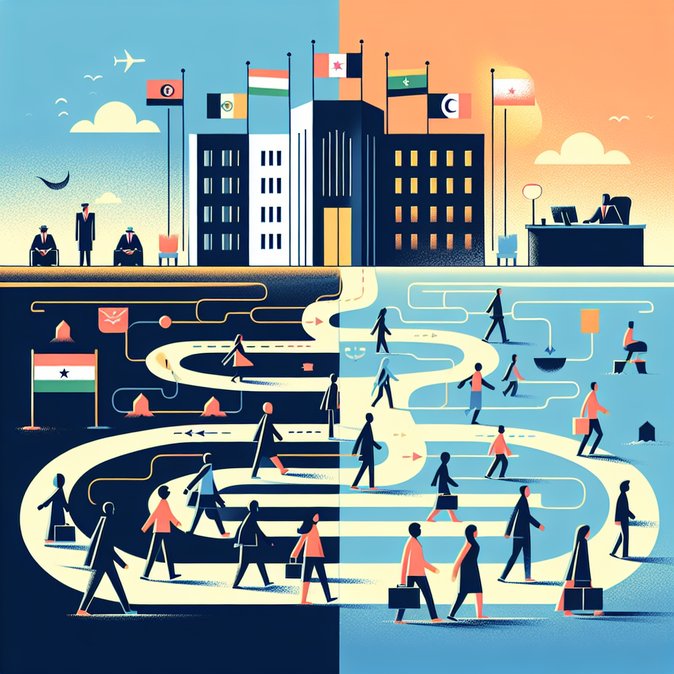
In a late-night vote on 5 December, the Bundestag approved a standalone law that empowers the federal government to declare ‘safe countries of origin’ through statutory orders without needing Bundesrat approval. The measure, passed by 457 votes to 130, complements the broader migration package adopted on 6 December but was handled as a separate bill for procedural reasons.
Interior-policy spokesman Alexander Throm (CDU) said the first ordinance would list Algeria, India, Morocco and Tunisia, enabling authorities to reject most applications from nationals of those states as ‘manifestly unfounded’. Asylum-seekers would still be able to present individual grounds, but the evidentiary burden will be higher.
![Parliament Gives Green Light to ‘Safe Country’ Ordinance Law, Signalling Shift in Asylum Policy]()
Pro Asyl and other NGOs argue the law erodes the right to individual assessment and risks refoulement. Business groups, by contrast, say shorter queues at the Federal Office for Migration and Refugees (BAMF) could indirectly speed work-visa processing. Companies employing nationals of the newly listed countries should note that the safe-country label does not affect skilled-worker or Blue-Card routes, but may influence discretionary elements such as family-reunion visas.
The Bundesrat cannot block the ordinance law, but Germany’s Greens have hinted at filing a constitutional challenge, citing the principle of legal certainty.
Interior-policy spokesman Alexander Throm (CDU) said the first ordinance would list Algeria, India, Morocco and Tunisia, enabling authorities to reject most applications from nationals of those states as ‘manifestly unfounded’. Asylum-seekers would still be able to present individual grounds, but the evidentiary burden will be higher.

Pro Asyl and other NGOs argue the law erodes the right to individual assessment and risks refoulement. Business groups, by contrast, say shorter queues at the Federal Office for Migration and Refugees (BAMF) could indirectly speed work-visa processing. Companies employing nationals of the newly listed countries should note that the safe-country label does not affect skilled-worker or Blue-Card routes, but may influence discretionary elements such as family-reunion visas.
The Bundesrat cannot block the ordinance law, but Germany’s Greens have hinted at filing a constitutional challenge, citing the principle of legal certainty.