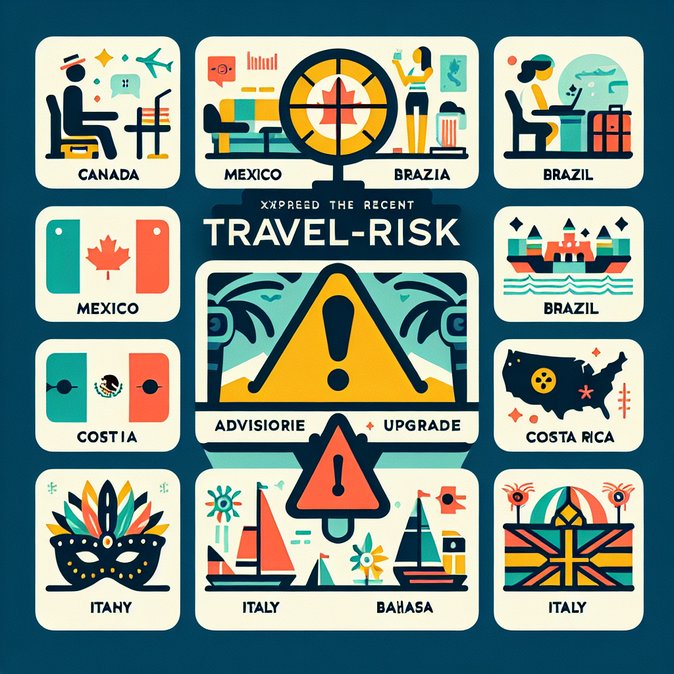
Global Affairs Canada has raised its risk level for Mexico, Brazil, the United Kingdom, Costa Rica, Italy and the Bahamas, citing escalating violent crime, gang activity and terrorism threats. The 1 December advisory urges Canadians to avoid specific states in Mexico, border regions in Brazil and high-profile events in Italy and the U.K., while exercising heightened vigilance in tourist corridors across the Bahamas and Costa Rica.
The department also reminds travellers that several of the affected countries have tightened visa, biometric or e-passport rules in the past year. Brazil re-introduces entry visas for Canadians in January 2026, while Costa Rica now demands proof of onward travel and expanded health-insurance coverage. Italy’s ETIAS pre-travel authorisation and the U.K.’s Electronic Travel Authorisation (ETA) pilot will become mandatory for Canadian visitors in 2026, potentially extending airport wait times.
![Canada Issues High-Alert Travel Advisories for Six Popular Destinations]()
For multinational employers, the elevated advisories trigger duty-of-care reviews: firms should update traveller tracking systems, reconfirm insurance coverage for high-risk zones and brief staff on local security protocols. Travel-management companies are advising clients to schedule longer connection windows to accommodate new entry formalities and to build contingency plans in case of sudden curfews or protest-related disruptions.
The federal government stresses that the notices are not blanket bans but reflect a “high degree of caution.” Nevertheless, failure to follow official guidance could invalidate insurance claims or delay emergency consular assistance—an important consideration for corporate mobility teams planning holiday or Q1 business trips.
The department also reminds travellers that several of the affected countries have tightened visa, biometric or e-passport rules in the past year. Brazil re-introduces entry visas for Canadians in January 2026, while Costa Rica now demands proof of onward travel and expanded health-insurance coverage. Italy’s ETIAS pre-travel authorisation and the U.K.’s Electronic Travel Authorisation (ETA) pilot will become mandatory for Canadian visitors in 2026, potentially extending airport wait times.

For multinational employers, the elevated advisories trigger duty-of-care reviews: firms should update traveller tracking systems, reconfirm insurance coverage for high-risk zones and brief staff on local security protocols. Travel-management companies are advising clients to schedule longer connection windows to accommodate new entry formalities and to build contingency plans in case of sudden curfews or protest-related disruptions.
The federal government stresses that the notices are not blanket bans but reflect a “high degree of caution.” Nevertheless, failure to follow official guidance could invalidate insurance claims or delay emergency consular assistance—an important consideration for corporate mobility teams planning holiday or Q1 business trips.