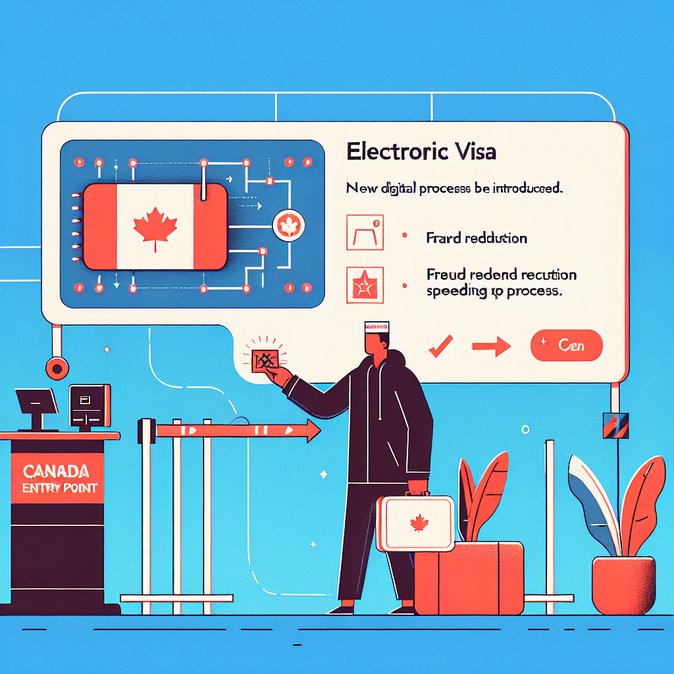
Canada’s drive to digitise its immigration system reached a milestone on 30 November 2025 with the launch of a pilot project that replaces the traditional visa vignette with a fully electronic credential. Under the trial, a small, pre-screened cohort of Moroccan visitors will receive their Canadian temporary resident visas in digital form, stored on a secure IRCC platform and verifiable via a QR code. Travellers will still receive the familiar foil in their passports during the test phase, but only the electronic record will be required for airline check-in and primary inspection at Canadian airports.
Ottawa’s objectives are two-fold: to cut processing times and to strengthen document security. By eliminating overseas mailing and in-person stamping, IRCC expects to shave several days off issuance and save significant courier costs. Digital credentials are also far harder to forge, addressing a persistent fraud problem that costs the department millions each year in secondary investigations and interdictions.
![Canada Launches First-Ever Digital Visa Pilot with Morocco]()
Choosing Morocco as the inaugural market is strategic. Moroccan visitor volumes have grown by double digits since direct Air Canada flights launched in 2023, yet visa refusal rates remain below the African average. The government therefore has a receptive pool of low-risk travellers who can provide real-world usability feedback without putting border integrity at risk. If the six-month pilot is successful, officials say the programme will expand to other visa-required countries in 2026, eventually enabling a paper-free process for all temporary resident visas.
For business travellers and global mobility managers the implications are significant. A digital visa means last-minute trips can be organised with minimal lead time, improving project agility. Corporations will also see lower courier fees and fewer lost-passport incidents. Immigration lawyers note, however, that companies will need to update internal compliance workflows to capture and store digital visa evidence in HR files. IRCC is expected to publish technical specifications in December so that travel management and HR-tech vendors can integrate verification APIs into their platforms.
Beyond convenience, the pilot signals how Canada intends to compete for talent. A faster, friction-light entry process aligns with Ottawa’s plan to attract more high-value visitors even as it moderates permanent-resident growth. If the model is adopted widely, Canada could leapfrog competitors still reliant on physical paperwork, reinforcing its brand as an innovation-friendly destination for conferences, R&D collaborations and short-term project work.
Ottawa’s objectives are two-fold: to cut processing times and to strengthen document security. By eliminating overseas mailing and in-person stamping, IRCC expects to shave several days off issuance and save significant courier costs. Digital credentials are also far harder to forge, addressing a persistent fraud problem that costs the department millions each year in secondary investigations and interdictions.

Choosing Morocco as the inaugural market is strategic. Moroccan visitor volumes have grown by double digits since direct Air Canada flights launched in 2023, yet visa refusal rates remain below the African average. The government therefore has a receptive pool of low-risk travellers who can provide real-world usability feedback without putting border integrity at risk. If the six-month pilot is successful, officials say the programme will expand to other visa-required countries in 2026, eventually enabling a paper-free process for all temporary resident visas.
For business travellers and global mobility managers the implications are significant. A digital visa means last-minute trips can be organised with minimal lead time, improving project agility. Corporations will also see lower courier fees and fewer lost-passport incidents. Immigration lawyers note, however, that companies will need to update internal compliance workflows to capture and store digital visa evidence in HR files. IRCC is expected to publish technical specifications in December so that travel management and HR-tech vendors can integrate verification APIs into their platforms.
Beyond convenience, the pilot signals how Canada intends to compete for talent. A faster, friction-light entry process aligns with Ottawa’s plan to attract more high-value visitors even as it moderates permanent-resident growth. If the model is adopted widely, Canada could leapfrog competitors still reliant on physical paperwork, reinforcing its brand as an innovation-friendly destination for conferences, R&D collaborations and short-term project work.