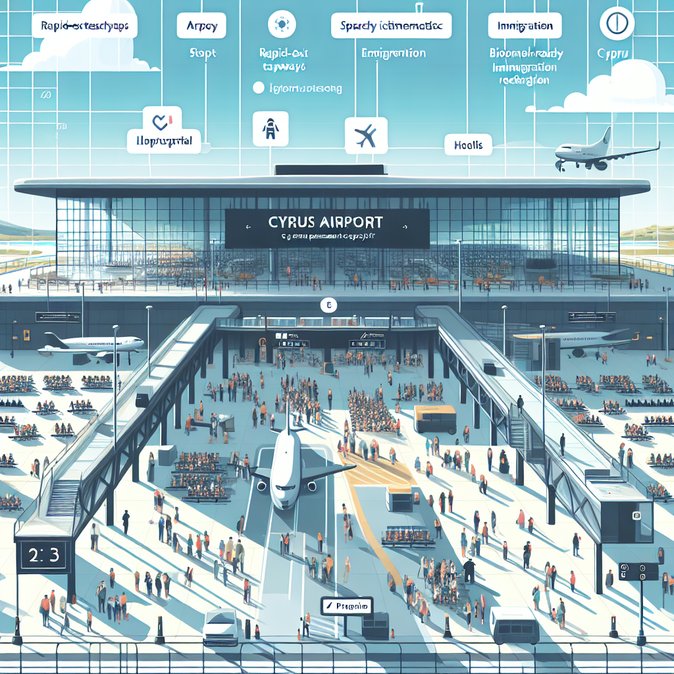
Night-time construction crews broke ground this week on the second phase of Paphos International Airport’s capacity-boost programme, a €220 million project designed to catapult the western Cyprus gateway into the biometrics era. The works—timed between 23:30 and 06:00 to keep daytime operations unaffected—will add two rapid-exit taxiways, extend a parallel taxiway and enlarge the terminal by one-third.
Once finished in mid-2027, peak-hour aircraft movements will rise from 12 to 18 and overall annual passenger throughput by roughly 30 percent. Inside the terminal, six extra departure gates and an expanded immigration hall have been wired to accommodate the EU’s Entry/Exit System (EES) and future e-gates that Cyprus hopes to activate once it secures Schengen membership later this decade.
![€220 Million Runway Upgrade Begins at Paphos, Adds Biometric-Ready Immigration Hall]()
Hermes Airports says the rapid-exit taxiways alone will trim average runway occupancy by 45 seconds per aircraft—an important gain for low-cost carriers operating dense schedules and for business-aviation operators who need precise slot times. One arrivals-level traffic lane has closed during works, and travellers are advised to allow an extra 15 minutes for drop-off.
From a global-mobility perspective the expansion promises more seat availability on Western-European and Gulf routes that regularly run above 90 percent load factors in summer. The Cyprus Chamber of Commerce argues that the upgrade will facilitate winter tourism and strengthen the island’s bid to attract regional headquarters and digital-nomad talent.
Project managers stress that sustainability has been baked in: recycled asphalt is being used on taxiways, while the new terminal segment will feature solar panels capable of meeting 25 percent of the building’s electricity demand.
Once finished in mid-2027, peak-hour aircraft movements will rise from 12 to 18 and overall annual passenger throughput by roughly 30 percent. Inside the terminal, six extra departure gates and an expanded immigration hall have been wired to accommodate the EU’s Entry/Exit System (EES) and future e-gates that Cyprus hopes to activate once it secures Schengen membership later this decade.

Hermes Airports says the rapid-exit taxiways alone will trim average runway occupancy by 45 seconds per aircraft—an important gain for low-cost carriers operating dense schedules and for business-aviation operators who need precise slot times. One arrivals-level traffic lane has closed during works, and travellers are advised to allow an extra 15 minutes for drop-off.
From a global-mobility perspective the expansion promises more seat availability on Western-European and Gulf routes that regularly run above 90 percent load factors in summer. The Cyprus Chamber of Commerce argues that the upgrade will facilitate winter tourism and strengthen the island’s bid to attract regional headquarters and digital-nomad talent.
Project managers stress that sustainability has been baked in: recycled asphalt is being used on taxiways, while the new terminal segment will feature solar panels capable of meeting 25 percent of the building’s electricity demand.