
Colombia customs
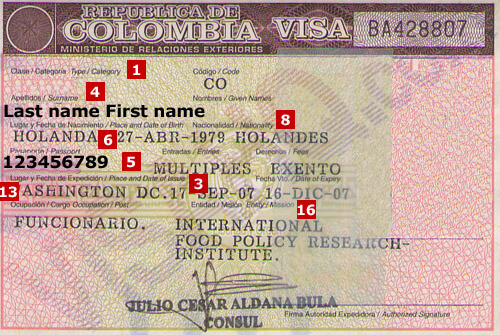
Apply for visa
Free import
• Personal effects (new or used items you need for your own use during the trip) are duty-free and do not count toward the allowance below.
• Other goods for personal or family use or as gifts, carried in your accompanied baggage, worth up to USD 2,000 in total, are free of duty and do not need a customs declaration. Travelers under 18 are entitled to 50% of this allowance.
• Purchases at arrival duty-free shops count toward the USD 2,000 allowance.
• Up to 10 units of the same kind of item are treated as non-commercial. Larger quantities are treated as commercial goods and cannot be imported as baggage.
• Up to 3 mobile phones may be brought in as personal effects, but they must be declared on the traveler declaration (Form 530) with each phone's IMEI number and value in USD.
Currency
• There is no limit on the amount of Colombian pesos or foreign currency you may bring in.
• Cash and negotiable instruments (in any currency, including Colombian pesos) worth more than USD 10,000 or the equivalent must be declared to customs on arrival on Form 530. A family travelling together may submit one declaration.
Prohibited
• Illegal drugs
Restricted
• If you have spent at least 5 days abroad, you may bring further goods worth up to USD 3,000 (up to 3 units each of household appliances, sports goods and tools of your trade, and up to 10 units of other personal items), accompanied or sent separately, by declaring them on Form 530 and paying a flat 15% tax at the arrival airport or port. This option can be used once a year. Undeclared goods above the allowance are seized.
• Declare on Form 530 all plants, animals and their products (including food), pets, cultural heritage items and goods regulated by the Ministry of Culture or the Ministry of Environment. Baggage is inspected jointly by customs (DIAN), the agricultural authority (ICA) and the police.
• Some processed animal products may enter without an ICA permit in limited quantities if they are in their original sealed, labelled packaging (showing the country and plant of origin, packing date and expiry date): for example up to 6 kg of cooked or cured sausages and meat products, boneless hams or aged, processed and spreadable cheeses, and up to 3 kg of processed or pasteurised honey or pre-cooked shrimp. Beef products from countries with mad cow disease (BSE) are excluded.
• Other animal and plant products, such as fresh fruit and vegetables, flowers, plants, seeds, fresh meat and dairy products, need a health or phytosanitary certificate from the country of origin and ICA approval. Products that do not meet the rules are held and re-shipped or destroyed.
• Medicines, food supplements, food and medical equipment are subject to the rules of the health regulator (INVIMA). Carry prescription medicines in their original containers with your prescription.
• Firearms, ammunition and explosives may be brought in only with a licence from the Ministry of National Defence. Customs notes in the passport that the weapons must leave Colombia with their owner.
• Live animals, plants and wildlife products of species protected by CITES need CITES permits.
• Dogs and cats: before travelling, register with ICA and apply online (SISPAP) for a Certificate of Sanitary Inspection (CIS). On arrival, go with your pet to the ICA office at the airport, port or border crossing and present the CIS application and payment receipt, an original official health certificate issued no more than 10 days before arrival (confirming the pet is free of contagious and parasitic diseases and was treated against internal and external parasites within 60 days before travel) and a valid vaccination record. Dogs need vaccination against rabies, distemper, canine hepatitis, leptospirosis, parvovirus, coronavirus and parainfluenza; cats against rabies, feline panleukopenia, rhinotracheitis and calicivirus. A first rabies vaccination must be given at least 21 days before departure, and pets must be at least 15 weeks old. Pets that fail inspection may be held, quarantined at home, sent back or put down at the owner's cost.
• Dogs of breeds classed as dangerous in Colombia (such as Pit Bull Terrier, Rottweiler and Dogo Argentino) need prior ICA authorization.