Ireland abolishes appeals for short-stay (Type C) visa refusals, shifting focus to first-time applications
Germany scraps airport-transit visa for Indian nationals from 3 June 2026
Unannounced Air-Traffic Controller Strike Shuts Belgian Airspace, Paralyzing Business Travel
Latest News

China’s Visa-Free Policy for Five South American Countries Celebrates First Anniversary with 50 % Surge in Arrivals
China reports a 50 % year-on-year jump in arrivals from Brazil, Argentina, Chile, Peru and Uruguay after one year of its 30-day visa-free trial. Seventy percent of South American visitors used the waiver, saving time and cost for business and leisure travellers. The figures validate Beijing’s push to revive inbound tourism and could pave the way for an extension or expansion of the programme, giving mobility managers greater planning certainty.

Australian Border Force signs US$1.5 billion aerial-surveillance deal to strengthen migration and fisheries patrols
Australia’s Home Affairs Department has chosen Metrea to supply a new fleet of surveillance aircraft from 2028, expanding ABF’s capacity to spot unauthorised vessels and enforce migration rules across 36 million km² of ocean. The upgrade underscores the government’s hard-line border posture and could create short-term air-space constraints around northern airports as the fleet is phased in.

Dubai to Launch ‘Smart Medical Visa’ Under GDRFA–DHA Agreement
GDRFA-Dubai and the Dubai Health Authority signed an MoU on 2 June 2026 to create a fully digital “smart medical visa”. The system will let hospitals sponsor patients online, link residency and insurance data, and issue renewable 90- or 180-day entry permits as QR codes. The reform will shorten lead times for medical travellers and help companies fast-track employees who need treatment before starting UAE assignments.

EU tells Austria and eight peers to start rolling back Schengen internal border checks
The European Commission issued legal opinions urging Austria and eight other Schengen members to phase out long-standing internal border checks, arguing that new external-border technologies make them unnecessary. Austrian companies say the controls add costs and hurt cross-border business travel, while Vienna has yet to commit to a timetable for lifting them.

Ontario shutters all nine immigration streams under its Provincial Nominee Program
Ontario revoked all nine pathways that previously allowed it to nominate foreign nationals for permanent residence. No replacement streams are yet in force, leaving employers and applicants without a provincial route and forcing contingency planning until new rules are announced. The closure could lengthen retention timelines and increase pressure on federal and other provinces’ programs.

Cyprus-led EU Presidency hails ‘migration crackdown’ deal on faster returns
Local media report that Cyprus, as current EU Council president, brokered a hard-line compromise that toughens detention rules, reduces benefits for non-co-operative migrants and paves the way for offshore ‘return hubs.’ The accord, which complements Monday’s Returns Regulation, underscores Cyprus’ influence and will force employers to police visa compliance more rigorously.

Swiss Vote on Population Cap Initiative Draws Global Attention Ahead of 14 June Ballot
With ten days left before voters decide, international media are scrutinising the SVP’s proposal to lock Switzerland’s population below ten million by curbing immigration. Business groups warn the measure would choke the supply of skilled foreign labour and endanger EU market-access treaties, while supporters say it will protect infrastructure and social systems. Mobility teams should brace for significant permit and quota turbulence if the initiative passes.

Brazil enacts Women’s World Cup 2027 law with fast-track e-visas for foreign staff and fans
A new law published on 2 June sets up a one-stop electronic visa system for everyone travelling to Brazil for the 2027 FIFA Women’s World Cup. Accredited officials and workers will receive multi-entry visas valid through the end of 2027, while ticket-holding fans can obtain a 90-day visit visa online. The measure gives companies and event partners a clear, fully digital immigration path and obliges airports to provide express lanes, significantly easing large-scale mobility planning.
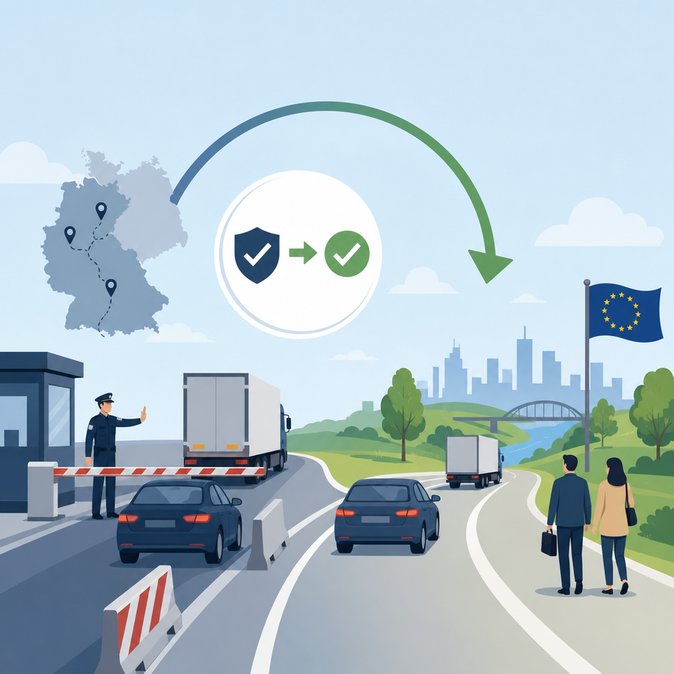
EU tells Germany to phase out prolonged Schengen border checks
The European Commission’s 2 June 2026 opinion says Germany’s long-running internal Schengen border checks are no longer proportionate and should be replaced by smarter alternatives. While not binding, the move increases pressure on Berlin to wind down fixed checkpoints that have raised costs for exporters and cross-border commuters. Businesses should plan for a phased easing of controls over the coming months.

European Commission urges France to lift long-running Schengen border checks
The European Commission has issued a formal opinion asking France to withdraw the border checks it has kept in place inside the Schengen Area since 2015. While non-binding, the move puts legal and political pressure on Paris to adopt less disruptive policing methods. A rollback of checks would ease delays for cross-border commuters and freight operators, cutting costs for businesses and simplifying short-term assignments.

Hong Kong International Airport’s New Terminal 2 Begins Operations, 15 Airlines Shifting Check-in Counters
Hong Kong International Airport has opened the departures hall of its rebuilt Terminal 2 and begun relocating 15 mainly short-haul carriers from Terminal 1. The new zone offers 160 counters, extensive self-service facilities and biometric immigration lanes that cut processing time by roughly a quarter. While boarding still occurs at T1, the move frees up capacity for the summer peak and positions HKIA to reach 120 million passengers annually once the three-runway system is complete. Business travellers should confirm their airline’s terminal and expect faster check-in but a short inter-terminal ride to the gate.

Austrian media echo Brussels’ call; business lobby demands clear exit date for border controls
Austrian broadcaster ORF amplified the European Commission’s request to end internal Schengen border controls, prompting industry and opposition politicians to press the government for a concrete phase-out schedule. Business groups argue that ongoing checks hurt trade and tourism, while the Interior Ministry insists they remain necessary for security.