
Brazil customs
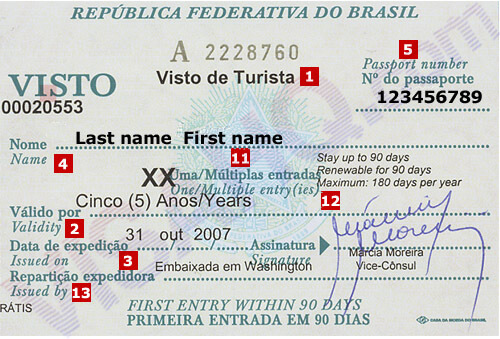
Apply for visa
Free import
• Clothing, toiletries and other personal belongings for your own use during the trip, in used condition, as well as books, leaflets and periodicals.
• Other goods (purchases and gifts) worth up to USD 1,000 per traveler arriving by air or sea, or USD 500 arriving by land, river or lake. The allowance can be used once every 30 days and cannot be combined with other travelers, including family members.
• Included in that allowance: up to 12 L of alcoholic beverages, 10 packs of 20 cigarettes (200 cigarettes), 25 cigars or cigarillos and 250 g of smoking tobacco.
• Also included in that allowance: items worth less than USD 10 each (USD 5 by land) up to 20 units, no more than 10 of them identical; other items up to 20 units (10 by land), no more than 3 of them identical.
• Travelers under 18 may not bring in alcoholic beverages or tobacco products, even when traveling with a parent or guardian.
• In addition, you may spend up to USD 1,000 in the arrival duty-free shop at the airport or port where you land. Limits: 24 units of alcoholic beverages (no more than 12 of the same type), 20 packs of cigarettes, 25 cigars or cigarillos and 250 g of tobacco. Land-border duty-free shops allow USD 500 once every 30 days, with 12 L of alcoholic beverages.
• Goods above the allowance must be declared in the electronic traveler's declaration (e-DBV) and taken through the "Goods to Declare" channel. Import tax is 50% of the value above the allowance; undeclared goods are fined another 50% of that value.
Currency
• Cash in Brazilian reais or foreign currency above USD 10,000 (or the equivalent in other currencies) must be declared in the e-DBV on arrival.
Prohibited
• Narcotics and illegal drugs
• Counterfeit and pirated goods
• Replica (imitation) firearms
• Cigarettes and alcoholic beverages made in Brazil for sale only abroad, and cigarette brands not sold in their country of origin
• Genetically modified organisms, pesticides and their components
• Honey and other bee products (propolis, royal jelly, beeswax, pollen)
• Raw or homemade meat, fish, dairy products and eggs (even if chilled, frozen or vacuum-packed), and dairy products made from unpasteurized milk
• Goods offensive to morals, public order or public health
Restricted
• All food, plant and animal products are checked by the agricultural inspection service (Vigiagro) of the Ministry of Agriculture (MAPA). Drop prohibited items in the agricultural disposal bins before customs, or declare them in the e-DBV. If you are unsure about an item, declare it. You must also declare a visit to a farm or livestock show in the last 15 days.
• Industrially processed meat, fish, dairy and egg products are allowed for your own use only in their original, intact factory packaging, labeled with the product name, ingredients, producing country and sanitary authority. Pork products are allowed only canned and sterilized.
• Fresh or dried fruit and vegetables need a phytosanitary certificate from the country of origin. Seeds, seedlings, bulbs, live plants and soil need a prior import authorization from MAPA.
• Dogs and cats need an International Veterinary Certificate (CVI) or an official pet passport issued by the official veterinary authority of the country of departure that meets Brazil's requirements, and must show no signs of disease. For pets traveling from the United States, the USDA-endorsed certificate is valid for 60 days from issue and requires: rabies vaccination (a first vaccination at least 21 days before departure; puppies and kittens under 90 days may travel unvaccinated), treatment against internal and external parasites within 15 days before the certificate is issued, and a clinical exam within 10 days before it is issued. A microchip is optional.
• Other pets (rabbits, ferrets, rodents and similar) need an import authorization from the MAPA Federal Agriculture Superintendency of the destination state. Birds and aquatic animals also need quarantine.
• Firearms and ammunition need prior authorization from the Brazilian Army (Exército Brasileiro).
• Wild animals, butterflies and insects, endangered species (CITES) and raw reptile and amphibian skins need authorization from IBAMA, the federal environment agency.
• Medicines, food supplements, cosmetics and medical devices are controlled by ANVISA, the health regulatory agency. Cannabidiol (CBD) products containing THC need ANVISA authorization. Carry prescriptions or a doctor's letter for your medicines.
• Works of art, historical, archaeological and numismatic items need clearance from IPHAN, the national heritage institute.
• Gold bars are controlled by the Central Bank (BACEN), rough diamonds by the National Mining Agency, and radio signal jammers and digital receivers by Anatel.