
Bolivia customs
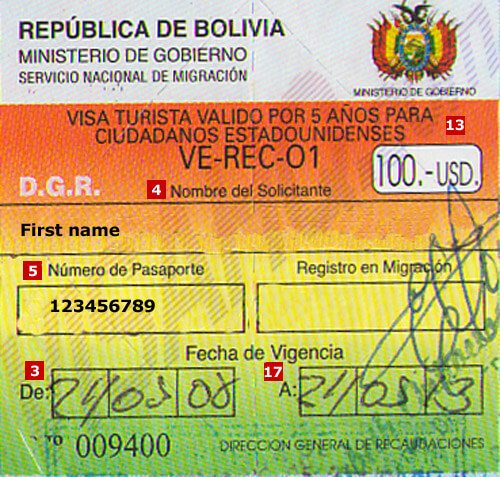
Apply for visa
Free import
• Used clothing and personal effects, books and printed matter, and one each of: camera, video camera, laptop, audio recorder or radio, mobile phone, musical instrument; also sports equipment, baby strollers, wheelchairs and other personal orthopedic items.
• New articles for strictly personal use (including gifts), not for sale, worth up to USD 1,000 per traveler. Within this allowance: up to 3 L of alcoholic beverages, up to 400 cigarettes, and up to 50 cigars or 500 g of cut tobacco.
• The USD 1,000 allowance can be used only once every 90 days. It is personal and cannot be combined with other travelers; children under 18 traveling with their family do not get their own allowance.
• Medicines for personal use: prescription medicines and over-the-counter medicines up to 3 units (boxes or bottles), except medicines containing controlled substances.
• New articles worth more than USD 1,000 are taxed on the excess (simplified clearance up to USD 2,000 in total); above USD 2,000 the goods need a formal import declaration. Keep purchase receipts to prove the value.
• Every traveler aged 18 or over must complete Form 250 (Sworn Statement of Accompanied Baggage and Currency) on arrival and departure, online on the Aduana Nacional website, in the AN Viajero app or via the QR codes at airports and border posts. Parents fill it in for children under 18.
Currency
• Cash of USD 10,000 or more, up to USD 50,000 (or the equivalent in other currencies), must be declared on Form 250 on arrival, with the origin and destination of the funds. The declaration is free.
• Amounts over USD 50,000 may not be carried in cash; they must be transferred through banks or money transfer companies authorized by ASFI (the Financial System Supervisory Authority).
• Failure to declare is fined 30% of the cash found; an inaccurate declaration is fined 30% of the difference between the amount found and the amount declared.
Prohibited
• Narcotics and controlled substances
• Counterfeit coins and banknotes, and foreign lottery tickets
• Food and beverages that are spoiled, adulterated or contain harmful substances
• Animals affected by disease, and plants, fruit, seeds and other plant or animal products carrying pests or quarantine diseases
• Radioactive and other hazardous waste
• Second-hand clothing, shoes, bed and table linen, blankets and other used textiles (your own used clothing and personal effects are allowed)
• Tobacco products above the allowance (400 cigarettes, 50 cigars or 500 g of tobacco)
Restricted
• Firearms, ammunition and explosives need an import authorization from the Bolivian Ministry of Defense (issued by ministerial resolution) before arrival; apply through a Bolivian embassy or consulate. Unauthorized weapons are seized.
• Animals, fresh agricultural products, products of animal or plant origin, plants, fruit and seeds in your baggage are checked by SENASAG (the National Agricultural Health and Food Safety Service) and may be seized if they do not meet its requirements.
• Pets: up to 2 pets (dogs and/or cats) per traveler or family may enter duty-free. Each needs an official health (zoosanitary) certificate from the veterinary authority of the country of origin and a rabies vaccination given between 1 month and 12 months before travel; how recent the certificate must be depends on the country of origin (for pets from the USA: issued within 3 months before arrival, endorsed by USDA APHIS and legalized at a Bolivian consulate).
• Exotic animals and endangered species of plants and animals, and products made from them (CITES), need a CITES certificate as well as the health requirements.
• Alcoholic beverages above the allowance, and medicines and foods not registered in Bolivia, need a formal import clearance.