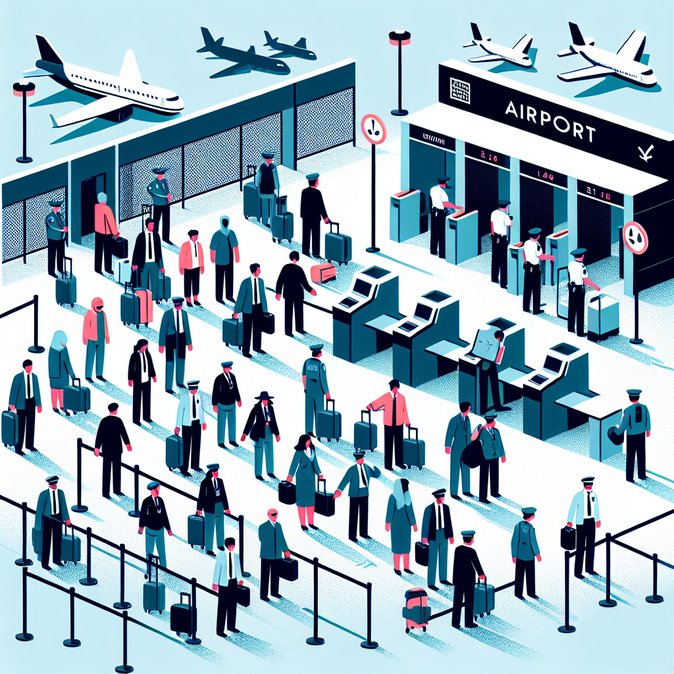
One week after the European Union began rolling out its new Entry/Exit System (EES), passengers landing at Prague’s Václav Havel Airport faced lines that snaked across Terminal 1, with some non-EU travellers waiting up to an hour and a half to clear border control. Spanish daily The Olive Press reports that similar scenes occurred in Brussels, but eyewitnesses described Prague as “one of the worst hotspots” because all self-service kiosks remained offline for parts of Tuesday afternoon.
The EES replaces manual passport stamping with a central database that stores fingerprints, facial images, and entry/exit timestamps for all third-country nationals staying up to 90 days in the Schengen Area. Czechia is among a handful of member states (alongside Estonia and Luxembourg) that opted for full implementation from day one on 12 October, a decision airport officials now concede was “ambitious”. Border-police unions say staffing models assumed that most enrolments would be completed at unmanned kiosks; when kiosks crashed, officers had to capture biometrics manually, tripling average processing time.
For business travellers the immediate implication is schedule risk. Airlines Lufthansa and Emirates have already issued travel alerts advising passengers departing Prague to arrive at least three hours before take-off. Travel-management companies are urging corporates to build longer layovers into itineraries originating in Prague until system stability improves. Frequent-traveller e-gate holders are unaffected, but first-time visitors from the UK, US and Asia should expect fingerprinting and a facial scan.
The Czech Interior Ministry told media that software patches supplied by the EU-Agency eu-LISA will be installed overnight on 29 October, and that a reserve team of 60 officers from regional airports has been dispatched to Prague for the long holiday weekend. Should bottlenecks persist, the ministry may follow the French model of phased enrolment, only requiring biometric capture on departure after an initial grace period.
Compliance is non-negotiable: once fully operational (deadline 10 April 2026), the EES will automatically flag overstays and bar re-entry for offenders. Mobility managers should therefore audit Schengen-day counts for frequent visitors and ensure passports have a clear biometric page to avoid mis-reads at the kiosks.
The EES replaces manual passport stamping with a central database that stores fingerprints, facial images, and entry/exit timestamps for all third-country nationals staying up to 90 days in the Schengen Area. Czechia is among a handful of member states (alongside Estonia and Luxembourg) that opted for full implementation from day one on 12 October, a decision airport officials now concede was “ambitious”. Border-police unions say staffing models assumed that most enrolments would be completed at unmanned kiosks; when kiosks crashed, officers had to capture biometrics manually, tripling average processing time.
For business travellers the immediate implication is schedule risk. Airlines Lufthansa and Emirates have already issued travel alerts advising passengers departing Prague to arrive at least three hours before take-off. Travel-management companies are urging corporates to build longer layovers into itineraries originating in Prague until system stability improves. Frequent-traveller e-gate holders are unaffected, but first-time visitors from the UK, US and Asia should expect fingerprinting and a facial scan.
The Czech Interior Ministry told media that software patches supplied by the EU-Agency eu-LISA will be installed overnight on 29 October, and that a reserve team of 60 officers from regional airports has been dispatched to Prague for the long holiday weekend. Should bottlenecks persist, the ministry may follow the French model of phased enrolment, only requiring biometric capture on departure after an initial grace period.
Compliance is non-negotiable: once fully operational (deadline 10 April 2026), the EES will automatically flag overstays and bar re-entry for offenders. Mobility managers should therefore audit Schengen-day counts for frequent visitors and ensure passports have a clear biometric page to avoid mis-reads at the kiosks.