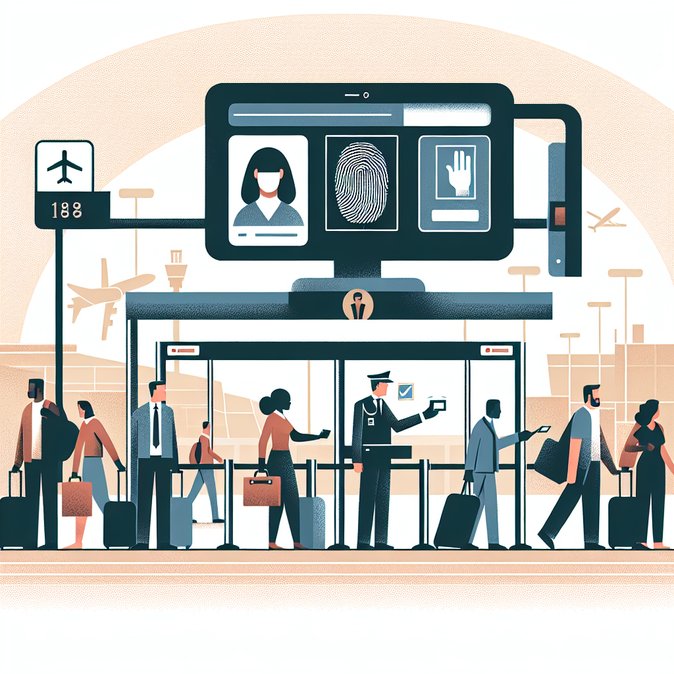
Spain has entered the final stretch of preparations for the European Union’s long-awaited Entry/Exit System (EES), after Brussels confirmed on 25 October 2025 that the biometric border-management platform will launch on 12 October and become mandatory by 10 April 2026.
Under EES, every non-EU traveller—including millions of British, U.S. and Latin-American visitors who arrive in Spain each year—will have their passport scanned and their facial image and four fingerprints captured on first entry to the Schengen area. Subsequent crossings will require a quick facial match. Spanish officials say the new process will replace manual stamping, detect overstays in real time and make it far harder to use multiple passports to prolong stays illegally.
Madrid’s Interior Ministry has invested €83 million to retrofit 124 air, land and sea crossing points with self-service kiosks, e-gates and secure police workstations. Airports will switch first, starting with a test arrival at Barajas in the early hours of 12 October; land borders with Gibraltar, Andorra, Ceuta and Melilla come next, followed by ferry terminals once port authorities finish infrastructure tenders.
Airlines and tourism boards have launched information campaigns warning travellers to expect longer queues during the six-month coexistence period when both stamping and EES operate side-by-side. AENA, the Spanish airport operator, says it will dedicate “EES ambassadors” in Madrid, Barcelona, Málaga and Palma to guide passengers, while Spain’s hotel federation is urging tour operators to stagger flight arrivals to ease pressure.
For employers, relocation managers and global-mobility teams, the system promises faster data on employees’ legal stay limits—but also removes the “wiggle room” created by missed passport stamps. Companies are urged to audit travel patterns now, update Schengen-day trackers and brief staff who cross borders frequently. Once fully live, overstayers will trigger automatic alerts that can jeopardise future visa applications or corporate AEO status.
Legal specialists note that Spanish residence-permit holders will be exempt from biometric capture provided they proactively show their Tarjeta de Identidad de Extranjero (TIE) at the border. Failure to do so could see residents treated as visitors and accidentally subjected to EES—with potential tax-residency and social-security implications if the system records excessive time outside Spain.
Under EES, every non-EU traveller—including millions of British, U.S. and Latin-American visitors who arrive in Spain each year—will have their passport scanned and their facial image and four fingerprints captured on first entry to the Schengen area. Subsequent crossings will require a quick facial match. Spanish officials say the new process will replace manual stamping, detect overstays in real time and make it far harder to use multiple passports to prolong stays illegally.
Madrid’s Interior Ministry has invested €83 million to retrofit 124 air, land and sea crossing points with self-service kiosks, e-gates and secure police workstations. Airports will switch first, starting with a test arrival at Barajas in the early hours of 12 October; land borders with Gibraltar, Andorra, Ceuta and Melilla come next, followed by ferry terminals once port authorities finish infrastructure tenders.
Airlines and tourism boards have launched information campaigns warning travellers to expect longer queues during the six-month coexistence period when both stamping and EES operate side-by-side. AENA, the Spanish airport operator, says it will dedicate “EES ambassadors” in Madrid, Barcelona, Málaga and Palma to guide passengers, while Spain’s hotel federation is urging tour operators to stagger flight arrivals to ease pressure.
For employers, relocation managers and global-mobility teams, the system promises faster data on employees’ legal stay limits—but also removes the “wiggle room” created by missed passport stamps. Companies are urged to audit travel patterns now, update Schengen-day trackers and brief staff who cross borders frequently. Once fully live, overstayers will trigger automatic alerts that can jeopardise future visa applications or corporate AEO status.
Legal specialists note that Spanish residence-permit holders will be exempt from biometric capture provided they proactively show their Tarjeta de Identidad de Extranjero (TIE) at the border. Failure to do so could see residents treated as visitors and accidentally subjected to EES—with potential tax-residency and social-security implications if the system records excessive time outside Spain.