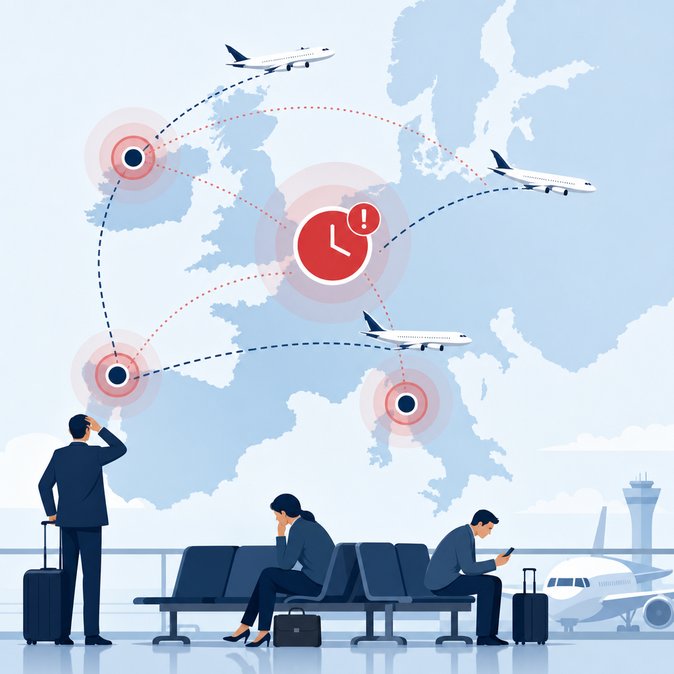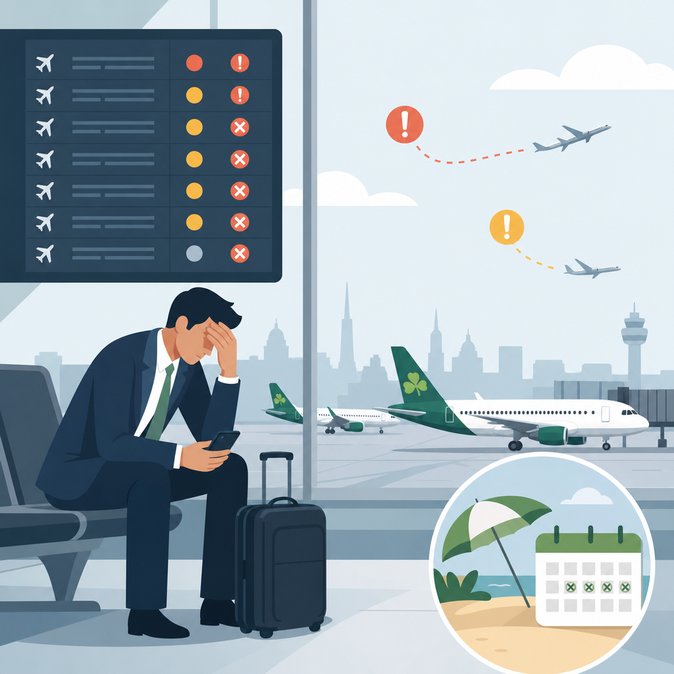
Dublin Airport entered the first bank-holiday weekend of the summer with roughly 40 delayed departures and at least four cancellations on Saturday, 23 May. Live-tracking boards showed knock-on disruption across key short-haul business routes to London, Paris and other European hubs as aircraft ran behind schedule and turnaround times lengthened.
![Flight delays at Dublin Airport strand passengers ahead of bank-holiday getaway]()
Amid such disruptions, ensuring your travel documents are in order is crucial. VisaHQ’s online platform for Ireland (https://www.visahq.com/ireland/) can fast-track visa checks and applications, helping stranded passengers manage last-minute itinerary changes without additional paperwork headaches.
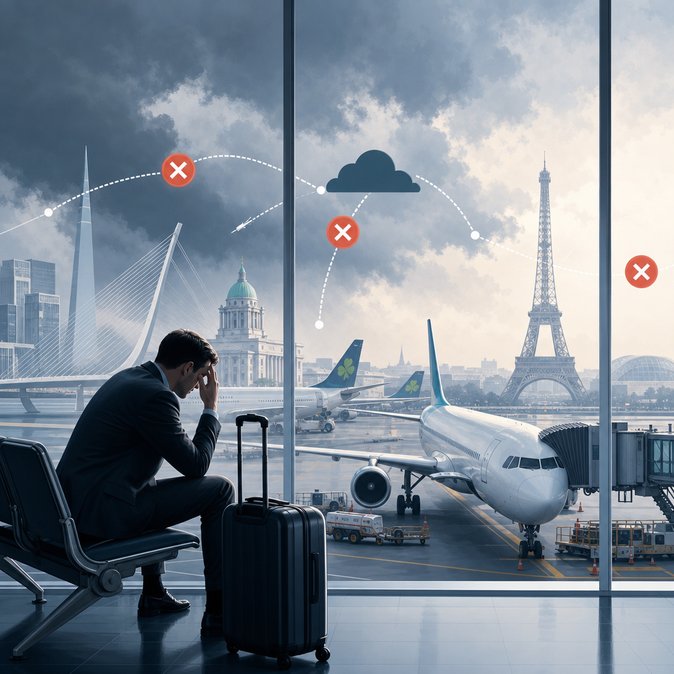
Ryanair and Aer Lingus—jointly responsible for the majority of Dublin’s traffic—were among the hardest-hit carriers, with British Airways and Air France also reporting late departures. While weather was benign, analysts pointed to a system running near capacity after months of staffing shortages and tight aircraft utilisation across Europe. Earlier this spring Dublin saw a single-day tally of more than 200 delays, underscoring how little slack is left in short-haul schedules. Saturday’s figures, though smaller, again exposed the fragility of high-frequency shuttle links: once an early-morning rotation slips, the day’s tightly-sequenced programme can unravel. Routes to London were worst affected. Late-running flights into Heathrow spilled into afternoon waves, compressing connection times for onward long-haul services. Links to Paris Charles de Gaulle followed a similar pattern, leaving both leisure travellers and corporate road-warriors scrambling to rebook missed connections. Cancellations added to the frustration. Aer Lingus has already warned customers that a separate fleet-maintenance programme will see about 2 percent of its summer schedule pulled, heightening sensitivity to any additional disruption. Under EU Regulation 261/2004, passengers delayed more than three hours or facing cancellation may be entitled to meals, accommodation and—in many cases—financial compensation. Travel-risk managers advising multinationals with Irish headquarters are urging staff to build extra slack into itineraries and to retain boarding passes and written delay notices as evidence for claims.
Amid such disruptions, ensuring your travel documents are in order is crucial. VisaHQ’s online platform for Ireland (https://www.visahq.com/ireland/) can fast-track visa checks and applications, helping stranded passengers manage last-minute itinerary changes without additional paperwork headaches.
Ryanair and Aer Lingus—jointly responsible for the majority of Dublin’s traffic—were among the hardest-hit carriers, with British Airways and Air France also reporting late departures. While weather was benign, analysts pointed to a system running near capacity after months of staffing shortages and tight aircraft utilisation across Europe. Earlier this spring Dublin saw a single-day tally of more than 200 delays, underscoring how little slack is left in short-haul schedules. Saturday’s figures, though smaller, again exposed the fragility of high-frequency shuttle links: once an early-morning rotation slips, the day’s tightly-sequenced programme can unravel. Routes to London were worst affected. Late-running flights into Heathrow spilled into afternoon waves, compressing connection times for onward long-haul services. Links to Paris Charles de Gaulle followed a similar pattern, leaving both leisure travellers and corporate road-warriors scrambling to rebook missed connections. Cancellations added to the frustration. Aer Lingus has already warned customers that a separate fleet-maintenance programme will see about 2 percent of its summer schedule pulled, heightening sensitivity to any additional disruption. Under EU Regulation 261/2004, passengers delayed more than three hours or facing cancellation may be entitled to meals, accommodation and—in many cases—financial compensation. Travel-risk managers advising multinationals with Irish headquarters are urging staff to build extra slack into itineraries and to retain boarding passes and written delay notices as evidence for claims.