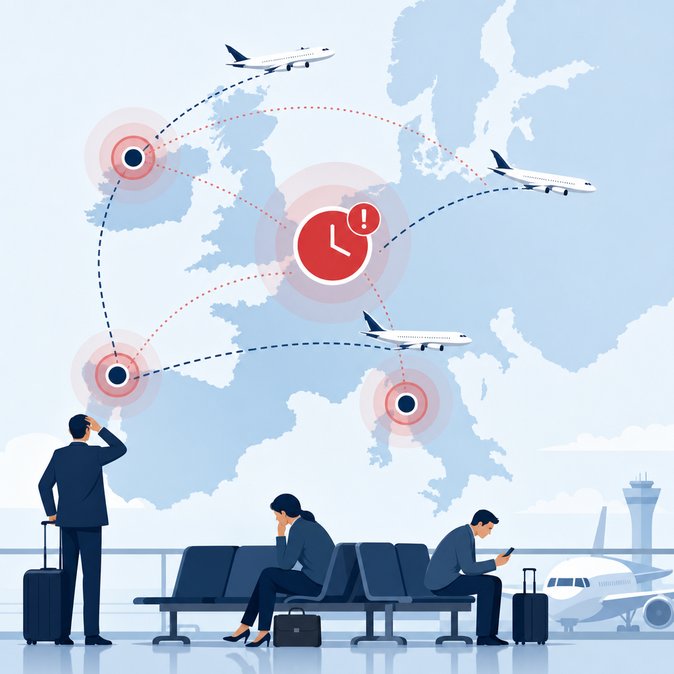
Europe’s tightly-woven aviation network recorded 1,854 delays and 41 cancellations on 23 May, with hubs in Rome, Amsterdam and Lisbon leading the disruption. Data compiled by flight-tracking platforms show the knock-on effects stretched north-west into Dublin, where late-arriving aircraft further strained turnaround windows already compressed by peak-season demand. Southern European hubs bore the brunt early in the day: storms around Rome Fiumicino and slot restrictions at Lisbon spiralled into widespread flow-control measures. Experience from previous events this year demonstrates how delays at a single runway-constrained airport can cascade through mainland Europe within hours, eventually impacting secondary airports such as Dublin that rely on arriving equipment to operate onward services.
![Europe-wide wave of 1,800 flight delays ripples into Ireland]()
For those whose itineraries shift suddenly, keeping travel documents current is just as important as monitoring flight status. VisaHQ’s Ireland portal (https://www.visahq.com/ireland/) lets both leisure and corporate travellers secure visas, passports and electronic travel authorisations in one place, providing real-time status updates—an invaluable safety net when re-routing through multiple Schengen states or beyond Europe at short notice.
Network carriers Lufthansa, KLM and ITA Airways—as well as pan-European low-cost giant Ryanair—featured prominently in today’s statistics. Their extensive use of Dublin as either an origin or end-point means Irish business travellers faced heightened risk of missed onward connections at Frankfurt, Schiphol or Rome. For travel-managers, the episode is another reminder to incorporate buffer time and real-time monitoring into corporate booking tools. EU passenger-rights rules oblige airlines to provide care and, in many cases, compensation—but only when travellers retain proof of delay. Firms are also being advised to review duty-of-care messaging around alternative surface transport should intra-European flight options dry up.
For those whose itineraries shift suddenly, keeping travel documents current is just as important as monitoring flight status. VisaHQ’s Ireland portal (https://www.visahq.com/ireland/) lets both leisure and corporate travellers secure visas, passports and electronic travel authorisations in one place, providing real-time status updates—an invaluable safety net when re-routing through multiple Schengen states or beyond Europe at short notice.
Network carriers Lufthansa, KLM and ITA Airways—as well as pan-European low-cost giant Ryanair—featured prominently in today’s statistics. Their extensive use of Dublin as either an origin or end-point means Irish business travellers faced heightened risk of missed onward connections at Frankfurt, Schiphol or Rome. For travel-managers, the episode is another reminder to incorporate buffer time and real-time monitoring into corporate booking tools. EU passenger-rights rules oblige airlines to provide care and, in many cases, compensation—but only when travellers retain proof of delay. Firms are also being advised to review duty-of-care messaging around alternative surface transport should intra-European flight options dry up.
More From Ireland
View all
Flight delays at Dublin Airport strand passengers ahead of bank-holiday getaway
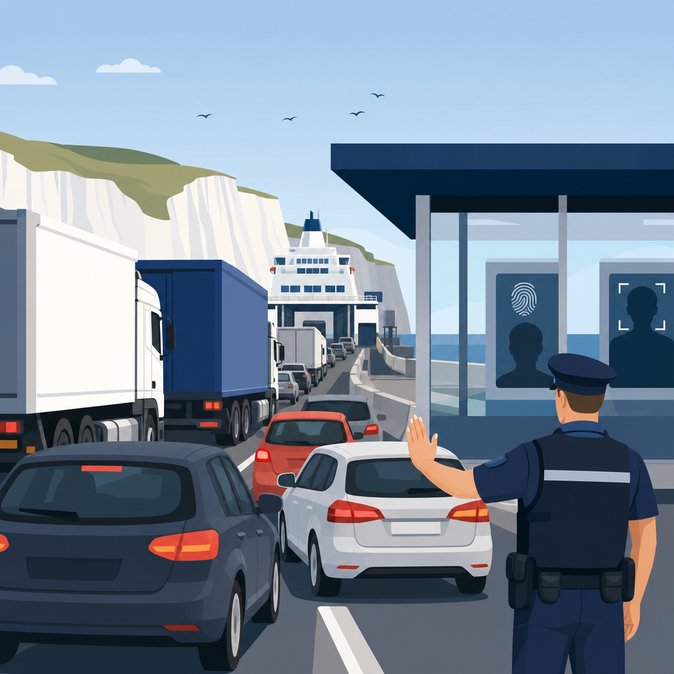
Dover drops biometric checks after gridlock—what it means for Irish motorists heading to France